.png)
)_edited_pn.png)


NON-SURGICAL Hypermobility Treatment
in Raleigh & Cary, NC
When Flexible Joints Cause Real Problems
Being "double-jointed" is common — and for many people, harmless. But when loose joints lead to chronic pain, repeated sprains, shoulders or kneecaps that slip out of place, and joints that ache by the end of a normal day, hypermobility stops being a party trick and becomes a medical problem.
At Carolina Nonsurgical Orthopedics, we evaluate and treat the musculoskeletal consequences of hypermobility — including hypermobile Ehlers-Danlos syndrome (hEDS) and hypermobility spectrum disorder (HSD) — with a nonsurgical, stability-first approach at our Raleigh and Cary offices.
Hypermobility, hEDS, and HSD: What's the Difference?
Generalized joint hypermobility (GJH) means joints move beyond the typical range. On its own, without symptoms, it often needs no treatment. Hypermobility spectrum disorder (HSD) is hypermobility plus musculoskeletal symptoms — chronic joint pain, recurrent sprains, or instability — that don't meet the criteria for EDS.
Hypermobile Ehlers-Danlos syndrome (hEDS) is the most common type of Ehlers-Danlos syndrome: symptomatic hypermobility plus systemic features such as easy bruising, stretchy skin, and chronic pain. It is a clinical diagnosis made using published criteria.
An important distinction: we treat hEDS — not vascular EDS (vEDS). Vascular Ehlers-Danlos syndrome is a different condition involving fragile blood vessels and organs, with risks — including arterial rupture — that require management by genetics and cardiology specialists.
If your history suggests vEDS (arterial dissection or rupture, organ rupture, extensive bruising out of proportion, or a family history of these events), we will refer you to the appropriate specialists rather than manage your musculoskeletal care in isolation. Getting this distinction right matters, because it changes everything about screening and management.
The Beighton Score: How Hypermobility Is Screened
The Beighton score is the standard 9-point screening tool for generalized joint hypermobility.
One point is awarded for each of the following (bilateral items count per side):
Passive dorsiflexion of each little finger beyond 90°
Passive apposition of each thumb to the forearm
Hyperextension of each elbow beyond 10°
Hyperextension of each knee beyond 10°
Forward trunk flexion with palms flat on the floor, knees straight
Maximum score: 9. A score of 5 or more in adults (with age-adjusted cutoffs — higher in children, lower after age 50) generally indicates generalized joint hypermobility.
The Beighton score is a useful screen, not the whole picture. Some patients score below the cutoff yet have meaningful instability in one or two key joints — a shoulder that subluxes, an ankle that constantly rolls. Our evaluation looks at the whole pattern: which joints are unstable, which structures are generating pain, and how it's affecting your function.
Symptoms We Commonly See
-
Joints that partially slip (sublux) or fully dislocate — shoulders, kneecaps, fingers
-
Sprains from trivial forces — ankles rolling on flat ground
-
Chronic joint pain, especially by day's end
-
Muscle fatigue and overuse tendinitis — muscles working overtime to stabilize what ligaments don't
-
Early arthritis in overworked joints
-
Poor proprioception — joints that "give way" without warning
Our Treatment Approach
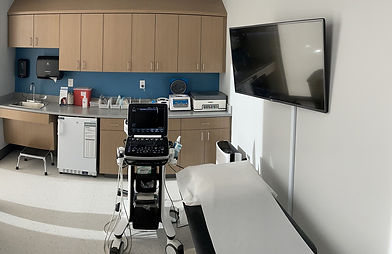
In hypermobile patients, the critical question is always which structure is actually causing the pain — a lax ligament, an overworked tendon, a labrum catching in an unstable shoulder, early cartilage wear. Our in-office ultrasound imaging answers that the same day, and the answer changes the plan.
The cornerstone of hypermobility care is controlled strength, not stretching. Aggressive stretching trains already-lax tissue to be laxer. What loose joints need is progressive resistance training for the surrounding muscles, proprioception and balance work, and graded load management. We coordinate rehabilitation as the foundation of every treatment plan.
Dextrose prolotherapy — precise injections that provoke a localized healing response in ligaments and tendon attachments — has the longest published history for ligament laxity and recurrent joint instability. For a specific joint that remains unstable despite good rehabilitation, it is a reasonable nonsurgical consideration.
Platelet-rich plasma has good published evidence for tendons and mild-to-moderate arthritis — the overuse injuries hypermobile patients commonly develop. We use it selectively, for structures PRP is actually known to help. To be direct: PRP is not a ligament-tightening treatment, and no injection reliably tightens a loose ligament. Anyone who tells you otherwise is selling, not diagnosing.
Shockwave and MLS Laser has good published evidence for tendons and painful soft tissue, and some patients choose it as there is no needle involved.
What We Don't Do
-
We do not manage vascular EDS — those patients belong with genetics and cardiology, and we refer promptly when the history suggests it.
-
We do not make a formal genetic EDS diagnosis — that is a clinical genetics process. Our role is the musculoskeletal side: stabilizing what can be stabilized and identifying true pain generators.
-
We do not recommend surgery for instability as a first step — most atraumatic instability in hypermobile patients responds to targeted strengthening, and surgery is reserved for structural damage or failure of good rehabilitation.
-
Get an Honest Evaluation
If loose joints have been causing pain, sprains, or instability — whether or not anyone has ever put a name on it — a proper evaluation can connect the dots and build a plan around stability.
Call Carolina Nonsurgical Orthopedics at 919.719.2270 or schedule your visit online. With offices in Raleigh and Cary, NC, and in-office X-ray and ultrasound for same-day answers, we'll determine exactly what's driving your symptoms and lay out your nonsurgical options.

TREATMENT OPTIONS FOR hEDS
As with most orthopedic conditions, patients will often begin with a combination of physical therapy, anti-inflammatories, ice and rest (and in some cases, steroid injections). When these methods are no longer effective, Carolina Nonsurgical Orthopedics offers the latest in cutting-edge treatments to reduce pain and get you back to the activities you enjoy. Some of these innovative alternatives to surgery include Orthobiologics and Regenerative Medicine treatments, such as:
-
Platelet-Rich Plasma (PRP) Injections: Use your own platelets to reduce inflammation and accelerate healing.
-
Prolotherapy: Uses dextrose (sugar water) in place of steroid to reduce pain and promote healing.
See the full list of conditions and treatments offered at Carolina Nonsurgical Orthopedics.


WHY CAROLINA
NONSURGICAL ORTHOPEDICS
-
All Providers are BOARD CERTIFIED and Specially Trained in Nonsurgical Orthopedics
-
Over 50,000+ and Counting Procedures Performed
-
Procedures Performed with Ultrasound Guidance for Accuracy and Safety
-
Local and Independent Practice That is NOT a Franchise
-
Discounts for Service Members, Teachers, and Public Servants
-
Serving Raleigh Since 2013