.png)
)_edited_pn.png)


PRP for Hip Impingement: A Natural Alternative to Steroid Injections
Hip impingement, also called femoroacetabular impingement (FAI), occurs when the bones of the hip joint do not fit together perfectly. This can lead to irritation of the labrum, cartilage, and surrounding joint tissues, causing pain in the groin or front of the hip.
Patients with hip impingement often notice pain with sitting, bending, squatting, or athletic activity, and some experience stiffness or catching within the joint.
Many patients are treated with steroid injections, which may temporarily reduce inflammation but do not address the underlying joint irritation. Repeated steroid injections may also contribute to cartilage damage over time.
Regenerative treatments such as high-dose Platelet-Rich Plasma (PRP) offer a more natural option by supporting the body’s healing processes within the joint.
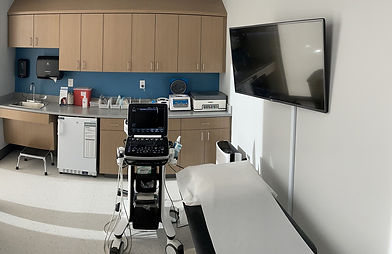
At Carolina Nonsurgical Orthopedics in Raleigh and Cary, we use ultrasound-guided high-dose PRP injections to help reduce inflammation and improve the joint environment in patients with hip impingement.
High-Dose PRP for Hip Impingement
PRP is created from a small sample of your own blood that is processed to concentrate platelets and healing growth factors. At our clinic we typically use high-dose PRP (double-spin PRP) to produce a higher concentration of platelets and growth factors than standard PRP systems.
These healing factors are injected directly into the hip joint using precise ultrasound guidance.
High-dose PRP may help with:
• Hip impingement (FAI)
• Hip labral irritation
• Early cartilage damage
• Chronic hip inflammation
• Persistent hip pain with activity
PRP works by reducing inflammation and supporting the body’s natural repair processes within the joint, which may help improve pain and mobility over time.
Treating the Entire Hip Joint
Hip impingement often affects more than just one structure within the hip. Pain can involve the labrum, cartilage surfaces, joint capsule, and surrounding soft tissues. At Carolina Nonsurgical Orthopedics, we evaluate the entire hip joint and surrounding structures to ensure the treatment addresses the full source of irritation rather than focusing on a single point of pain. Improving the overall biologic environment of the hip joint may help patients return to activity more comfortably.
Hip Impingement Treatment in Raleigh and Cary
Regenerative treatments such as high-dose PRP allow physicians to support healing within the hip joint without relying on repeated steroid injections.

TREATMENT OPTIONS FOR HIP IMPINGEMENT (FAI)
As with most orthopedic conditions, patients will often begin with a combination of physical therapy, anti-inflammatories, ice and rest (and in some cases, steroid injections).
When these methods are no longer effective, Carolina Nonsurgical Orthopedics offers the latest in cutting-edge treatments to reduce pain and get you back to the activities you enjoy. Some of these innovative alternatives to surgery include Orthobiologics and Regenerative Medicine treatments, such as:
-
Platelet-Rich Plasma (PRP) Injections: Use your own platelets to reduce inflammation and accelerate healing.
-
Prolotherapy: Uses dextrose (sugar water) in place of steroid to reduce pain and promote healing.
See the full list of conditions and treatments offered at Carolina Nonsurgical Orthopedics.
READ MORE ABOUT HIP IMPINGMEMENT (FAI)
FAI impingement generally occurs as two forms: Cam and Pincer. The Cam form of impingement is when the femoral head and neck are not perfectly round, most commonly due to excess bone that has formed. This lack of roundness and excess bone causes abnormal contact between the surfaces. The Pincer form of impingement is when the socket, or acetabulum rim, has overgrown and is too deep. It covers too much of the femoral head resulting in the labral cartilage being pinched. The Pincer form of impingement may also be caused when the hip socket is abnormally angled backwards, causing abnormal impact between the femoral head and the rim of the acetabulum. Most diagnoses of FAI include a combination of the Cam and Pincer forms. The femoral head and acetabulum rub against each other, creating damage and pain to the hip joint. The damage can occur to the articular cartilage (the smooth white surface of the ball or socket) or the labral tissue (the lining of the edge of the socket) during normal movement of the hip. The articular cartilage labral tissue can fray or tear after repeated friction. Over time, more cartilage and labrum are lost until eventually the femur bone and acetabulum bone impact on one another. Bone on bone friction is commonly referred to as osteoarthritis. A risk factor is something that is likely to increase a person’s chances of developing a disease or condition. Risk factors for developing femoroacetabular impingement may include the following: - Athletes such as football players, weightlifters, and hockey players - Workers engaged in heavy labor - Repetitive hip flexion - Congenital hip dislocation - Anatomical abnormalities of the femoral head or angle of the hip - Legg-Calves-Perthes disease: a form of arthritis in children where blood supply to the bone is impaired, causing bone breakdown. - Trauma to the hip - Inflammatory arthritis


WHY CAROLINA
NONSURGICAL ORTHOPEDICS
-
All Providers are BOARD CERTIFIED and Specially Trained in Nonsurgical Orthopedics
-
Over 50,000+ and Counting Procedures Performed
-
Procedures Performed with Ultrasound Guidance for Accuracy and Safety
-
Local and Independent Practice That is NOT a Franchise
-
Discounts for Service Members, Teachers, and Public Servants
-
Serving Raleigh Since 2013