.png)
)_edited_pn.png)


Combining PRP with MLS Laser or Shockwave: Treating the Whole Problem, Not Just the Spot
The Lesion Is Only Half the Problem
Here's something we see constantly: a patient has a clear structural problem — an arthritic knee, a degenerative tendon — and also a halo of dysfunction around it. Guarded, weak quadriceps around the bad knee. A stiff, painful calf complex around the Achilles. Inflamed, irritated tissue surrounding the tendon lesion.
An injection treats the spot. But the spot lives inside a neighborhood, and the neighborhood matters.
That's the thinking behind how we combine treatments: **PRP goes precisely to the lesion — the arthritic joint, the degenerative tendon — while MLS laser or shockwave therapy** treats the surrounding tissue. Biology to the target, rehabilitation to everything around it.
Why the Combination Makes Sense
Each modality does something the other doesn't:
PRP delivers a concentrated dose of the patient's own platelets and growth factors directly into the damaged structure — the joint, the tendon defect. It's the most biologically active thing we can put precisely where the damage is.
Shockwave drives neovascularization (new blood vessel formation), breaks up dysfunctional tissue patterns, and modulates pain signaling in the surrounding structures. It's mechanotransduction — using mechanical energy to trigger a biological healing response.
MLS laser reduces inflammation and pain in the surrounding soft tissues, improves local circulation, and helps guarded musculature relax and re-engage — which is often what keeps patients from rehabbing properly after the injection.
The PRP handles the lesion. The laser or shockwave handles the environment the lesion has to heal in.
What the Research Says
This isn't just a theory. A randomized trial in athletes with patellar tendinopathy compared PRP alone against PRP plus shockwave: the combination group got faster pain reduction at one month, with both groups doing well at a year and no safety issues. A separate study found the combination produced greater structural improvement on ultrasound than either treatment alone — the authors described it as a potential synergy between biological stimulation and mechanical loading.
For MLS laser specifically, the combination data with PRP is thinner — we use it on the rationale above (surrounding-tissue inflammation and muscle guarding), and we're upfront that this part rests on clinical reasoning rather than a dedicated trial.
What This Looks Like in Practice
Knee arthritis: PRP into the joint + MLS laser to the quadriceps and periarticular tissues that have been guarding and weakening for years
Tennis elbow: PRP to the tendon origin + shockwave to the surrounding forearm musculature
Plantar fasciitis: PRP to the fascial insertion + shockwave to the calf-plantar complex driving the overload
Achilles tendinopathy: PRP to the degenerative segment + shockwave to the surrounding paratenon and calf
In each case, the injection is the centerpiece and the laser or shockwave is the supporting cast — treating the tissue that has to carry the load while the lesion heals.
An Honest Note on How We Price It
We offer 10% off when PRP is combined with MLS laser or shockwave in a treatment plan — not as a sales package, not as a today-only deal, just a straightforward recognition that combined care costs us less to deliver per treatment than piecemeal visits.
And the same honesty applies in reverse: if your case doesn't call for the combination, we won't suggest it. Plenty of patients do well with PRP alone, or shockwave alone. The combo is for cases where the surrounding tissue is clearly part of the problem — which, in chronic cases, it usually is.
Schedule Your Evaluation
Call Carolina Nonsurgical Orthopedics at 919.719.2270 or schedule your visit online. With offices in Raleigh and Cary, NC — and in-office ultrasound to map both the lesion and the tissue around it — we'll build the combination your case actually needs, and nothing it doesn't.
About Your Physicians
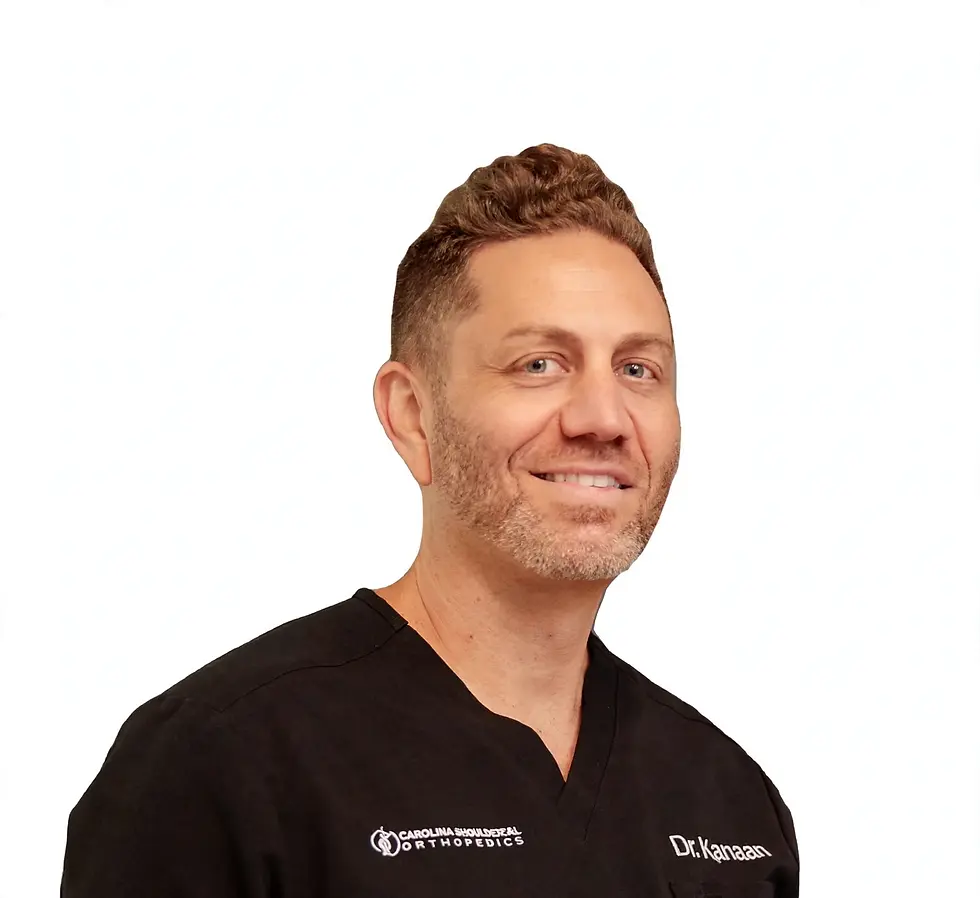
Dr. Matthew Kanaan
Nonsurgical Orthopedic Specialist
Founder of Carolina Nonsurgical Orthopedics. Fellowship trained in sports medicine at Duke; residency in family medicine at Duke, where he served as Chief Resident.
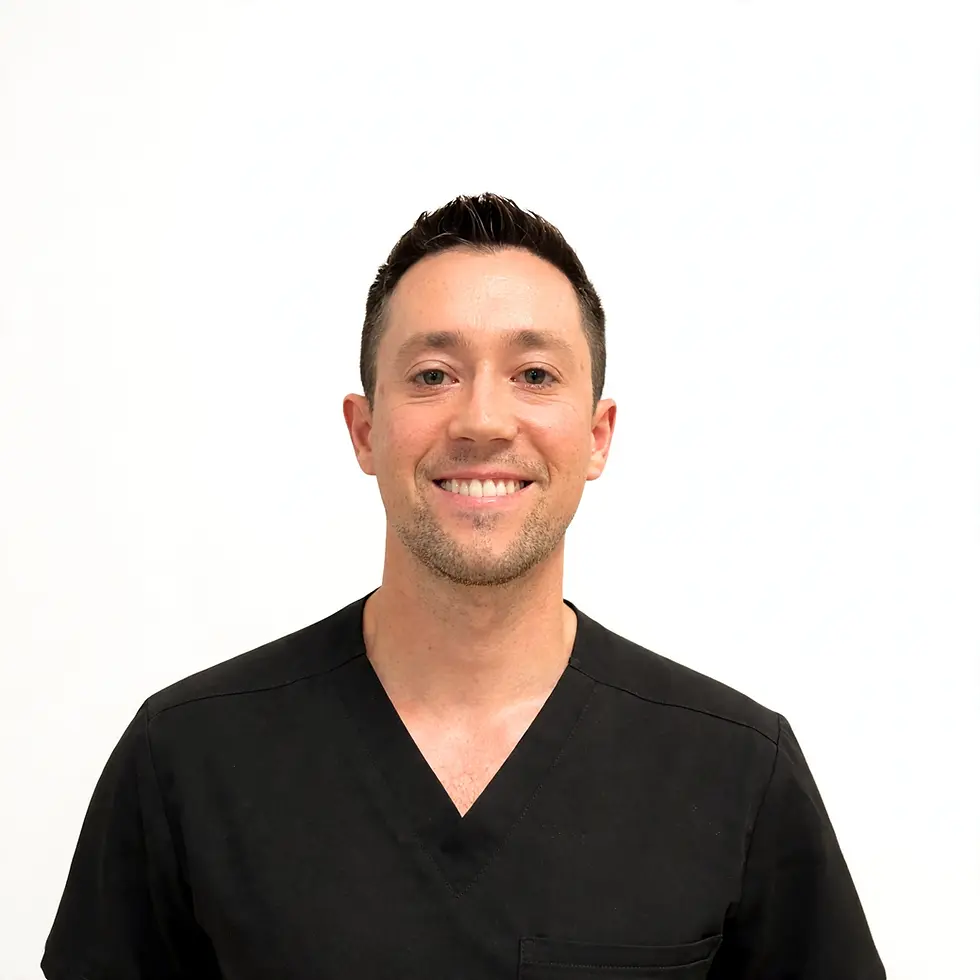
Dr. Pierce Knox
Nonsurgical Orthopedic Specialist
Fellowship trained in nonsurgical sports medicine at Penn Medicine; residency in primary care at Christiana Care.