.png)
)_edited_pn.png)


Hypermobility & Joint Pain: When Flexible Joints Need a Stability Plan
Updated: 18 hours ago
Being "double-jointed" is a fun party trick — until it's not. If your shoulders slip during a workout, your ankles roll on flat ground, your knees ache after a normal day, and you've sprained the same joint more times than you can count, your flexibility may be working against you. Hypermobility is one of the most under-recognized drivers of chronic joint pain we see: people search their symptoms for years ("why do my joints hurt," "shoulder keeps slipping") without realizing the loose joints are the thread connecting them all.
Here's the part that matters: hypermobility itself isn't a disease, and it doesn't automatically need treatment. But when loose joints cause pain, instability, or repeated injury, there's a real plan — and it starts with strength, not stretching.
What Hypermobility Actually Is
Hypermobility means joints move beyond the typical range. It exists on a spectrum:
Generalized joint hypermobility (GJH) — bendy joints without significant symptoms. Common, often harmless, sometimes even advantageous in dance or gymnastics.
Hypermobility spectrum disorder (HSD) — hypermobility plus musculoskeletal symptoms like chronic joint pain or recurrent sprains.
Hypermobile Ehlers-Danlos syndrome (hEDS) — the most common EDS type: hypermobility plus systemic features (easy bruising, stretchy or fragile skin, chronic pain, autonomic symptoms). It's a clinical diagnosis made with specific criteria — not something a single office visit confers.
Clinicians often screen with the Beighton score — a 9-point checklist (can you bend your pinkies back past 90 degrees? touch palms flat to the floor with straight knees? hyperextend elbows and knees?). It's a useful screening tool, but it's not the whole story: some people score low and still have meaningful instability in one or two key joints.
The recognizable pattern: joints that sublux (partially slip) or dislocate, sprains from trivial forces, joints that "click" or ache by day's end, muscle fatigue from muscles working overtime to stabilize what ligaments don't, and sometimes an early start to arthritis in the overworked joints.
Why Stretching Is the Wrong Instinct
This is the most important — and most counterintuitive — point. If your joints are already too loose, aggressive stretching makes the problem worse. The yoga class, the deep static stretches, the partner-assisted "let me push that further" — all of it trains already-lax tissue to be laxer.
What hypermobile joints need is the opposite: controlled strength around the joint. Muscles are the dynamic stabilizers — when ligaments are loose, strong muscles take up the slack. That's why the cornerstone of hypermobility care everywhere in the world is the same: progressive resistance training, proprioception (balance and joint-position work), and load management. Not because it's the conservative answer — because it's the effective one.
A good program emphasizes:
Strength over stretch. Closed-chain and progressive resistance work for the muscles surrounding the unstable joints — rotator cuff and scapular stabilizers for loose shoulders, glute and hip rotator strength for wobbly hips and knees, peroneal and calf strength for rolling ankles.
Proprioception. Balance boards, single-leg work, controlled perturbation drills. Hypermobile joints often have duller position sense; retraining it reduces the "giving way" episodes.
Pacing, not avoidance. Total rest deconditions the stabilizers and guarantees the next flare. The goal is graded loading — enough to build strength, not so much that the joint protests for days.
Support during activity. Bracing or athletic taping for high-risk activities (not all-day bracing, which weakens the very muscles you're building).
Most people with symptomatic hypermobility improve substantially on 8 to 12 weeks of a well-designed program. If you haven't — or if a specific joint keeps failing despite good rehab — that's when a sports-medicine evaluation earns its keep.
Where Injections Fit (Honestly)
Let's be direct, because this is where the internet gets ahead of the evidence.
Ultrasound-guided diagnosis first. In hypermobile patients, the question is always which structure is actually generating the pain — a lax ligament, an irritated tendon working overtime, a labrum catching in an unstable shoulder, early cartilage wear. In-office ultrasound imaging answers that the same day, and it changes the plan.
Prolotherapy has the longest track record for lax ligaments. Dextrose prolotherapy — small injections that provoke a localized healing response in ligaments and tendon attachments — has published support for ligament laxity going back decades, including for recurrent joint instability. It's a reasonable consideration for a specific unstable joint that hasn't responded to rehab.
PRP is a different conversation. Platelet-rich plasma has good evidence for tendons and mild-to-moderate arthritis, but the published evidence for PRP specifically in hypermobile joints or EDS is preliminary — small series and clinical reasoning, not robust trials. We offer it selectively when the pain generator is a structure PRP is actually known to help (an irritated tendon, an arthritic joint), not as a way to "tighten" ligaments. No injection reliably tightens a loose ligament, and you should be skeptical of anyone who tells you otherwise.
The honest framework: rehab builds the stability, imaging finds the true pain source, and injections are a targeted tool for specific structures — not a substitute for the strength work.
When to Get Evaluated Rather Than Waiting
See a clinician promptly if:
A joint dislocates (fully comes out) — especially more than once
You have recurrent subluxations despite a solid 8–12 weeks of strength and proprioception work
Pain is worsening, focal, or limiting daily function despite activity modification
You have signs suggesting something beyond simple hypermobility: unusual skin fragility, poor wound healing, easy and extensive bruising, or a family history of EDS or aortic/vascular problems — these warrant referral to genetics or rheumatology for formal evaluation, since vascular EDS carries risks that change management entirely
A child or teen is having repeated injuries — early guidance on training and sport selection pays dividends for decades
A formal EDS diagnosis is a clinical process involving specific criteria and sometimes genetic testing — our role is the musculoskeletal side: stabilizing what can be stabilized, identifying true pain generators, and getting you back to activity safely.
Frequently Asked Questions
Is hypermobility the same as Ehlers-Danlos syndrome? No. Hypermobility is a trait; EDS is a group of connective-tissue disorders, of which hypermobile EDS is one type. Many hypermobile people don't have EDS. A formal diagnosis requires meeting published clinical criteria — it's worth getting right, because it changes screening and management.
Can you fix loose joints? You can't make ligaments short again with exercise or injections. What you can do — reliably — is build the muscular stability around the joint so the looseness stops causing pain and injury. That's the actual goal, and it works.
Should hypermobile people avoid stretching entirely? Not entirely — gentle mobility to maintain normal range is fine. What's counterproductive is aggressive end-range stretching, partner stretching, and "flexibility training" as a goal. If you're hypermobile, your training goal is stability, not more range.
My shoulder keeps slipping during workouts. Do I need surgery? Usually not. Most atraumatic instability in hypermobile patients responds to targeted rotator cuff and scapular strengthening. Surgery for instability is generally reserved for structural damage (like a significant labral tear) or failure of good rehab — and in hypermobile patients, surgical outcomes for instability deserve an especially careful conversation, since the underlying tissue laxity remains.
Will PRP tighten my ligaments? No — and that's an honest answer worth having before anyone sells you the procedure. PRP supports healing in tendons and joints with published evidence behind it; it is not a ligament-tightening treatment. For ligament laxity specifically, prolotherapy has the deeper published history, and neither replaces strength training.
Take the Next Step
Hypermobility explains a lot of mysterious joint pain — and once it's recognized, the plan is refreshingly practical: find the true pain generators, build strength where it counts, and use targeted treatments for the structures that need them. If your joints have been telling you something for years, it's worth getting a straight answer.
Call Carolina Nonsurgical Orthopedics at 919.719.2270 or schedule your visit online. With offices in Raleigh and Cary, NC — and in-office X-ray and ultrasound for same-day answers — we'll determine exactly what's hurting and build a plan around stability, not just symptom-chasing.
About Your Physicians
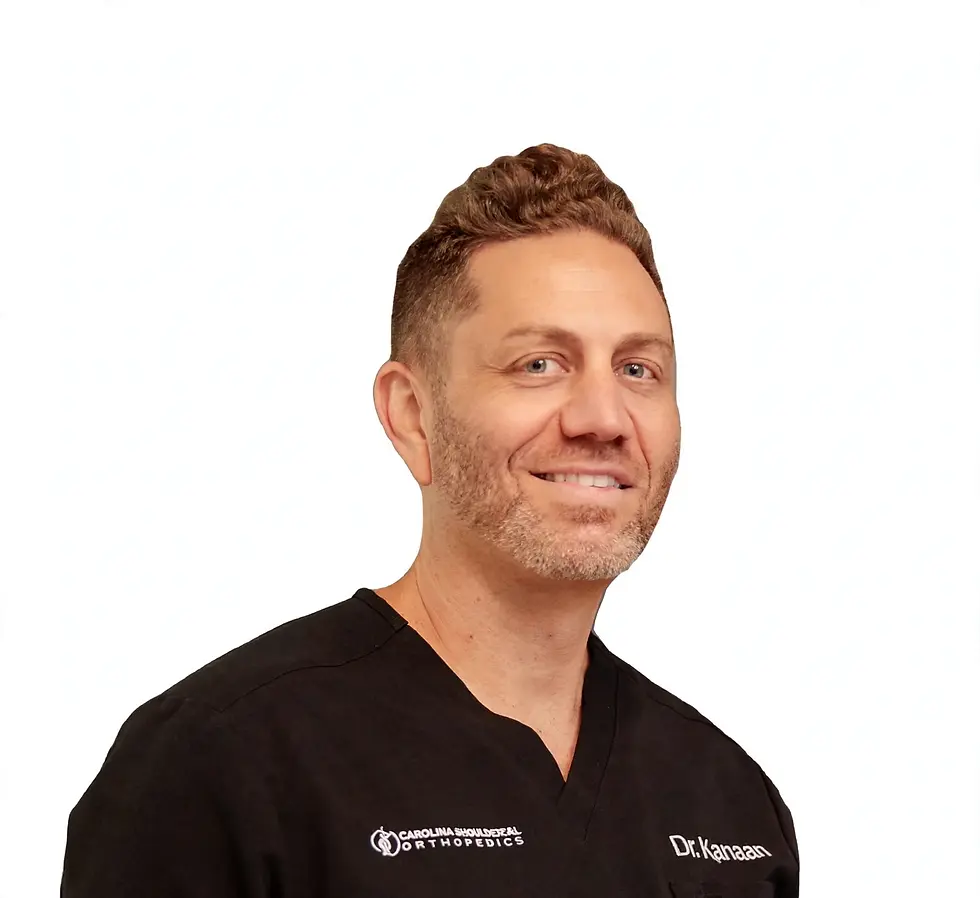
Dr. Matthew Kanaan
Nonsurgical Orthopedic Specialist
Founder of Carolina Nonsurgical Orthopedics. Fellowship trained in sports medicine at Duke; residency in family medicine at Duke, where he served as Chief Resident.
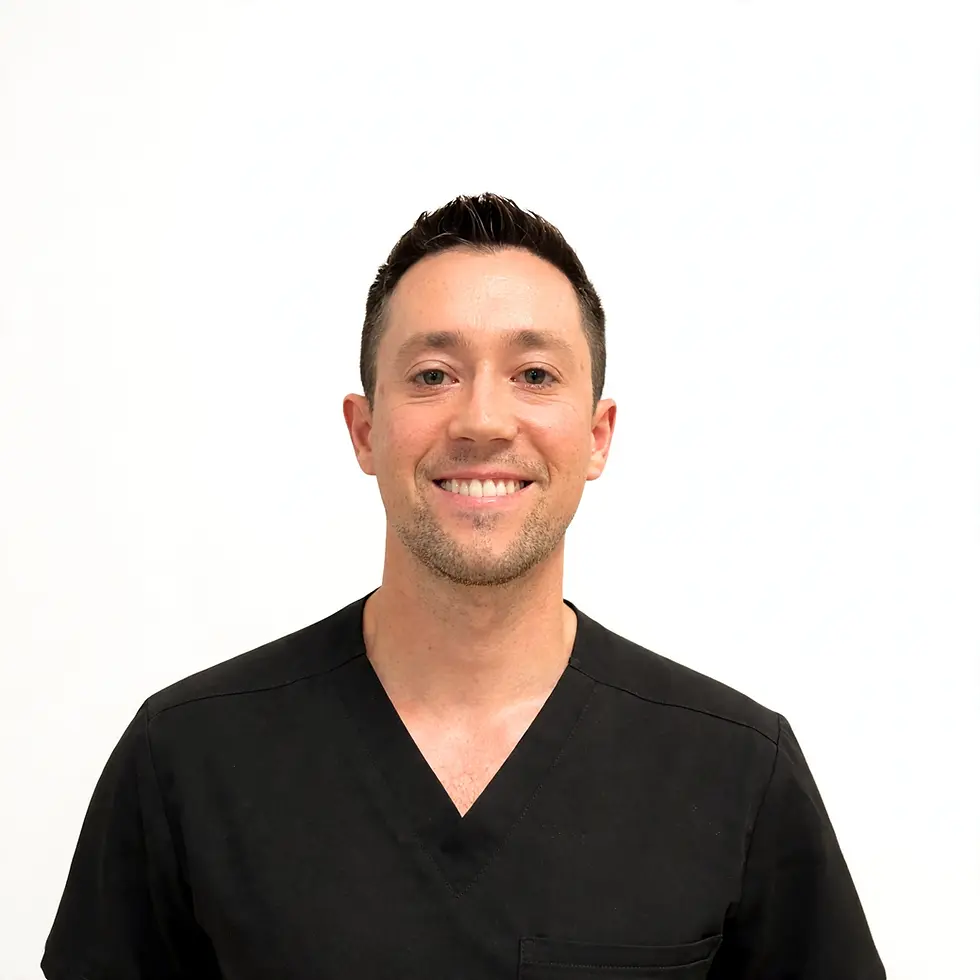
Dr. Pierce Knox
Nonsurgical Orthopedic Specialist
Fellowship trained in nonsurgical sports medicine at Penn Medicine; residency in primary care at Christiana Care.