.png)
)_edited_pn.png)


Pain After Knee Replacement: Causes & Nonsurgical Options
Updated: 18 hours ago
A knee replacement is supposed to end the pain, not relocate it. For most people it does — the grinding bone-on-bone ache disappears and life gets moving again. But for a meaningful minority, months after surgery the knee still aches, swells, stiffens, or burns — and the most frustrating part is hearing "the X-ray looks fine" when it clearly isn't.
Persistent pain after knee replacement is more common than most patients are told — research has found roughly 10 to 20 percent still have meaningful pain a year or more later. If you're in that group, you are not imagining it. Many causes are treatable without another operation — but the diagnosis has to be right first, because a few genuinely require going back to the surgeon.
Rule Out the Emergencies First
Before anything else, some symptoms after knee replacement demand prompt surgical evaluation — not a wait-and-see approach.
Signs of possible infection: increasing pain with fever, chills, redness, warmth, swelling, or any drainage from the incision — even months or years later. An infected implant can be limb-threatening, often requires surgical treatment, and delay makes things worse. Contact your operating surgeon or go to urgent care promptly.
Signs of possible loosening or instability: sudden new pain after a fall, a feeling the knee is giving way, new deformity, or rapidly increasing swelling — possible loose implant or fracture around it.
This page is about the much larger group whose implants are fine but whose knees still hurt. With red-flag symptoms, stop reading and call your surgeon.
Why a "Successful" Replacement Can Still Hurt
A knee replacement resurfaces the joint — not the muscles, tendons, nerves, and soft tissues around it. Pain after the bone work heals usually comes from those surrounding structures, or from subtle issues a standard X-ray doesn't show.
Arthrofibrosis (stiffness and scar tissue). Some knees form excessive scar tissue after surgery, leaving the joint stiff and achy — especially with bending or prolonged sitting. Stiffness that never resolved after rehab, or worsened, points here.
Patellofemoral problems. The kneecap is a frequent source of lingering pain — especially on stairs, rising from a chair, or after sitting with the knee bent. Even with a resurfaced patella, maltracking can keep the front of the knee irritated.
Nerve-related pain. Small skin nerves around the incision can form painful neuromas — burning or hypersensitivity, sometimes just from a bedsheet touching the knee. A subset of patients develops complex regional pain syndrome, with disproportionate burning pain plus color or temperature changes.
Tendinopathy around the implant. The quadriceps and patellar tendons, the IT band, and the pes anserine tendons all attach near the surgical field and can become chronically irritated — especially if gait changed after surgery. None of this shows on a standard implant X-ray.
Subtle instability or malalignment. A knee can look fine on X-ray yet have soft-tissue imbalance — too tight on one side, too loose on the other — causing insecurity, recurrent swelling, or pain with pivoting.
Referred pain. Hip arthritis and other problems can refer pain to the knee. A knee that "failed" may be an innocent bystander.
Implant-related issues. True loosening, wear, or metal sensitivity are less common but real — and they're the domain of revision surgery, not injections. Exactly why evaluation comes first.
How Persistent Knee Replacement Pain Is Evaluated
Sorting this out takes more than a glance at an X-ray:
A detailed history. Was the pain never gone, or did it return after a pain-free interval? What makes it worse — aching, burning, sharp, or unstable-feeling? Each pattern points somewhere different.
A hands-on exam. Range of motion, stability testing, palpation of the tendons and incision, kneecap tracking, and a neurologic check for nerve-pain patterns.
Imaging. Weight-bearing X-rays check implant position and alignment. In-office ultrasound is particularly useful here — it visualizes the tendons, bursae, and soft tissues around the implant in real time, exactly where X-rays are blind. CT or MRI with metal-suppression protocols may be ordered when loosening is suspected.
Labs. When infection is even a remote consideration, blood work and sometimes joint aspiration are part of the workup — coordinated with the surgical team.
Treatment follows the diagnosis — not a generic label of "failed knee replacement."
Nonsurgical Treatments That Can Help
Once infection, loosening, and fracture are ruled out, a surprising amount of post-replacement pain responds to nonsurgical care — because much of it lives in the soft tissues, not the implant.
Shockwave therapy. Extracorporeal shockwave therapy uses acoustic pressure waves to stimulate healing in chronic tendon and soft-tissue problems. Around a knee replacement, it's commonly used for patellar and quadriceps tendinopathy, IT band irritation, and pes anserine pain — the exact structures X-rays can't see. It's noninvasive, done in the office, and pairs well with rehab.
Laser therapy and EMTT. Low-level laser and electromagnetic transduction therapy are noninvasive options used to calm soft-tissue pain and support healing around the joint — useful adjuncts for diffuse irritation or stiffness that hasn't responded to rehab alone.
PRP for soft-tissue contributors. Platelet-rich plasma is not a treatment for a loose or infected implant — no injection fixes hardware. But when the pain generator is a chronically irritated tendon or ligament around a well-fixed implant, ultrasound-guided PRP can support healing in that tissue. Patient selection is everything, and an honest conversation about the actual cause comes first.
Genicular nerve treatments. For pain with a significant nerve-mediated component in patients who aren't candidates for (or don't want) revision surgery, genicular nerve blocks — and in some cases ablation — can reduce pain signals from the knee.
Physical therapy — done right. Generic post-op protocols and targeted therapy for a specific diagnosed problem are different things. A focused program built around the actual diagnosis, not the calendar, is often where progress finally happens.
Bracing and offloading. A brace or hinged sleeve can reduce pain during activity for soft-tissue overload patterns while other treatments take effect.
What nonsurgical care cannot do deserves equal emphasis: it cannot re-seat a loose implant or clear an infection. Anyone promising injections as an alternative to a needed revision is selling something, not practicing medicine.
When Revision Surgery Is the Right Call
Revision — replacing or fixing part or all of the implant — is major surgery and the last resort, but it's the right call for confirmed infection, radiographic loosening, fracture around the implant, severe instability bracing can't control, or progressive malalignment problems.
The decision belongs with an experienced revision surgeon. Our role is honest triage: evaluate thoroughly, treat what's treatable nonsurgically, and refer promptly when the problem is mechanical. (Our joint replacement pain treatment page covers the full range of options we offer for painful replacements.) Sending a loose implant for shockwave would be indefensible; sending patellar tendinopathy for revision would be equally wrong. The diagnosis decides.
Pain After Knee Replacement in Raleigh and Cary
Persistent pain after knee replacement is one of the most under-evaluated problems we see — patients get told the X-ray looks good and run out of road. At our Raleigh and Cary offices, we start by finding exactly what's hurting: exam, in-office X-ray, and ultrasound to see what standard imaging misses. Many post-replacement patients turn out to have treatable soft-tissue problems that were never specifically diagnosed — and those are the cases where shockwave, laser, targeted injections, and focused rehab change the trajectory without another operation.
Frequently Asked Questions
My surgeon says the X-ray looks perfect, but my knee still hurts. What now? A normal implant X-ray rules out the big mechanical failures — good news — but says nothing about tendons, bursae, nerves, or scar tissue, where persistent pain usually lives. Next step: a soft-tissue-focused evaluation with exam plus ultrasound around the implant.
Can shockwave therapy be used near a knee implant? Yes — shockwave targets soft tissues (tendons, fascia, bursae), not the implant itself. It's commonly used for patellar tendinopathy and IT band irritation around well-fixed implants. It should not be used over an infected joint or a loose implant, which is why evaluation comes first.
Will PRP help pain after my knee replacement? Only if the cause is soft tissue. PRP treats irritated tendons and ligaments around the implant — not the implant itself. If your pain comes from patellar tendinopathy or a similar problem, it may help. If the implant is loose or infected, no injection is appropriate. An honest diagnosis is the prerequisite.
How do I know if I need revision surgery? Fever, redness, drainage, sudden instability after injury, rapidly worsening pain, or X-ray evidence of loosening need a revision surgeon's evaluation promptly. Gradual aching, stiffness, or burning without those features is more often a soft-tissue problem — still worth evaluating, but not a surgical emergency.
Take the Next Step
If your knee replacement never delivered the relief you were promised — or the pain came back — don't settle for "the X-ray looks fine." A targeted evaluation of the soft tissues around the implant often finds a treatable cause standard follow-up missed.
Call Carolina Nonsurgical Orthopedics at 919.719.2270 or schedule your visit online. With offices in Raleigh and Cary, NC, we'll find what's actually hurting — including telling you honestly when the answer is a revision surgeon, not us.
About Your Physicians
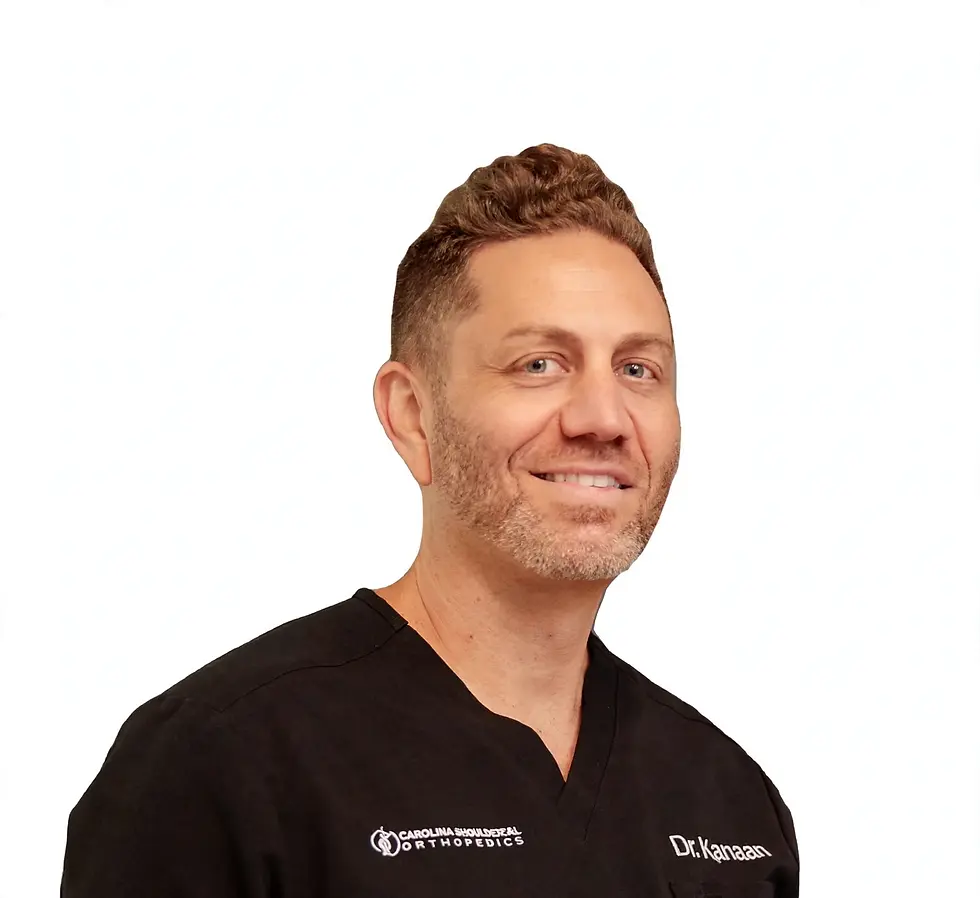
Dr. Matthew Kanaan
Nonsurgical Orthopedic Specialist
Founder of Carolina Nonsurgical Orthopedics. Fellowship trained in sports medicine at Duke; residency in family medicine at Duke, where he served as Chief Resident.
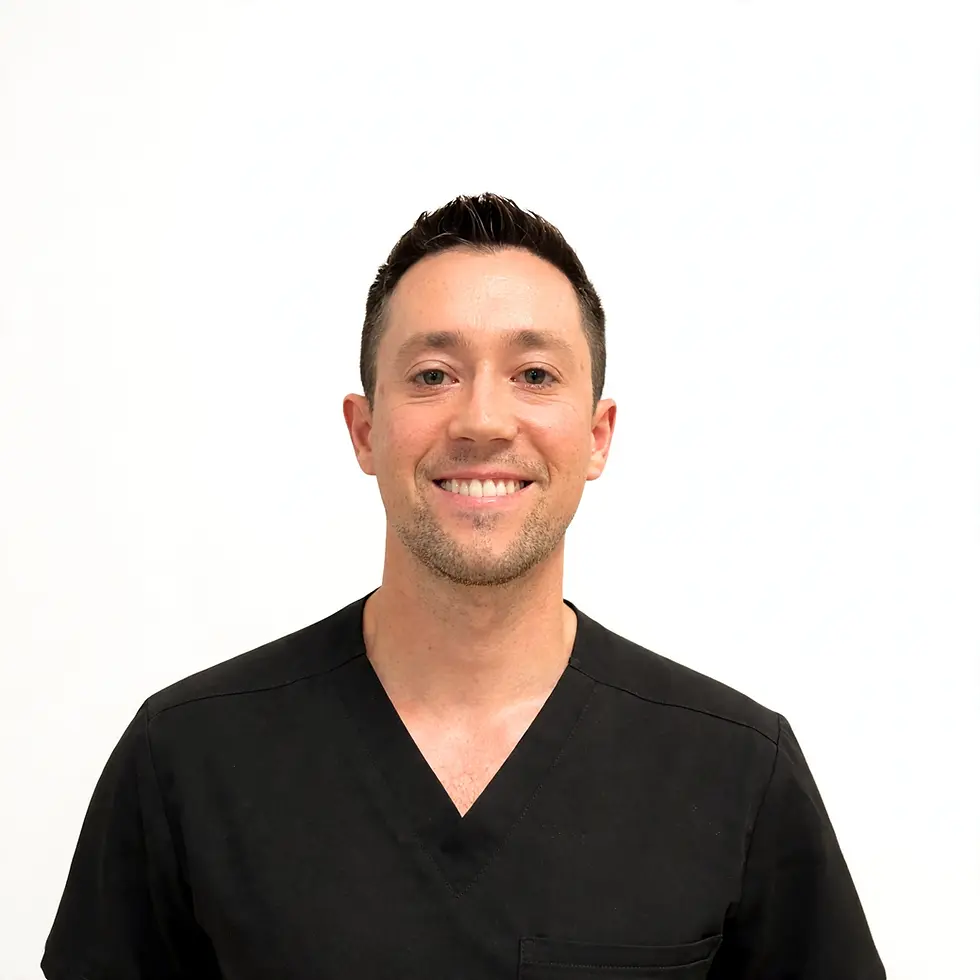
Dr. Pierce Knox
Nonsurgical Orthopedic Specialist
Fellowship trained in nonsurgical sports medicine at Penn Medicine; residency in primary care at Christiana Care.