.png)
)_edited_pn.png)


PRP for Knee Arthritis: What the Research Actually Shows
Updated: 17 hours ago
The Most Studied PRP Application in Orthopedics
If there's one joint where PRP has been put through its paces, it's the knee. Dozens of randomized trials and multiple meta-analyses have tested platelet-rich plasma for knee osteoarthritis — more than for any other condition in orthopedics. That volume of research is a double-edged sword: it means real answers exist, but also a lot of cherry-picked marketing.
This post is the plain-English version: what the trials actually show, where PRP beats the alternatives, who benefits most, and what it honestly cannot do.
What PRP Does Inside an Arthritic Knee
Osteoarthritis isn't just "worn cartilage" — it's a whole-joint disease involving chronic low-grade inflammation of the synovial lining. PRP's proposed mechanism: a concentrated dose of the patient's own platelets releases growth factors (PDGF, TGF-β, IGF, VEGF among others) that modulate that inflammatory environment and may support the joint's remaining tissues.
The key word is modulate. PRP doesn't regrow cartilage that's gone — no injectable does, and any clinic promising regrowth is selling something the evidence doesn't support. What PRP appears to do is quiet the inflammatory signaling driving pain and stiffness, which is why patients feel better and move better even though their X-ray looks the same afterward.
PRP vs. the Alternatives: What the Trials Say
PRP vs. placebo (saline): PRP wins, consistently. Multiple RCTs show meaningful pain and function improvement over saline injection — this isn't just the needle effect.
PRP vs. corticosteroid: Cortisone works faster (days) but fades within weeks to a few months. PRP takes weeks to kick in but the benefit typically lasts 6–12 months, and in head-to-head trials PRP outperforms steroids at the 6- and 12-month marks. Different tools: cortisone for a quick flare knockdown, PRP for durable improvement.
PRP vs. hyaluronic acid ("gel shots"): Several meta-analyses find PRP superior to HA for pain relief at 6–12 months, particularly in mild-to-moderate arthritis. Gel shots have a modest, debated effect size; PRP's is larger in most comparisons.
PRP vs. doing nothing / PT alone: PRP is an add-on, not a replacement. The best outcomes in practice combine PRP with quadriceps strengthening, activity modification, and weight management — the injection calms the joint, the rehab protects it.
Who Benefits Most
The trials are consistent on this: mild-to-moderate osteoarthritis responds best. Patients with preserved joint space and an active inflammatory component — pain, swelling, stiffness — see the largest gains. Bone-on-bone disease with major malalignment responds less; PRP can still reduce pain there, but expectations need calibrating, and cell therapy (MFAT) or surgical evaluation may be the more honest conversation.
Other positive predictors: lower BMI, younger age, and realistic activity goals. Knee arthritis in a 55-year-old who wants to hike again is the sweet spot; end-stage deformity in someone who can't walk a block is a different discussion.
The Details That Affect Results
Not all PRP is the same, and the literature reflects it:
Leukocyte-rich vs. leukocyte-poor: LP-PRP is generally favored for the knee joint itself (fewer inflammatory white cells inside the joint); LR-PRP has proponents for extra-articular tendon targets. We use leukocyte-poor formulations for intra-articular knee injections.
Single vs. series: Most knee OA protocols use a series (commonly 2–3 injections weeks apart) rather than a single shot; the series data looks better.
Dose and concentration: Higher platelet concentrations trend toward better outcomes in the dose-response analyses.
Ultrasound guidance: The knee joint is a big target and palpation-guided injections are usually accurate — but for precise placement (especially with effusion or difficult anatomy), we guide.
What PRP Can't Do
Regrow cartilage. Saying it again because it matters: no credible trial shows PRP rebuilding lost joint cartilage in humans.
Fix malalignment. A bowlegged knee overloading its inner compartment needs mechanical correction (bracing, weight loss, eventually realignment surgery) — biology can't overcome physics.
Work forever. Benefits typically last 6–12+ months; many patients repeat treatment annually as part of a long-term joint-preservation strategy.
PRP vs. MFAT (Cell Therapy) for the Knee
Patients often ask which to choose. The honest framework: PRP is the first-line orthobiologic — lower cost, minimal downtime, strong trial support for symptom improvement. **MFAT** — the adipose-derived cell therapy — involves a mini-liposuction procedure, costs more, and has evidence for longer-lasting relief (studies support 2–3 years). Many patients start with PRP; those wanting a bigger, longer-acting intervention, or with more advanced disease, consider MFAT. They're complementary, not competing.
What the Procedure Is Like
Blood draw, processing (about 20–30 minutes), ultrasound-guided injection into the knee joint. Soreness for a few days is common — that's the inflammatory phase of the healing response, not a complication. Most patients resume normal activity within days and notice improvement building over 4–8 weeks.
The Bottom Line
PRP for knee arthritis has the deepest evidence base of any orthobiologic application in orthopedics: better than placebo, more durable than cortisone, generally superior to gel shots, best in mild-to-moderate disease. It's not cartilage regrowth and it's not forever — but for the right knee, it's the best-studied nonsurgical intervention we have.
Schedule Your Evaluation
Call Carolina Nonsurgical Orthopedics at 919.719.2270 or schedule your visit online. With offices in Raleigh and Cary, NC — and in-office X-ray to grade your arthritis the same day — we'll tell you whether your knee is a PRP knee, an MFAT knee, or a knee that needs a different conversation.
About Your Physicians
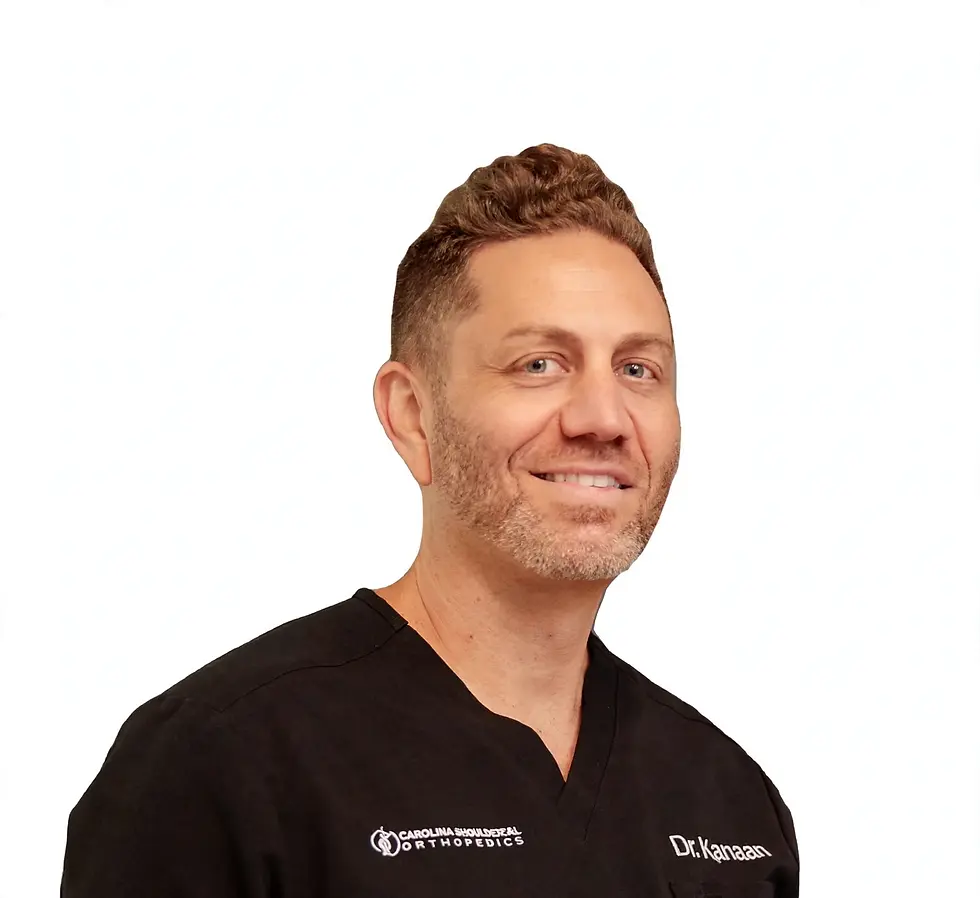
Dr. Matthew Kanaan
Nonsurgical Orthopedic Specialist
Founder of Carolina Nonsurgical Orthopedics. Fellowship trained in sports medicine at Duke; residency in family medicine at Duke, where he served as Chief Resident.
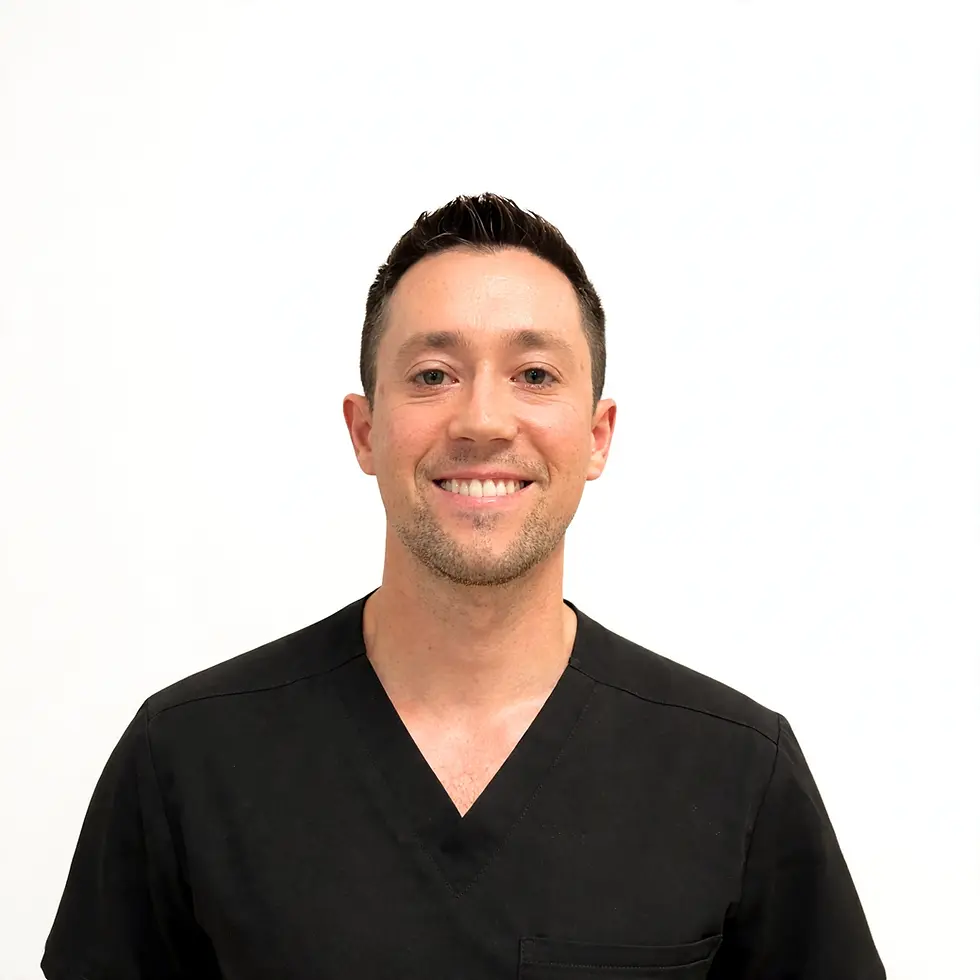
Dr. Pierce Knox
Nonsurgical Orthopedic Specialist
Fellowship trained in nonsurgical sports medicine at Penn Medicine; residency in primary care at Christiana Care.