.png)
)_edited_pn.png)


What to Do When Your Knee Locks Up: Causes and Next Steps
A Locking Knee Is a Mechanical Problem — Treat It Like One
There's knee pain, and then there's a knee that physically won't move. Locking — the joint catching and refusing to straighten or bend — means something is mechanically interfering inside the joint. This is different from pain, stiffness, or giving way, and it needs a different response.
Common Causes
Bucket-handle meniscus tear — the classic cause. A displaced meniscal fragment flips into the joint and jams it. Often the knee locks bent and won't fully straighten.
Loose bodies — fragments of cartilage or bone floating in the joint ("joint mice"). They drift, then wedge at the wrong moment. Classic story: "it locked getting out of the car, then unlocked on its own."
Meniscal flap tear — a smaller unstable fragment that catches intermittently.
Patellar maltracking with catching — less common as a true lock, but patients describe the sensation similarly.
What to Do in the Moment
Don't force it. Gentle wiggling and slowly bending/straightening sometimes dislodges the fragment — many patients learn their own unlocking maneuver. Forcing through a true mechanical block risks damaging the cartilage the fragment is wedged against.
What's Urgent vs. What's Not
Urgent (same day): knee locked and cannot be unlocked, especially with significant pain or after trauma. A locked joint compresses cartilage abnormally — it shouldn't stay that way.
Soon (this week): recurrent locking episodes, even if they self-resolve. Each episode is cartilage taking a hit.
Routine: a single brief catching sensation with no pain or swelling. Worth mentioning at your next visit, not an emergency.
How Locking Changes the Treatment Math
This is the key point: a locking knee is one of the clearest surgical indications in knee orthopedics. Unlike degenerative meniscus pain (where sham trials question the scope), a displaced bucket-handle tear jamming the joint is a mechanical problem that rehab and injections can't fix. The fragment has to be addressed — usually arthroscopically, ideally repaired rather than removed when the tissue allows.
What we do: confirm the cause with exam and imaging, and if it's a true mechanical block, refer you to the right surgeon promptly. We don't inject locked knees and hope. Conversely, if the "locking" turns out to be pseudo-locking from pain or quad inhibition rather than a true mechanical block, that's a nonsurgical problem — and the distinction matters enormously.
Don't Wait It Out
Every locking episode is a cartilage injury happening in real time. If your knee is catching or locking, call Carolina Nonsurgical Orthopedics at 919.719.2270 or schedule online. Offices in Raleigh and Cary, NC. We'll determine whether it's a true mechanical block — and get you to the right fix without delay.
About Your Physicians
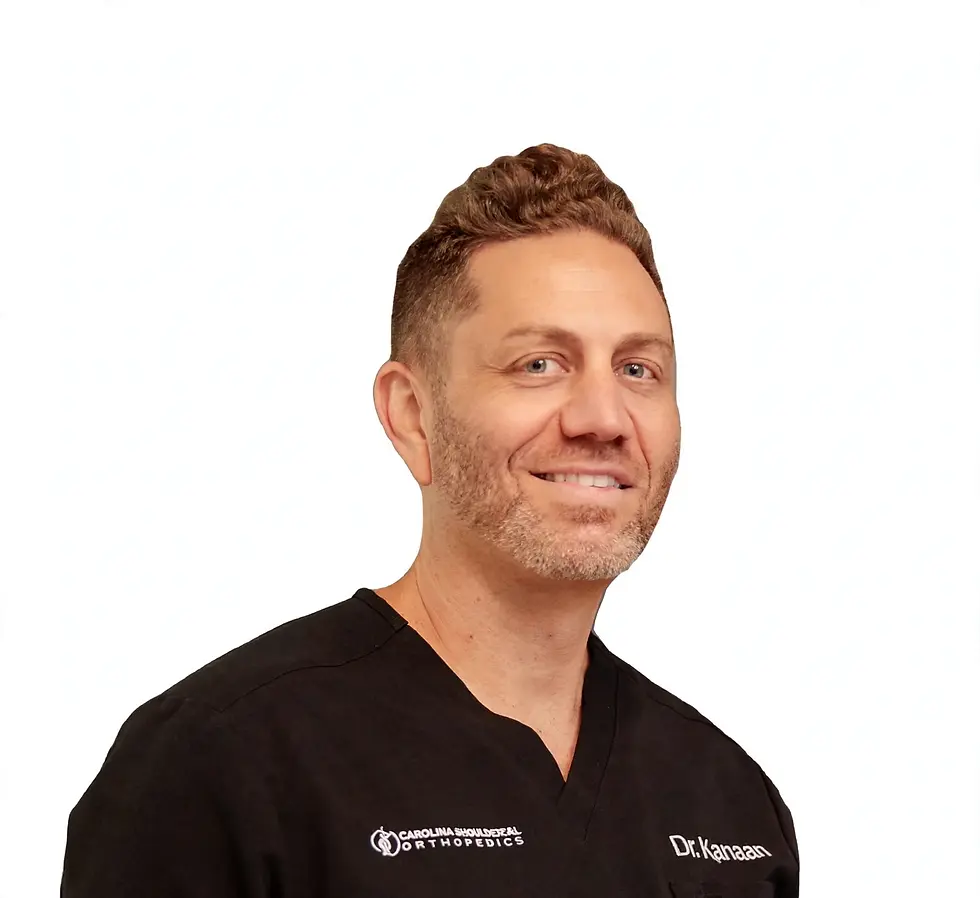
Dr. Matthew Kanaan
Nonsurgical Orthopedic Specialist
Founder of Carolina Nonsurgical Orthopedics. Fellowship trained in sports medicine at Duke; residency in family medicine at Duke, where he served as Chief Resident.

Dr. Pierce Knox
Nonsurgical Orthopedic Specialist
Fellowship trained in nonsurgical sports medicine at Penn Medicine; residency in primary care at Christiana Care.