.png)
)_edited_pn.png)


hEDS Treatment in Raleigh & Cary: Specialized Musculoskeletal Care for Hypermobile Ehlers-Danlos Syndrome
When "You're Just Flexible" Isn't the Whole Story
Patients with hypermobile Ehlers-Danlos syndrome (hEDS) hear it constantly: you're just flexible, just stretch more, just strengthen. Meanwhile they're dealing with joints that sublux doing ordinary things, chronic pain that migrates around the body, and a medical system that often doesn't know what to do with them.
We see a lot of hEDS patients at Carolina Nonsurgical Orthopedics — and the musculoskeletal side of this condition is squarely in our wheelhouse. This post covers how we approach it.
What hEDS Does to the Musculoskeletal System
hEDS is a genetic connective tissue disorder. The collagen that should hold joints stable is stretchier than it should be, which creates a predictable pattern:
Joint instability — partial dislocations (subluxations) and full dislocations, sometimes from trivial movements
Chronic widespread musculoskeletal pain — from joints constantly moving beyond their stable range
Poor proprioception — the body's position sense is dulled, so joints get injured before the brain registers the danger
Soft tissue injury — tendinopathies and ligament sprains accumulate because nothing is holding quite tight enough
Higher surgical failure rates — published data shows hypermobile patients have worse outcomes from stabilizing surgeries, which makes the nonsurgical route especially important to get right
The standard orthopedic playbook — rest it, inject cortisone, scope it — was not designed for this population. That's why hEDS patients need a different approach, not just the same treatments.
Our Approach: Stability First, Everything Else Second
1. The right physical therapy — which is the opposite of what most people get
The single most important intervention in hEDS is physical therapy focused on strength, stability, and proprioception — and critically, not on stretching. Generic PT that emphasizes flexibility actively makes hypermobile patients worse. We refer to therapists who understand hypermobility and can build the muscular stability that the ligaments can't provide.
2. Ultrasound-guided diagnosis of the actual pain generators
hEDS pain is often dismissed as "just the EDS." We don't accept that. With in-office ultrasound and X-ray, we identify the specific structures driving pain — the unstable joint, the degenerative tendon, the irritated bursa — so treatment targets something real.
3. Prolotherapy for ligament laxity
Dextrose prolotherapy has the longest history of any injection treatment for ligament laxity — it was originally developed specifically for unstable, lax ligaments. For hEDS patients with chronically painful, unstable joints or ligamentous pain that hasn't responded to rehab, prolotherapy is a reasonable option. We'll be straight with you: the modern trial evidence is modest, but the mechanistic rationale for lax ligaments is the strongest of any prolotherapy indication.
4. PRP for the tendinopathies and joint pain that come with hEDS
Hypermobile patients develop the same tendinopathies and arthritis as everyone else — often earlier and more frequently. PRP treats those the same way it does in the general population: ultrasound-guided, to the specific lesion. The hEDS-specific consideration is that we treat the structure while the stability program protects it.
5. Bracing for unstable joints
Sometimes the right answer is mechanical support, not a needle. We fit and dispense braces for joints that need external stability — and unlike the DME-mill model, bracing here is part of a coordinated plan, not a standalone sale.
6. MLS laser and shockwave for the surrounding tissue
Chronic guarding, myofascial pain, and secondary tissue irritation are constant companions in hEDS. MLS laser and shockwave address the muscular fallout around unstable joints — the same "treat the neighborhood" logic we apply across the practice.
What We Don't Do
We don't claim to treat hEDS itself. It's a systemic genetic condition; there is no cure and no injection fixes collagen. We treat its musculoskeletal consequences.
We don't do the standard stretch-more PT. If a therapist tells an hEDS patient to work on flexibility, that's a red flag.
We don't rush to injections. In hEDS, the stability program comes first. Injections are for specific structures that stay painful despite proper rehab — not a substitute for it.
Diagnosis stays with the right specialists. If you suspect undiagnosed hEDS, that evaluation belongs with rheumatology or genetics. We manage the joints once the diagnosis is established — and we're happy to coordinate.
Why hEDS Patients End Up Here
Frankly: because they've been everywhere else. The typical story is years of being told the pain is in their head, PT that made things worse, and surgeons who (correctly, in many cases) didn't want to operate on hypermobile joints. A nonsurgical sports medicine practice that understands instability, images every joint before treating it, and builds the plan around stability rather than procedures is what this population has been looking for.
We also wrote a broader overview on hypermobility and joint pain and maintain detailed information on our hypermobility treatment approach.
Schedule Your Evaluation
Call Carolina Nonsurgical Orthopedics at 919.719.2270 or schedule your visit online. With offices in Raleigh and Cary, NC, we'll evaluate your joints, map the instability pattern, and build a stability-first plan — whether or not that plan includes a needle.
About Your Physicians
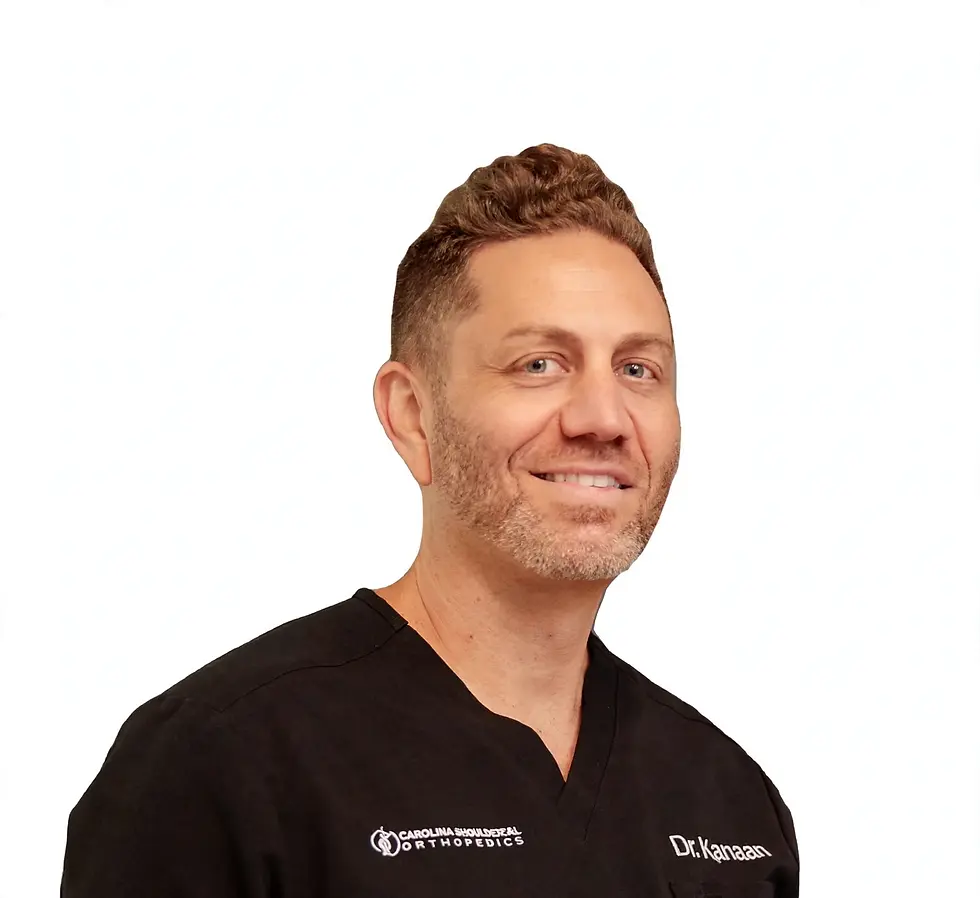
Dr. Matthew Kanaan
Nonsurgical Orthopedic Specialist
Founder of Carolina Nonsurgical Orthopedics. Fellowship trained in sports medicine at Duke; residency in family medicine at Duke, where he served as Chief Resident.
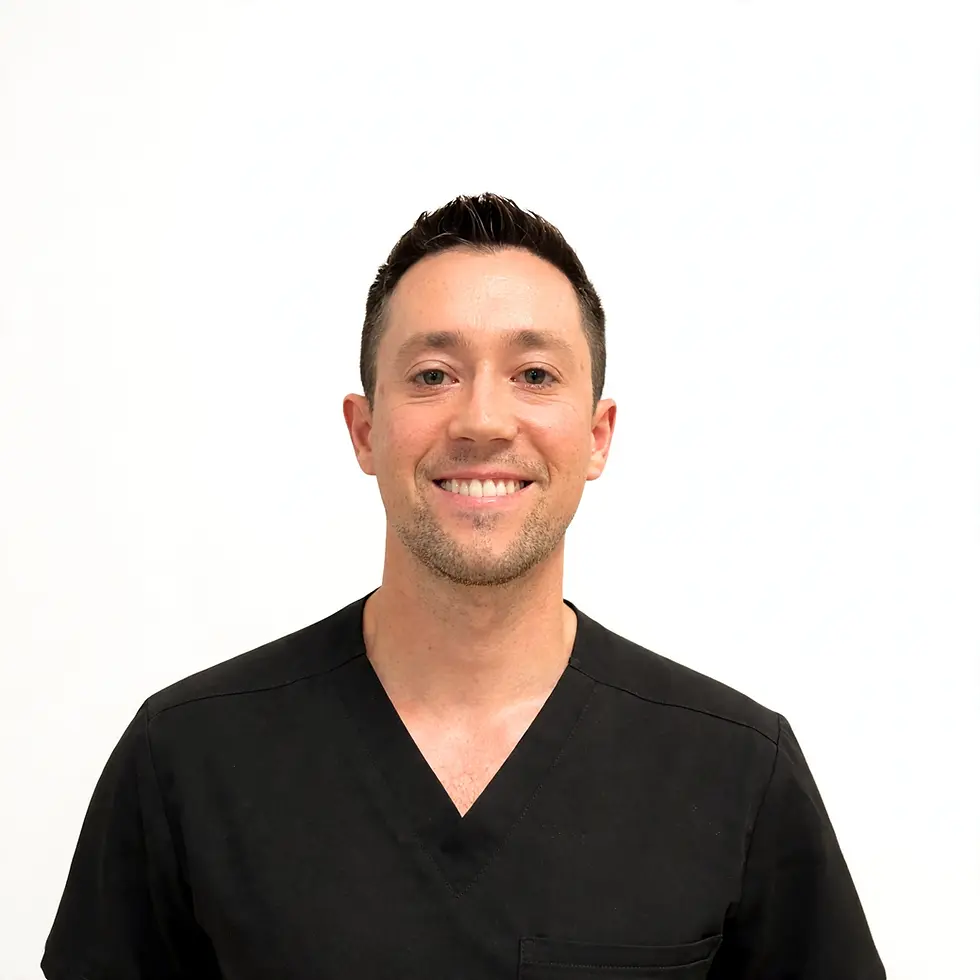
Dr. Pierce Knox
Nonsurgical Orthopedic Specialist
Fellowship trained in nonsurgical sports medicine at Penn Medicine; residency in primary care at Christiana Care.