


Gamekeeper's Thumb (Thumb UCL Injury): Skier's Thumb Explained
Updated: Oct 14
Quick answer: Gamekeeper's thumb is a tear of the ulnar collateral ligament (UCL) of the thumb's metacarpophalangeal (MCP) joint — the big knuckle at the base of your thumb. The mechanism is a sudden force that bends the thumb away from the hand — radial deviation stress on the MCP joint.
The name sounds like a historical curiosity. The injury is anything but — it's one of the most common serious thumb injuries, and missing it can cost you your pinch grip permanently. If you fell onto an outstretched hand, jammed your thumb on a ski pole, or took a ball to the thumb and now the inner side of the thumb joint is swollen and unstable, keep reading.
What Is Gamekeeper's Thumb?
Gamekeeper's thumb is a tear of the ulnar collateral ligament (UCL) of the thumb's metacarpophalangeal (MCP) joint — the big knuckle at the base of your thumb. This ligament stabilizes the thumb against sideways forces. When it tears, the thumb becomes unstable, and pinch and grip strength collapse.
The name comes from Scottish gamekeepers who developed the injury chronically from breaking rabbits' necks between thumb and forefinger. Today the acute version is far more common — it's also called skier's thumb, from falls where the ski pole forces the thumb outward. Football players, basketball players, and anyone who's fallen onto an outstretched hand gets it the same way.
How It Happens
The mechanism is a sudden force that bends the thumb away from the hand — radial deviation stress on the MCP joint. Classic scenarios:
Falling onto an outstretched hand (FOOSH) — the most common cause overall
Skiing fall with the thumb caught in the pole strap
Ball sports — catching a pass or a ground ball wrong
A direct blow to the inner thumb during contact sports
You may feel a pop at the time, followed by swelling and bruising along the inner (ulnar) side of the thumb's base joint. Trying to pinch — holding a pen, turning a key, buttoning a shirt — feels weak and unstable.
Grading: Not All UCL Tears Are Equal
Like ligament injuries elsewhere, thumb UCL injuries fall on a spectrum:
Grade I (sprain): Ligament stretched, fibers intact. Tender but stable. This heals well with immobilization.
Grade II (partial tear): Some fibers torn. Mild laxity but a firm endpoint on exam — the ligament is still doing its job. Usually nonsurgical.
Grade III (complete tear): Ligament fully disrupted. The thumb opens up with no firm endpoint. This is where the surgical conversation starts.
The exam that sorts this out is valgus stress testing of the thumb MCP joint — the physician gently stresses the thumb sideways at the joint, both straight and slightly bent, comparing to the other thumb. More than about 30–35 degrees of opening, or 15+ degrees more than the uninjured side with no firm endpoint, points to a complete tear.
The Stener Lesion: The One That Can't Heal on Its Own
Here's the critical detail that makes this injury different from a routine sprain. In some complete tears, the torn end of the ligament flips back and gets trapped on top of the adductor aponeurosis — a thin sheet of tissue over the joint. This is called a Stener lesion, and it's a surgical problem: the ligament ends can't find each other to heal because tissue is interposed between them. No amount of splinting, PRP, or wishful thinking fixes a Stener lesion.
A Stener lesion is suspected when there's a complete tear on exam, sometimes with a palpable lump where the displaced ligament sits. MRI or high-resolution ultrasound can confirm it. If you have one, you need a hand surgeon — and sooner is better, because outcomes are best when repaired within the first few weeks.
Nonsurgical Treatment: What Works for Stable Injuries
Grade I sprains and stable Grade II partial tears do well without surgery:
Thumb spica splint or cast for 4–6 weeks, keeping the MCP joint immobilized while allowing the IP joint (tip of thumb) to move. This is the cornerstone — most stable injuries heal with proper immobilization alone.
Hand therapy afterward to restore pinch strength, motion, and function. The thumb deconditions fast in a splint; guided rehab gets it back.
PRP or prolotherapy for stable partial tears that are slow to heal. The evidence here is early — small studies and clinical experience rather than large trials — but the rationale is sound: a biologic stimulus to a ligament that's intact enough to heal but doing so slowly. We consider it for partial tears with persistent laxity or pain after the immobilization period, not as a substitute for the splint.
Activity modification during healing — no skiing, ball sports, or heavy gripping until cleared.
What doesn't work: "playing through it." An unstable thumb doesn't stabilize itself, and a partial tear stressed repeatedly can become a complete one.
When It's Surgical
Be direct about this — some of these need an operation, and delaying hurts outcomes:
Stener lesion — displaced ligament can't heal; needs surgical repair
Complete tear with gross instability — especially in active patients who need pinch strength
Avulsion fracture with significant displacement — when the ligament pulls a chunk of bone off with it and the fragment is displaced
Chronic instability — an old missed injury with a permanently unstable, arthritic joint may need reconstruction
We refer to trusted hand surgeons for these — and we'd rather send you promptly than watch a repairable injury become a reconstruction.
When to Get Evaluated
Thumb pain, swelling, or bruising on the inner side of the base joint after a fall or sports injury
Weakness or instability with pinch and grip
Any thumb injury where the joint feels "loose" or opens up sideways
Red flags — get seen promptly: a visible deformity, numbness in the thumb, inability to move it, or a palpable lump at the inner thumb base (possible Stener lesion). Complete tears do best with surgical repair in the first few weeks — don't wait months to have it looked at.
Schedule Your Evaluation
Call Carolina Nonsurgical Orthopedics at 919.719.2270 or schedule your visit online. With offices in Raleigh and Cary, NC — and in-office X-ray and ultrasound for same-day diagnosis — we'll grade the injury accurately, stabilize what's stable, and get you to a hand surgeon fast when that's the right call.
About Your Physicians
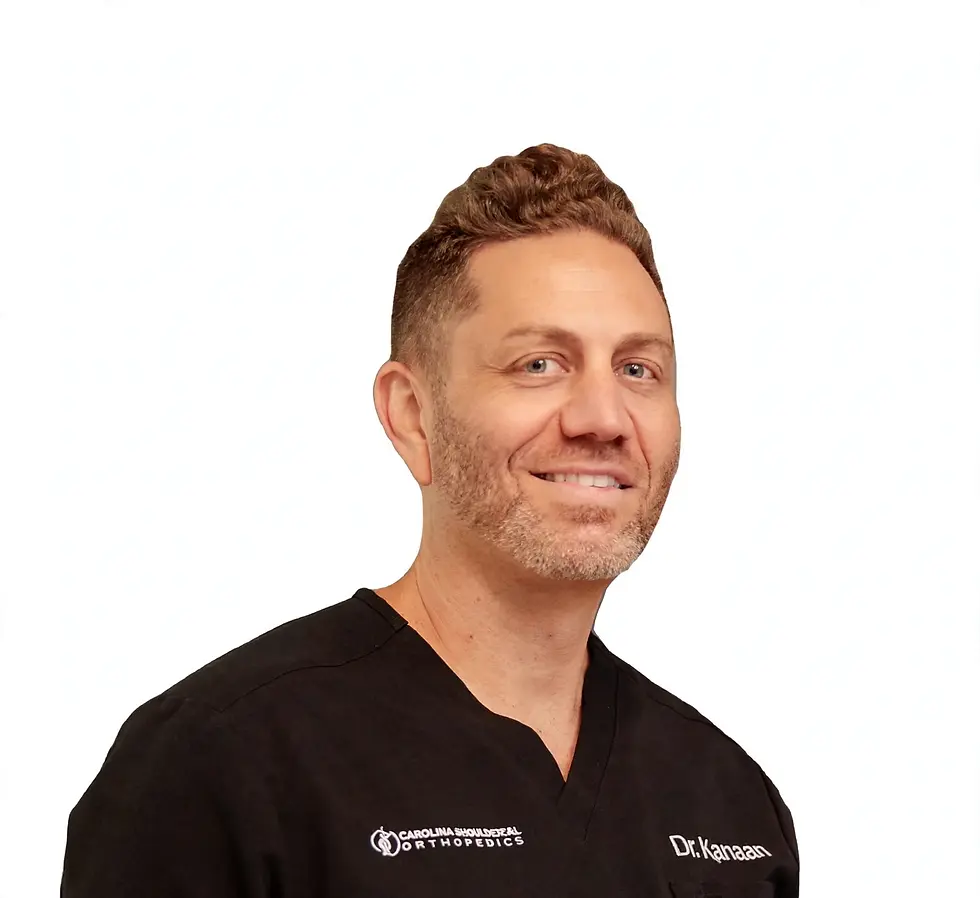
Dr. Matthew Kanaan
Nonsurgical Orthopedic Specialist
Founder of Carolina Nonsurgical Orthopedics. Fellowship trained in sports medicine at Duke; residency in family medicine at Duke, where he served as Chief Resident.
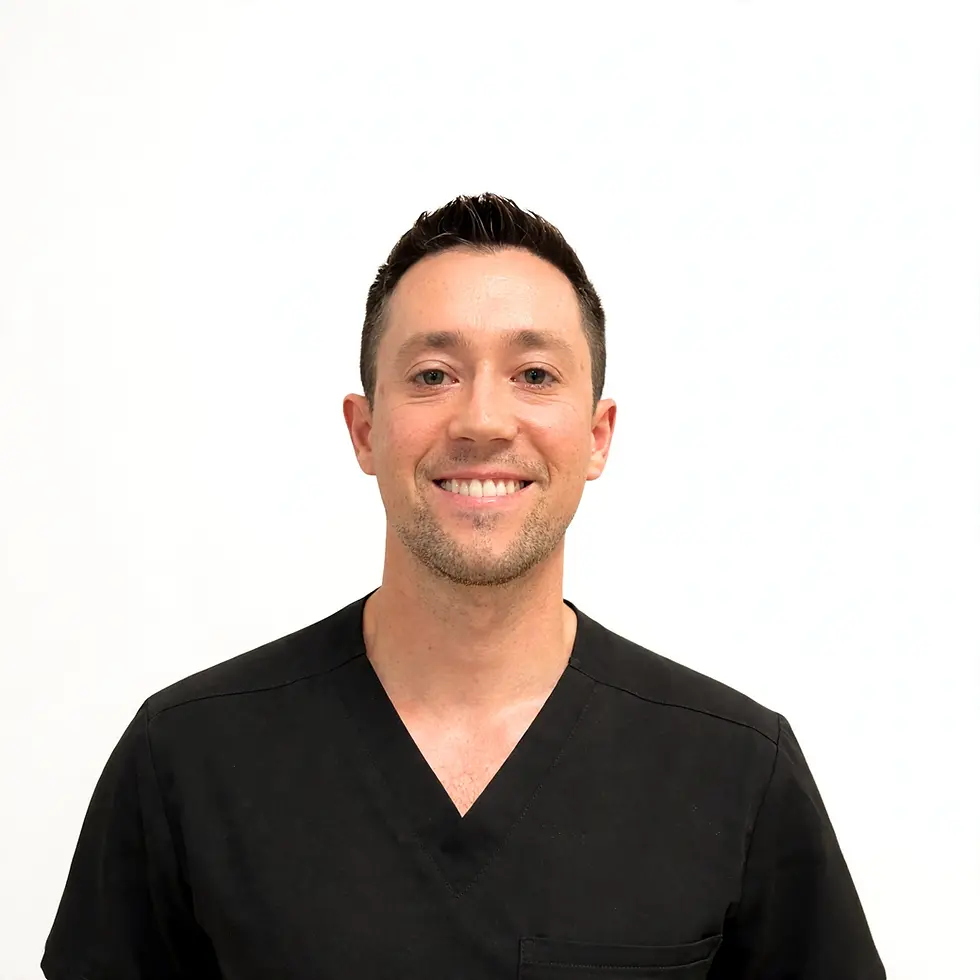
Dr. Pierce Knox
Nonsurgical Orthopedic Specialist
Fellowship trained in nonsurgical sports medicine at Penn Medicine; residency in primary care at Christiana Care.


