
)_edited_pn.png)


Epidural Steroid Injection Didn't Work? Why You Still Hurt — and What Was Probably Never Treated
Quick Answer: An epidural steroid injection does one specific job: it delivers anti-inflammatory medication around an irritated spinal nerve root. If some or all of your pain is coming from the muscles around your spine — guarded, knotted, trigger-point pain that develops after months of hurting — the epidural was never aimed at it, and its "failure" may really be a missed target. Residual muscular pain is treatable without any procedure on the spine itself. But some post-epidural pain means the problem is still inside the spine, and sorting out which situation you're in comes before any treatment.
You've done the steps in the right order. Conservative care didn't cut it, so you had the epidural — maybe two or three of them. Either nothing changed, or it helped for a few weeks and then the pain came back, or it took the edge off the leg pain but your back still aches every day.
The usual conclusions are "injections don't work on me" or "surgery is next." Sometimes surgery genuinely is next. But there's a third possibility that gets skipped surprisingly often: the epidural treated one component of your pain, and a different component — the muscular one — was never treated at all.
What an epidural is actually designed to do
An epidural steroid injection places corticosteroid in the epidural space, near a nerve root that's inflamed — typically pinched or irritated by a herniated disc or spinal stenosis. Steroids are powerful anti-inflammatories. When the diagnosis is right, calming that nerve reduces the shooting, burning leg pain (radicular pain) that the nerve produces.
Notice what that description doesn't include: muscles. An epidural delivers no treatment to the paraspinal muscles, the gluteal muscles, or the ligaments and soft tissue around the spine. It isn't designed to. It's also not a repair — it's an anti-inflammatory with a working life measured in weeks to months, not a fix for the disc or the stenosis itself.
So "the epidural didn't work" can mean several very different things.
Four reasons an epidural "fails"
1. The pain was never nerve pain to begin with. This is the big one. Low back pain has many possible generators, and muscular (myofascial) pain is at the top of the list — strained paraspinal muscles, trigger points, chronic guarding. MRI scans complicate the picture because disc bulges and degeneration show up on most adult MRIs whether or not they're causing pain. If your pain is muscular, an epidural is a well-performed treatment aimed at the wrong structure. It fails the way a knee injection would fail to fix a hip problem.
2. It worked — on one component. Many backs have more than one thing going on. The disc irritates the nerve and the surrounding muscles lock down in response. The epidural calms the nerve, the leg pain improves, and what's left is the muscular pain — which by then may have become a self-sustaining problem of its own. Patients describe this as "it helped about half," and they're usually describing it accurately.
3. It worked and wore off. This isn't failure so much as pharmacology. Steroid effect fades; the underlying disc or stenosis is unchanged; pain returns on schedule. A shot that reliably helps for six weeks is telling you the target was right — it's also telling you the treatment is temporary by design.
4. The pain generator is still inside the spine. Facet joint pain, pain from inside the SI joint, an unstable segment, a disc that needs a surgeon's opinion — none of these are muscular, and no amount of muscle treatment will substitute for the right spine care. This is the category where repeating epidurals, changing the approach, or consulting a surgeon is the honest next step.
The part that often never got treated: the muscles
Here's the physiology that gets overlooked. When your back hurts — from a disc, an injury, or surgery itself — the muscles around the spine guard. They splint the area, stay contracted, and over weeks and months develop trigger points: tight, irritable bands that generate their own pain, refer pain into the buttock and thigh in patterns that mimic other problems, and don't switch off just because the original problem improved.
This is why residual pain after lumbar surgery is so common, and why "the surgery fixed the structure but I still hurt" is a sentence spine surgeons hear constantly. The structure got treated. The muscles that spent a year protecting it did not.
Muscular pain also explains a pattern epidural patients recognize: pain that's worse with sitting at a desk, standing in one place, or rolling over in bed; stiffness in the morning; pain that feels like a deep ache across the belt line rather than a bolt down the leg. None of that is nerve-root pain, and none of it responds to steroid around a nerve.
What treating the muscular component looks like
We are not a spine practice — we don't perform epidurals, facet injections, or any procedure inside the spine. What we treat is the muscular layer, and for the right patient it's the missing piece:
Shockwave therapy applied to trigger points and chronically tight paraspinal and gluteal muscle. Of the tools used for muscular back pain, it has the strongest evidence behind it — a meta-analysis of 12 randomized trials in chronic nonspecific low back pain found it reduced pain and improved function. (That research is in non-radicular pain — muscle, not nerve — which is exactly the boundary we practice inside.)
MLS laser therapy over the painful muscles, aimed at local inflammation and spasm. Non-invasive, no downtime. We'll be candid that the evidence here is thinner than for shockwave; we use it as part of a plan, not as a miracle.
PRP injections into the muscles, placed under ultrasound guidance into trigger points and injured muscle tissue — your own concentrated platelets delivered to muscle that isn't healing on its own. To be explicit: this is an injection into muscle, not into the spine. No epidurals, no discs, no nerves. (More on how we approach PRP generally: Platelet-Rich Plasma (PRP) treatment.)
One related mimic deserves a mention: pain sitting low and to one side, around the sacroiliac joints. When that pain is coming from the muscles and ligaments around the joint, it's in the same treatable category — we wrote about the SI region here: SI Joint Pain and PRP. When it's coming from inside the joint itself, it needs diagnostic injections we don't perform, and we'll refer you for them.
When it is not muscular — the part where we send you back
Some post-epidural situations should not be in our office at all:
New or worsening leg weakness, foot drop, or numbness in a spreading pattern
Saddle numbness, or any change in bladder or bowel control — this is an emergency, not an appointment
Fever, or escalating pain in the days right after an injection — infection after an epidural is rare but serious
Pain that is steadily progressing despite everything, or pain waking you at night with weight loss
And short of emergencies: if your exam points to a generator inside the spine or inside the SI joint, the right move is back to an interventional pain physician or a spine surgeon with our findings in hand — not a series of muscle treatments. Part of our evaluation is making that call honestly, including when it means we don't treat you.
The bottom line
An epidural that "didn't work" is information, not a dead end. It may mean the target was wrong, the treatment was partial, the effect simply expired, or the problem is one that still needs a spine specialist. The possibility that's most often missed is the muscular one — months of guarding and trigger points that no epidural was ever going to reach, and that respond to treatment aimed at the muscles themselves.
If you're in the Raleigh or Cary area and still hurting after epidural injections, an evaluation can sort out which component is which — and treat the part that's ours to treat. Call 919-719-2270.
About Your Physicians
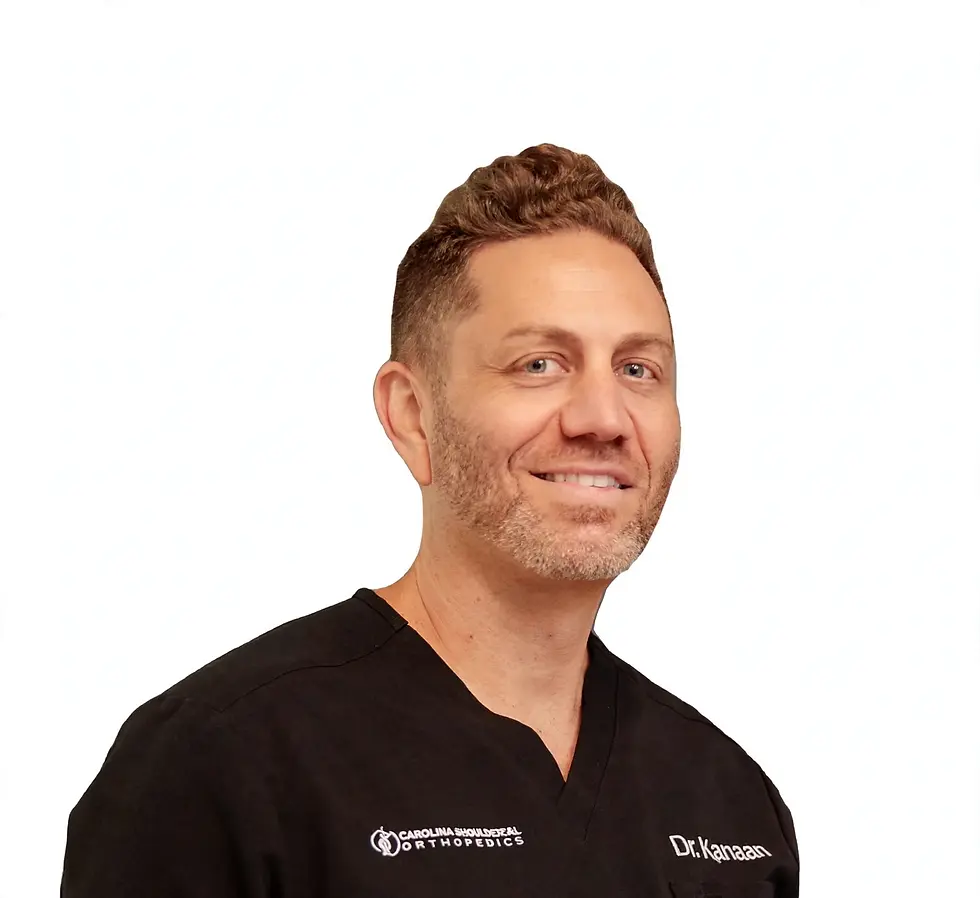
Dr. Matthew Kanaan
Nonsurgical Orthopedic Specialist
Founder of Carolina Nonsurgical Orthopedics. Fellowship trained in sports medicine at Duke; residency in family medicine at Duke, where he served as Chief Resident.
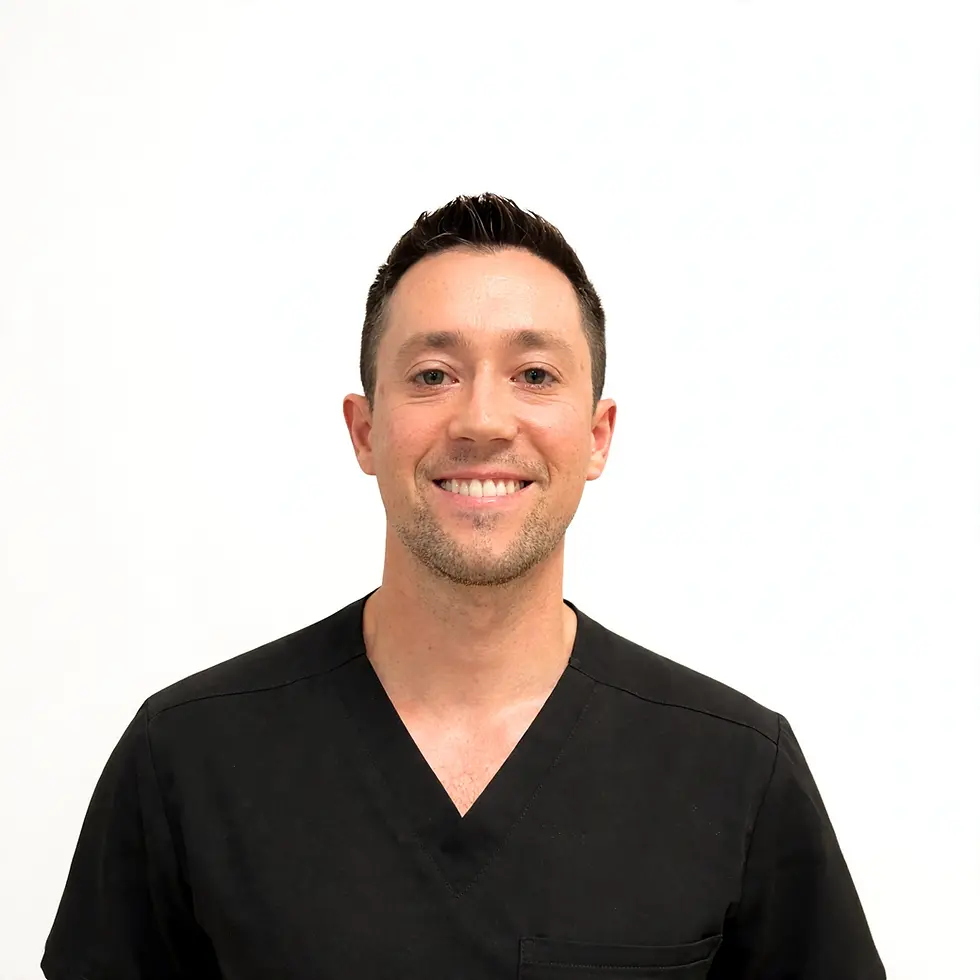
Dr. Pierce Knox
Nonsurgical Orthopedic Specialist
Fellowship trained in nonsurgical sports medicine at Penn Medicine; residency in primary care at Christiana Care.


