.png)
)_edited_pn.png)


Hip Surgery Alternatives: Nonsurgical Options Before Hip Surgery
Updated: Oct 14
Quick answer: The nonsurgical path starts with an accurate diagnosis, then activity changes, therapy, and — when appropriate — image-guided treatment, with surgery considered only when conservative care isn't enough. That is the approach we take at Carolina Nonsurgical Orthopedics in Raleigh & Cary. The objective is to identify the source of pain and determine whether conservative treatment, an image-guided procedure, PRP, shockwave therapy, or another approach has a reasonable role before surgery.
Hip pain can disrupt nearly every weight-bearing activity. When an X-ray or MRI shows arthritis, a labral problem, impingement, or tendon disease, patients are often concerned that hip replacement or another operation is their only option. In many cases, it is reasonable to evaluate nonsurgical treatments first.
Carolina Nonsurgical Orthopedics provides nonsurgical hip pain treatment in Raleigh and Cary, NC. The objective is to identify the source of pain and determine whether conservative treatment, an image-guided procedure, PRP, shockwave therapy, or another approach has a reasonable role before surgery.
Why Look for Alternatives to Hip Surgery?
Hip surgery ranges from arthroscopic procedures to total hip replacement. Recovery, restrictions, rehabilitation, time away from work, and individual surgical risk vary considerably. For someone with mild or moderate disease, a major operation may feel premature. Other patients simply want to understand whether less invasive options remain.
Hip pain is not a diagnosis. Arthritis, labral pathology, gluteal tendinopathy, bursitis, hip flexor problems, referred lumbar pain, and other conditions can produce overlapping symptoms. A surgery alternative only makes sense when matched to the actual diagnosis.
Hip Arthritis: Options Before Hip Replacement
Hip osteoarthritis can cause groin pain, stiffness, reduced motion, difficulty putting on shoes, and pain with walking. Our hip arthritis treatment guide explains nonsurgical options for selected patients.
Initial treatment may include activity modification, strengthening, mobility work, weight management when relevant, and medications when appropriate. Image-guided injections may also be considered. Because the hip joint is deep, image guidance is useful when accurately targeting an intra-articular procedure.
For selected patients, PRP injections may be considered. PRP does not restore a severely destroyed hip joint to normal and cannot guarantee that a patient will avoid replacement. The goal is symptom and function improvement when a nonsurgical trial is reasonable.
Hip Labral Tears and Impingement
Labral tears can occur with femoroacetabular impingement, instability, trauma, or age-related change. Some symptomatic labral tears ultimately require arthroscopic evaluation, particularly when significant structural impingement or persistent mechanical symptoms are present.
Other patients may improve with rehabilitation, changes in loading, and carefully selected nonsurgical treatments. The presence of a tear on MRI does not automatically establish that the labrum is the sole source of pain.
Lateral Hip Pain, Bursitis, and Gluteal Tendon Problems
Pain on the outside of the hip is often labeled bursitis, but persistent lateral hip pain frequently involves the gluteus medius or gluteus minimus tendons. This is commonly grouped under greater trochanteric pain syndrome.
When chronic tendon degeneration is part of the problem, treatment may include progressive strengthening, load modification, shockwave therapy, or PRP in selected cases. This differs from simply repeating a corticosteroid injection whenever symptoms recur.
PRP as an Alternative to Hip Surgery
PRP is prepared from a patient’s own blood and concentrates platelets that contain signaling proteins involved in the body’s response to injury. It is an orthobiologic treatment, not a guaranteed method of tissue regeneration.
At Carolina Nonsurgical Orthopedics, PRP is used selectively and generally performed with ultrasound guidance when appropriate. Potential hip applications include selected cases of osteoarthritis and chronic tendon pathology. Patient selection matters because the likelihood of benefit differs with disease severity.
What About MFAT for Hip Arthritis?
For selected patients with more significant degenerative joint disease, we may also discuss MFAT cell therapy as an orthobiologic option. MFAT uses processed autologous adipose tissue and should not be marketed as a cure for arthritis or as FDA-approved stem cell therapy for hip arthritis.
Whether PRP, MFAT, or neither makes sense depends on imaging, symptoms, age, health, prior treatments, expectations, and severity of arthritis.
How Much Downtime Is There With Nonsurgical Hip Treatment?
Downtime depends on the procedure and condition. Many patients can continue basic daily activities after an office-based image-guided procedure, but strenuous exercise may need to be limited temporarily. After PRP, patients generally progress activity over time rather than immediately testing the hip with high-impact exercise.
Improvement from an orthobiologic procedure is usually gradual. Rehabilitation and progressive loading often remain important parts of recovery.
When Is Hip Surgery the Better Option?
Severe hip arthritis with major loss of joint space, progressive functional limitation, pain despite reasonable nonsurgical treatment, significant deformity, fractures, and certain structural disorders may be better treated surgically. Hip replacement is a highly effective operation for appropriately selected patients.
The purpose of evaluating alternatives is to make sure patients understand their options and have not skipped reasonable nonsurgical care—not to promise that surgery can always be avoided.
Hip Surgery Alternatives in Raleigh & Cary, NC
Patients looking for alternatives to hip surgery can learn more on our hip pain treatment page and hip arthritis page. Carolina Nonsurgical Orthopedics provides physician-led evaluation, diagnostic ultrasound, image-guided procedures, PRP, shockwave therapy, and other nonsurgical options in Raleigh and Cary, NC.
If hip pain is limiting walking, exercise, sleep, or daily activity, contact us for an evaluation.
Understanding Nonsurgical Options Before Hip Surgery
Hip-region pain can originate from the hip joint, gluteal tendons, greater trochanteric region, proximal hamstring, lumbar spine, or other structures. This is why an accurate diagnosis is particularly important before concluding that a patient needs hip surgery. Hip osteoarthritis and labral pathology may cause groin pain, while gluteal tendinopathy more often causes lateral hip pain and proximal hamstring problems commonly cause pain near the sitting bone.
For many conditions, initial treatment includes activity modification, progressive strengthening, mobility work, weight management when appropriate, and medications or physical therapy. Image-guided injections may be considered based on the diagnosis. Options can include corticosteroid, PRP, or other orthobiologic approaches, but the evidence and expected benefit differ for arthritis, tendon disease, and labral pathology.
For hip arthritis, PRP and other nonsurgical treatments are intended primarily to improve symptoms and function. They should not be presented as guaranteed alternatives to replacement in patients with end-stage disease. The practical question is whether a patient can maintain acceptable function and quality of life with nonsurgical care or whether the structural severity and disability make surgery the more appropriate option.
Patients seen in Raleigh and Cary can be evaluated for both intra-articular and extra-articular causes of hip pain. This is especially useful for patients who have been told they have arthritis on imaging but whose symptoms may also be coming from gluteal tendons, bursae, hamstring attachments, or the lumbar spine.
About Your Physicians

Dr. Matthew Kanaan
Nonsurgical Orthopedic Specialist
Founder of Carolina Nonsurgical Orthopedics. Fellowship trained in sports medicine at Duke; residency in family medicine at Duke, where he served as Chief Resident.
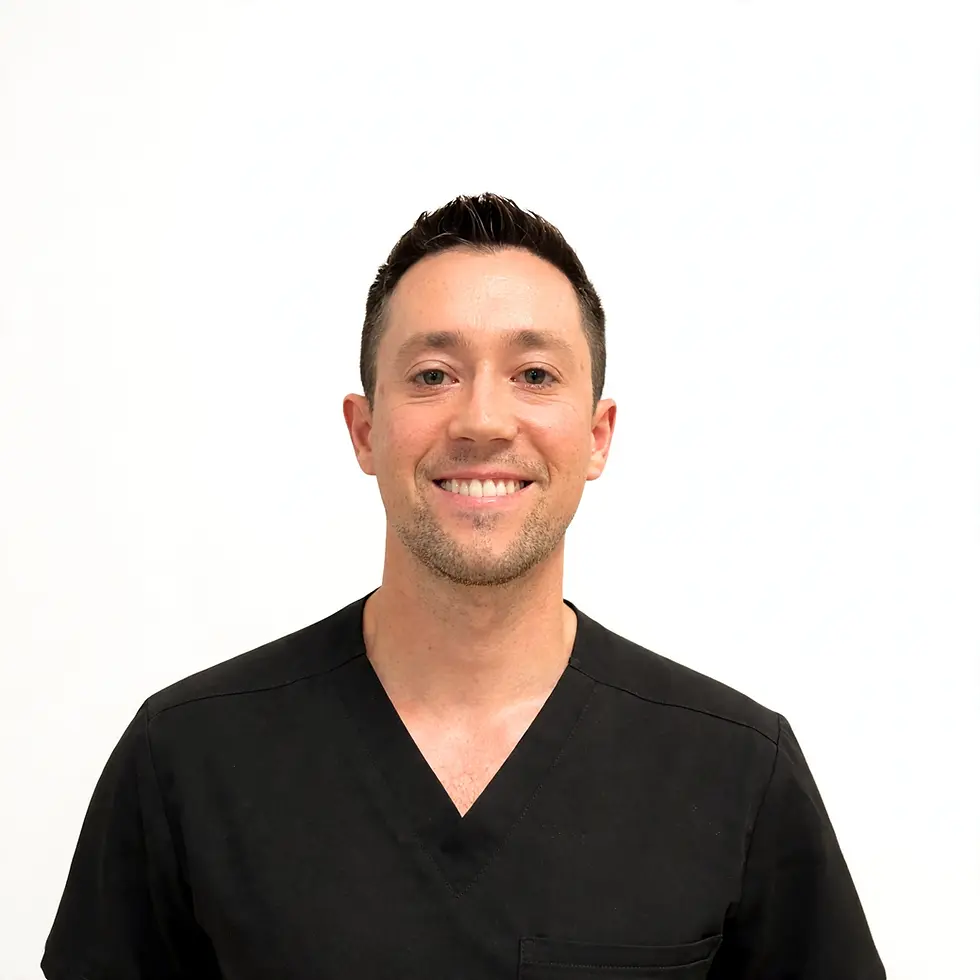
Dr. Pierce Knox
Nonsurgical Orthopedic Specialist
Fellowship trained in nonsurgical sports medicine at Penn Medicine; residency in primary care at Christiana Care.


