
)_edited_pn.png)


Hip Arthritis: Could Cell Therapy Delay a Hip Replacement?
Updated: Oct 14
Quick answer: Cell therapy (MFAT) uses your own microfragmented adipose tissue, prepared and injected the same day under ultrasound guidance. It is a cash-pay, nonsurgical option we offer in Raleigh & Cary for selected joint and tendon problems, and candidacy is decided at an evaluation. A middle path exists: evidence-based nonsurgical care, including cell therapy and high-dose PRP, aimed at reducing pain, preserving function, and potentially delaying the day you need a new joint.
Hip arthritis has a way of shrinking your world: morning stiffness that takes an hour to loosen, a groin ache after a walk that used to feel easy, days planned around what your hip can tolerate. If you've been told you're "bone on bone" and a hip replacement is in your future, ask a careful question first: is the future now, or can nonsurgical treatment buy you meaningful, high-quality time?
Hip replacement is one of the most successful operations in medicine — genuinely life-changing for advanced arthritis. But it's still major surgery with real recovery and a prosthesis with a finite lifespan, an important consideration in your 40s or 50s. A middle path exists: evidence-based nonsurgical care, including cell therapy and high-dose PRP, aimed at reducing pain, preserving function, and potentially delaying the day you need a new joint.
Understanding Hip Osteoarthritis
The hip is a ball-and-socket joint; in a healthy hip the ball and socket glide on slick cartilage. Osteoarthritis is the gradual wearing of that cartilage, with changes in the underlying bone, low-grade inflammation of the joint lining, and sometimes bone spurs. As cartilage thins, the joint becomes painful, stiff, and less mobile.
Hip arthritis typically announces itself as groin pain — sometimes in the front of the thigh or buttock — that worsens with activity and eases with rest, at least early on. Stiffness after sitting, difficulty putting on shoes and socks, and gradual loss of hip rotation are classic signs. X-ray severity and symptoms don't always match — treatment decisions should be driven by your symptoms and function, not the X-ray alone.
Risk factors include age, prior hip injuries, excess body weight, genetics, and certain hip shapes — several of which are modifiable.
The Standard Nonsurgical Playbook
Before considering regenerative injections, the fundamentals of hip arthritis care deserve respect:
Targeted exercise. Strengthening the muscles around the hip (especially the gluteals) and maintaining range of motion can substantially reduce pain. Low-impact activities like swimming, cycling, and walking keep the joint nourished without pounding it.
Weight management. The highest-leverage lifestyle change: meaningful weight loss reduces joint loading with every step, easing pain and slowing functional decline.
Activity modification. Choose joint-friendly movement — shorter, more frequent walks instead of one long one; avoid deep squats and prolonged sitting on low surfaces.
Medications and injections. Anti-inflammatory medications can help, with appropriate attention to their risks. Cortisone injections can calm a painful flare, though effects are temporary and repeated injections may accelerate cartilage loss — most physicians use them judiciously.
These measures are the foundation. When they aren't enough but you're not ready — or not a good candidate — for replacement, regenerative treatments enter the conversation.
How Cell Therapy (MFAT) Works for Hip Arthritis
MFAT — microfragmented adipose tissue — is a same-day procedure using your own tissue. A small amount of fat is gently harvested, processed to preserve its natural regenerative cell population, and injected into the arthritic hip under ultrasound guidance. Because it comes from your own body, there's no rejection risk and nothing synthetic implanted in the joint.
Patients often encounter this treatment category under the name "stem cell therapy." The biological goal in an arthritic hip is not to regrow a brand-new layer of cartilage — that would be an overpromise — but to calm inflammation inside the joint, support remaining cartilage, and reduce pain so you can stay active. Movement keeps the joint's supporting structures strong, which matters enormously.
Clinical studies of adipose-derived cell therapy for hip osteoarthritis have reported meaningful pain reduction and functional improvement in many patients, often lasting a year or longer. The evidence base is smaller than for knee arthritis but growing, with a favorable safety profile — most commonly temporary soreness at the harvest and injection sites. As always, results vary: advanced bone-on-bone arthritis with major deformity is less likely to respond than moderate disease.
How PRP Fits Into Hip Arthritis Care
PRP — platelet-rich plasma — is made from your own blood, concentrated to deliver a high dose of platelets and their growth factors into the hip joint under ultrasound guidance. The growth factors help regulate inflammation and signal the body's repair processes.
For hip arthritis, PRP sits between basic measures and cell therapy: less involved than MFAT (a blood draw rather than a fat harvest), with a growing evidence base. A 2024 systematic review found significant pain relief and improved hip function versus control treatments, sustained through months of follow-up. Because the hip sits deep beneath muscle, ultrasound guidance is essential to ensure treatment reaches the joint space.
Can These Treatments Really Delay a Hip Replacement?
The honest goal is buying high-quality time — and for many patients, these treatments appear to do exactly that.
Think of it practically: if regenerative treatment drops your pain from a 7 to a 3 and restores comfortable walking, exercise, travel, and sleep for a year or more — repeatable as needed — the replacement gets pushed into the future. In your early 50s, that delay can mean one prosthesis in a lifetime instead of two.
What regenerative treatment cannot do is reverse severe structural damage. If your hip is bone-on-bone with significant deformity and constant pain unresponsive to conservative care, the most honest advice may be that replacement is the right move — further delay just costs you months of life quality. A trustworthy clinic will tell you when you've crossed that line.
There's also a middle outcome worth naming: some patients get partial relief — enough to function better but not enough to forget the hip entirely. That's still a win if it postpones surgery, but go in with calibrated expectations.
Who Is a Good Candidate?
The best candidates share certain features: mild to moderate arthritis on imaging, pain that limits activity despite good conservative care, a desire to stay active, and realistic expectations. Less likely to benefit: severe bone-on-bone arthritis with major deformity, or inflammatory arthritis like rheumatoid arthritis, which needs different management. An in-person evaluation — history, examination, and X-ray review — is the only reliable way to determine where you fall.
At our Raleigh and Cary, NC hip clinic, that evaluation is the whole point: an honest sorting of who should try regenerative care, who should continue with rehab and lifestyle measures, and who should talk to a hip replacement surgeon.
What to Expect From Treatment
A typical course begins with a consultation and imaging review. If you're a candidate, the procedure is done in the office in a single visit: for PRP, a blood draw followed by processing and ultrasound-guided injection; for MFAT, a gentle fat harvest under local anesthesia, processing, and ultrasound-guided injection.
After treatment, expect some soreness for several days. Most patients return to light activity quickly and progress over several weeks, guided by symptoms and their physician's protocol, with improvement building gradually over 6 to 12 weeks. Follow-up visits track your pain, function, and activity level to determine whether additional treatment would be worthwhile.
Frequently Asked Questions
How long do the effects of cell therapy for hip arthritis last?
Published studies report benefits lasting a year or longer in many patients, especially when treatment is combined with sustained exercise and healthy weight. But arthritis is progressive, and no injection stops the clock entirely — think of treatment as resetting the joint's inflammatory state and buying functional time, with repeat treatments sometimes used to extend the benefit. Results vary, and your physician should discuss what's realistic for your stage of arthritis.
Is it safe to delay a hip replacement?
For mild to moderate arthritis, yes — delaying surgery while pursuing effective nonsurgical care is safe and often wise, especially for younger patients. With severe, bone-on-bone disease the calculus changes: prolonged delay can mean worsening deformity, muscle atrophy, and a more difficult eventual surgery. That's why monitoring matters — a good nonsurgical physician reassesses, and will tell you plainly if the window for conservative care is closing.
Will insurance cover PRP or cell therapy?
In most cases, no — PRP and adipose-derived cell therapy for arthritis are typically self-pay, as insurers generally classify them as investigational, and costs vary by practice. Many patients weigh the expense against the costs of surgery: time off work, rehabilitation, deductibles, and copays. A transparent practice will discuss pricing openly before you commit.
Can I exercise after treatment, and should I?
Yes — and you should. After a brief recovery period, progressive return to low-impact exercise (walking, cycling, swimming, strength training) supports everything the injection is trying to accomplish: stronger supporting muscles, better joint mechanics, and weight control. Your physician or physical therapist should give you a clear activity roadmap — the patients who do best long-term are almost always the ones who stay active.
Take the Next Step
You don't have to choose between suffering through hip arthritis and scheduling a replacement tomorrow. If you're in the Raleigh or Cary, NC area, call 919.719.2270 or visit our schedule page to explore whether cell therapy or PRP could buy you high-quality time with your own hip.
About Your Physicians

Dr. Matthew Kanaan
Nonsurgical Orthopedic Specialist
Founder of Carolina Nonsurgical Orthopedics. Fellowship trained in sports medicine at Duke; residency in family medicine at Duke, where he served as Chief Resident.
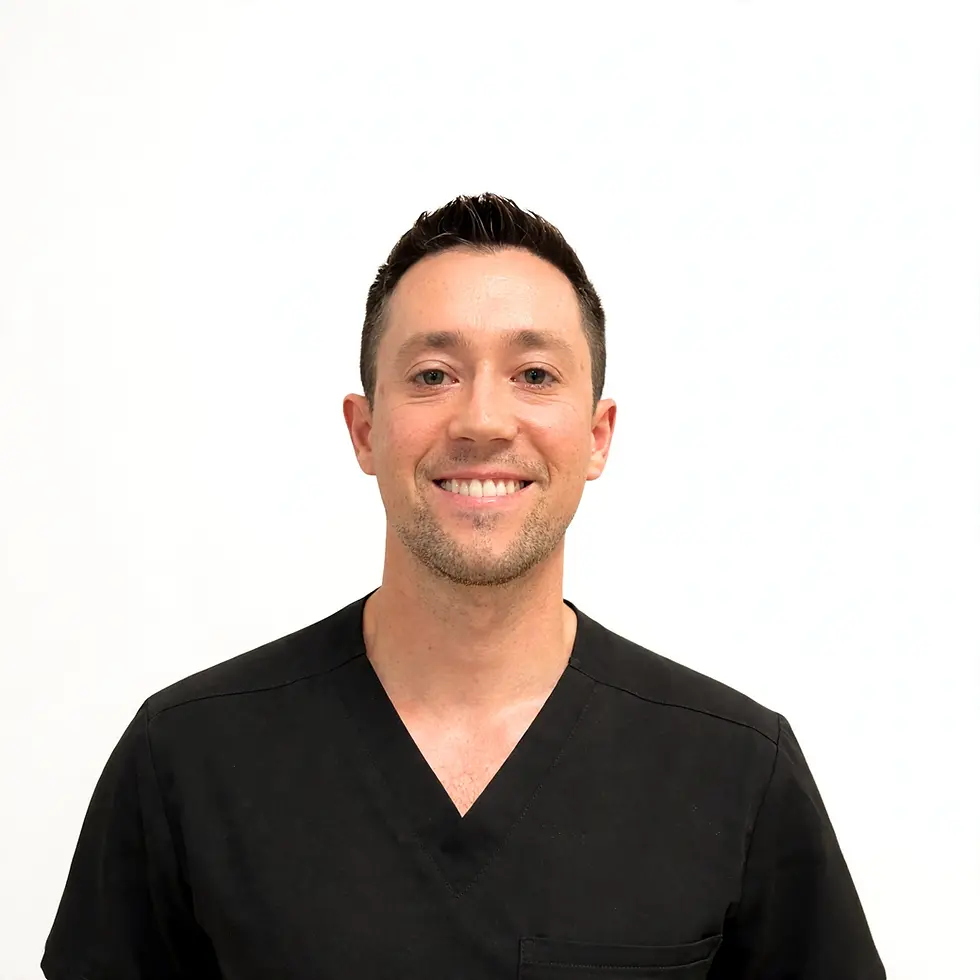
Dr. Pierce Knox
Nonsurgical Orthopedic Specialist
Fellowship trained in nonsurgical sports medicine at Penn Medicine; residency in primary care at Christiana Care.


