


Pain After Rotator Cuff Surgery: Why It Hurts & What Helps
Updated: Oct 14
Quick answer: Persistent pain after rotator cuff repair is frustratingly common, with a long list of possible causes — from a tendon that didn't fully heal, to stiffness from immobilization, to nerve irritation, to rehab that never finished the job. Months 3 to 6 are where most patients turn the corner — strength builds, night pain fades, function returns.
Rotator cuff surgery comes with a long, uncomfortable recovery — that's normal. But there's a difference between the expected months of gradual improvement and pain that stalls, worsens, or never really lifts. If you're a year out and your shoulder still aches through the night or won't let you sleep on that side, something beyond normal healing is going on.
Persistent pain after rotator cuff repair is frustratingly common, with a long list of possible causes — from a tendon that didn't fully heal, to stiffness from immobilization, to nerve irritation, to rehab that never finished the job. Many of these respond to nonsurgical treatment. The critical first step is figuring out which one you're dealing with, because a retear and a stiff shoulder need very different plans.
Normal Recovery vs. Concerning Pain
Context matters. Rotator cuff repair recovery is measured in months, not weeks, and knowing the expected timeline keeps you from panicking over normal healing — or ignoring a real problem.
The first 6 weeks are about protection: sling, limited motion, and soreness that's worst at night. Significant pain here is expected.
Weeks 6 to 12 bring progressive motion and the start of strengthening. Pain should be trending down, even if slowly. A plateau at this stage deserves attention but isn't alarming yet.
Months 3 to 6 are where most patients turn the corner — strength builds, night pain fades, function returns. Pain that's unchanged or worsening across this window deserves re-evaluation.
Beyond 6 to 12 months, meaningful ongoing pain is no longer "just healing." Retear rates vary widely with tear size and patient factors — large tears fail to heal at notably higher rates than small ones — but pain at this stage always warrants a fresh diagnosis.
Red flags at any stage: fever, increasing redness or drainage from incisions (possible infection — contact your surgeon promptly), sudden loss of motion or a popping sensation with new weakness after a fall or trauma (possible acute retear), or numbness spreading down the arm.
Why Pain Persists After Rotator Cuff Surgery
Retear or incomplete healing. The most feared cause — but far from the only one. Tendons repaired under tension, in older patients, or in smokers heal less reliably. A retear typically announces itself as a plateau or regression: progress stalls, night pain returns, weakness creeps back. Only imaging confirms it.
Postoperative stiffness. The shoulder freezes up more readily than any joint after immobilization. Adhesive capsulitis — stiff, achy, progressively restricted motion — is one of the most common and most treatable causes of post-surgical shoulder pain, and one of the most misattributed: patients assume the repair failed when the capsule just needs mobilizing.
Nerve irritation. The axillary and suprascapular nerves run close to the surgical field. Positioning, traction during surgery, or postoperative swelling can irritate them, producing burning, tingling, or a deep ache that doesn't behave like tendon pain.
Hardware and suture issues. Anchors, sutures, and knots can irritate the bursa or surrounding tissue, occasionally causing impingement-type pain with overhead motion.
Incomplete rehabilitation. Rehab that stopped at "good enough" — motion restored but cuff and scapular strength never rebuilt — leaves the shoulder mechanically vulnerable. Pain with activity months later is often a strength deficit in disguise.
Arthritis progression. Surgery fixes the tendon, not the cartilage. If glenohumeral arthritis was already developing, it keeps developing — and becomes the new pain generator once the tendon heals.
How It's Evaluated
A post-surgical shoulder deserves a from-scratch evaluation, not assumptions.
History and exam. When did improvement stop? What does the pain feel like — deep ache, sharp catch, burning, instability? A careful exam tests active vs. passive motion (stiffness shows up when passive motion is limited too), strength in specific rotator cuff muscles, and provocative maneuvers that localize the problem.
Ultrasound. In-office ultrasound is especially valuable in the post-surgical shoulder: it visualizes the repaired tendon in real time, assesses bursal inflammation, and guides any injection precisely. It's dynamic — we can watch the tendon move — which static imaging can't do.
MRI. When a retear is suspected or the ultrasound is inconclusive, MRI (often with contrast, an MR arthrogram) remains the standard for evaluating tendon integrity after repair. Metal artifact from anchors can limit detail, which is why the clinical picture and ultrasound come first.
X-ray. Less informative for soft tissue, but useful for checking anchor position, hardware complications, and arthritis progression.
The point: treatment without a diagnosis is guessing. A stiff shoulder needs mobilization, a retorn tendon needs a surgical conversation, and an irritated bursa needs neither.
Nonsurgical Treatments That Can Help
Targeted physical therapy. Not a repeat of the generic protocol — a program built around the specific diagnosis. Stiffness responds to progressive mobilization; scapular dyskinesis to motor control work; strength deficits to graduated loading. The most common gap we see is rehab that ended months before the shoulder was ready.
Shockwave therapy. Extracorporeal shockwave has good evidence for chronic tendinopathy and is useful post-surgically for persistent bursal irritation, tendinopathy at repair margins, and stiffness. Noninvasive and office-based — a reasonable step before any repeat procedure.
PRP — with honest framing. Platelet-rich plasma has been studied as an adjunct around rotator cuff surgery with mixed but interesting results. For pain months after surgery, PRP may help residual tendinopathy or incomplete healing at the repair margins, delivered under ultrasound guidance. What it cannot do: reattach a fully retorn tendon. If imaging shows a complete retear with retraction, that's a surgical discussion, and we'll say so directly.
Ultrasound-guided injections. Corticosteroid injections into the subacromial bursa can break the pain-inflammation cycle in bursitis-dominant cases — though they're used judiciously after tendon repair, since steroids and healing tendon are a cautious combination. Hydrodissection techniques can address nerve irritation and adhesive tissue planes.
Activity modification and load management. Sometimes the "treatment" is stopping the thing that's perpetuating the problem — the overhead work task, the sleeping position, the too-aggressive home exercise program — while the shoulder catches up.
What nonsurgical care cannot fix: a fully retorn, retracted tendon; an infected joint; or significantly displaced hardware. Those need a surgeon, and identifying them quickly is part of the job.
When to Go Back for Surgical Re-evaluation
Return to your surgeon — or get a second surgical opinion — when imaging confirms a full-thickness retear with meaningful retraction, when there's evidence of infection, when hardware is causing impingement that injections can't quiet, or when a thorough course of appropriate nonsurgical care has failed and the mechanical problem is clear.
This isn't failure; it's triage. The patients who do best are correctly identified early — whether that leads to focused rehab or back to the operating room. The worst outcomes come from months of guessing in either direction.
Pain After Rotator Cuff Surgery in Raleigh and Cary
Post-surgical shoulder pain is one of the most common second-opinion visits at our Raleigh and Cary offices, and the pattern repeats: the patient was told the surgery "looked good," but nobody re-evaluated the shoulder as a new problem. We start over — exam, in-office ultrasound, targeted imaging when needed — to determine whether you're dealing with stiffness, a healing problem, nerve irritation, or mechanical failure. Most of the time, the answer is treatable without another operation. When it isn't, we'll tell you that too.
Frequently Asked Questions
How long should I wait before worrying about pain after rotator cuff surgery? Steady improvement through 6 months is the expected course, even if slow. Pain that's unchanged or worsening between months 3 and 6, or any meaningful pain persisting beyond 6 to 12 months, warrants re-evaluation rather than more waiting.
Can the tendon tear again after it's been repaired? Yes. Retear rates depend heavily on original tear size, tissue quality, age, and smoking — small tears heal reliably, large ones fail more often. A plateau or regression, especially with returning night pain and weakness, should prompt imaging.
Will PRP fix my shoulder if the repair didn't heal? Only in specific situations. PRP may help residual tendinopathy or partial healing problems at the repair margins. It cannot reattach a fully retorn, retracted tendon — that requires surgical repair. Imaging and exam determine which situation you're in.
My shoulder is stiff, not weak. Is that better or worse? Usually better — postoperative stiffness (adhesive capsulitis) is one of the most treatable causes of persistent post-surgical pain. It responds to mobilization, targeted therapy, and sometimes hydrodissection or injections. Stiffness without weakness is encouraging, not alarming.
Take the Next Step
If your rotator cuff surgery was months ago and your shoulder still isn't right, you need a new diagnosis — not more waiting. An ultrasound-based re-evaluation can usually identify whether you're dealing with stiffness, incomplete healing, nerve irritation, or something that needs a surgeon's eyes.
Call Carolina Nonsurgical Orthopedics at 919.719.2270 or schedule your visit online. With offices in Raleigh and Cary, NC, we'll find out why your shoulder still hurts and give you an honest plan — including when the right answer is back to surgery.
About Your Physicians
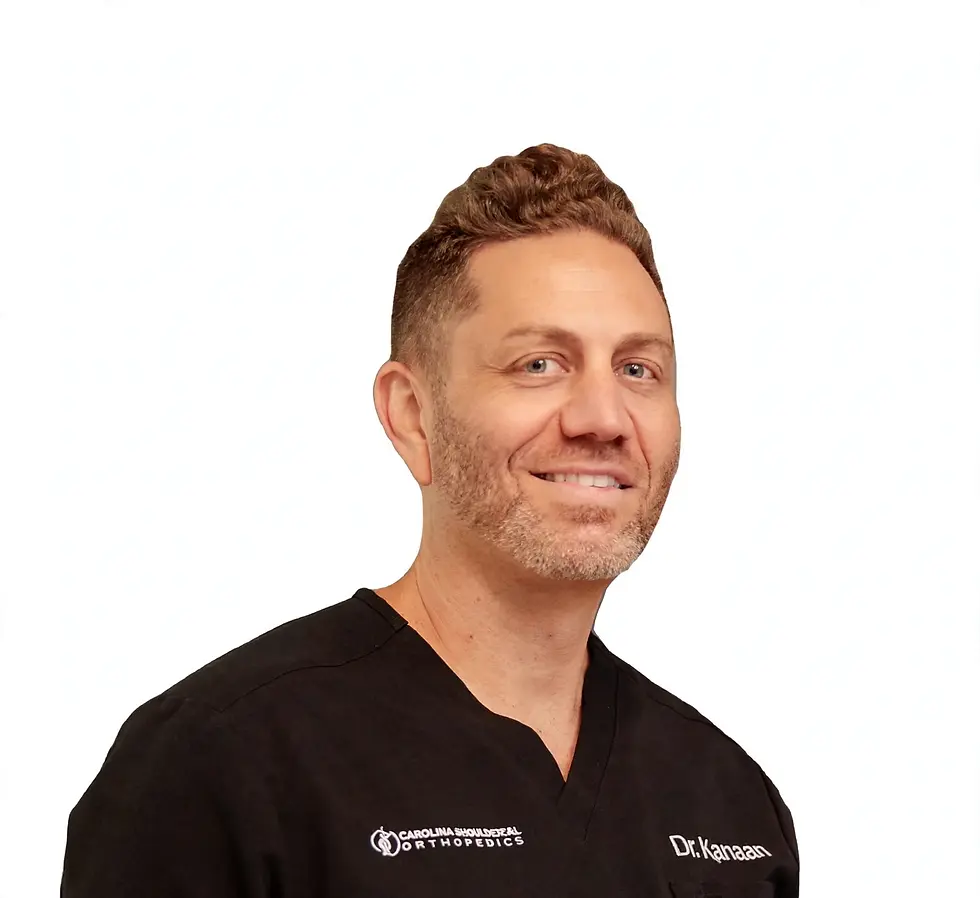
Dr. Matthew Kanaan
Nonsurgical Orthopedic Specialist
Founder of Carolina Nonsurgical Orthopedics. Fellowship trained in sports medicine at Duke; residency in family medicine at Duke, where he served as Chief Resident.
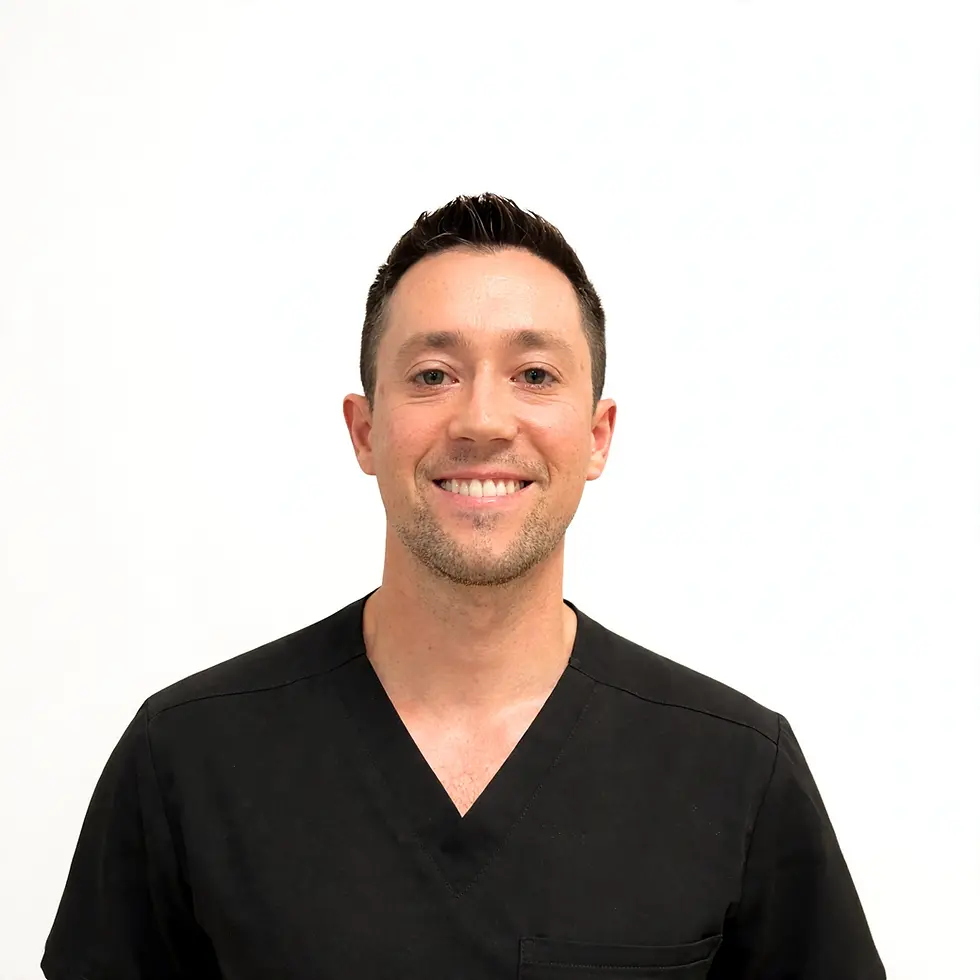
Dr. Pierce Knox
Nonsurgical Orthopedic Specialist
Fellowship trained in nonsurgical sports medicine at Penn Medicine; residency in primary care at Christiana Care.


