.png)
)_edited_pn.png)


Shoulder Surgery Alternatives: Nonsurgical Treatment Options
Updated: Oct 14
Quick answer: The nonsurgical path starts with an accurate diagnosis, then activity changes, therapy, and — when appropriate — image-guided treatment, with surgery considered only when conservative care isn't enough. That is the approach we take at Carolina Nonsurgical Orthopedics in Raleigh & Cary. At Carolina Nonsurgical Orthopedics, we evaluate whether patients have reasonable nonsurgical shoulder treatment options before surgery.
Shoulder pain is a common reason patients are told they may need orthopedic surgery. Rotator cuff tears, labral injuries, arthritis, impingement, biceps problems, and persistent tendon pain can all lead to surgical discussions. Yet an abnormal MRI does not automatically mean an operation is required.
At Carolina Nonsurgical Orthopedics, we evaluate whether patients have reasonable nonsurgical shoulder treatment options before surgery. Depending on the diagnosis, options may include rehabilitation, activity modification, image-guided procedures, shockwave therapy, and PRP.
Why Patients Search for Shoulder Surgery Alternatives
Shoulder surgery can involve a meaningful recovery period. Rotator cuff repair may require sling immobilization followed by months of rehabilitation. For active adults, athletes, parents, and people whose jobs require use of the arm, downtime is often a major part of the decision.
That does not mean the treatment with the shortest recovery is automatically best. The key is determining whether the tissue has a reasonable chance of improving without surgery and whether delaying an operation could make the problem harder to repair.
Rotator Cuff Tears: Do All Tears Need Surgery?
No. Rotator cuff tears range from small partial-thickness abnormalities to large acute full-thickness tears. Our rotator cuff tear treatment page discusses the nonsurgical approach in more detail.
Age, tear size, whether the injury was acute or degenerative, muscle weakness, tendon retraction, fatty atrophy, functional demands, and response to rehabilitation all matter. Some degenerative tears are managed successfully without surgery. A significant acute traumatic tear with marked weakness may warrant prompt surgical consultation.
PRP for Rotator Cuff and Shoulder Tendon Problems
For selected patients with rotator cuff tendinopathy or certain partial tears, PRP may be considered after appropriate conservative treatment. PRP is prepared from the patient’s blood and delivers a concentration of platelets and signaling proteins to a targeted area.
PRP is not a way to sew a completely detached tendon back onto bone and should not be presented as equivalent to surgical repair when repair is clearly indicated. Its role is more relevant when a biologic and rehabilitation strategy is reasonable.
Ultrasound guidance allows the physician to visualize the rotator cuff and place the injection at the intended target when appropriate.
Shoulder Impingement and Tendinopathy Without Surgery
Many patients have tendinopathy, bursitis, or pain with overhead movement rather than a major repairable tear. Treatment can include rehabilitation focused on rotator cuff and scapular mechanics, modification of aggravating activity, and selected image-guided treatments.
For chronic tendon disorders, shockwave therapy may be another nonsurgical option. Shockwave uses acoustic energy and does not require an injection.
Shoulder Arthritis: Alternatives Before Joint Replacement
Shoulder osteoarthritis can cause deep joint pain, stiffness, loss of motion, grinding, and difficulty reaching overhead or behind the back. Early and moderate disease may be treated with rehabilitation, activity modification, medications when appropriate, and image-guided injections.
PRP may be considered in selected patients with shoulder arthritis, although the evidence base is not as extensive as for knee osteoarthritis. Advanced bone-on-bone disease with severe loss of motion may ultimately be better treated with shoulder replacement.
Labral Tears and Biceps-Related Shoulder Pain
Labral abnormalities can occur after trauma, instability, repetitive overhead sports, or age-related change. Not every labral finding on MRI is symptomatic. Treatment decisions depend on tear type, instability, age, demands, and associated biceps or rotator cuff pathology.
Rehabilitation is often an important first step. In selected cases, an image-guided diagnostic injection can help clarify the pain generator. Significant instability or a repairable traumatic lesion may require surgical evaluation.
Steroid Injections vs a Tissue-Focused Approach
Corticosteroid injections can reduce pain and inflammation and can be appropriate in selected circumstances. However, repeated steroid injections are not the only option for chronic shoulder pain, particularly when tendon degeneration is a major part of the diagnosis.
Our approach is to determine which structure is generating symptoms and then discuss treatments that fit that diagnosis. In chronic tendinopathy, that discussion may include rehabilitation, shockwave, or PRP rather than automatically repeating a steroid injection.
What Is the Downtime With Nonsurgical Shoulder Treatment?
Recovery depends on treatment. Rehabilitation often allows patients to remain active while temporarily modifying painful movements. After PRP, patients generally avoid heavy loading for a period and then gradually progress shoulder use and strengthening. The biologic response is expected to develop over weeks, not overnight.
This can differ substantially from recovery after surgical tendon repair, but the comparison only matters when both approaches are reasonable for the same patient.
When Should Shoulder Surgery Not Be Delayed?
Certain acute traumatic rotator cuff tears, recurrent instability, fractures, advanced arthritis, major structural damage, and progressive weakness may require surgical consultation.
A good nonsurgical practice should recognize when surgery is the better treatment. The goal is to avoid unnecessary surgery, not necessary surgery.
Shoulder Surgery Alternatives in Raleigh & Cary, NC
If you have persistent shoulder pain or have been told you may need surgery, our shoulder pain treatment page and rotator cuff tear page provide more information. Carolina Nonsurgical Orthopedics treats shoulder conditions in Raleigh and Cary, NC using physician-led evaluation and image-guided nonsurgical care.
For selected patients, treatment may include rehabilitation guidance, ultrasound-guided procedures, PRP, or shockwave therapy. Contact Carolina Nonsurgical Orthopedics to schedule an evaluation.
Which Shoulder Problems May Respond to Nonsurgical Care?
Shoulder pain is not a single diagnosis. Rotator cuff tendinopathy, partial tears, bursitis, biceps pathology, calcific tendinopathy, frozen shoulder, labral disease, acromioclavicular arthritis, and glenohumeral arthritis can produce overlapping symptoms. Determining the primary pain generator is essential before deciding whether surgery, rehabilitation, an injection, or another treatment is appropriate.
Many shoulder conditions are initially treated with restoration of motion, progressive rotator cuff and scapular strengthening, modification of painful activities, and a gradual return to loading. Some conditions may benefit from an image-guided injection. Depending on the diagnosis, options can include corticosteroid, PRP, or other nonsurgical treatments such as shockwave therapy, particularly for selected chronic tendon disorders or calcific tendinopathy.
PRP may be considered for certain chronic rotator cuff tendon problems and other selected shoulder conditions, but it is not a replacement for surgical repair of every tear. Large traumatic tears, substantial weakness, instability, fractures, and advanced arthritis may require surgical consultation. A nonsurgical evaluation can help identify patients who have a reasonable opportunity to improve without an operation and those who should not delay surgical care.
At Carolina Nonsurgical Orthopedics in Raleigh and Cary, musculoskeletal ultrasound can be used to assess many superficial shoulder structures dynamically and to guide injections when indicated. This helps tailor treatment to the actual structure involved rather than treating all shoulder pain the same way.
About Your Physicians
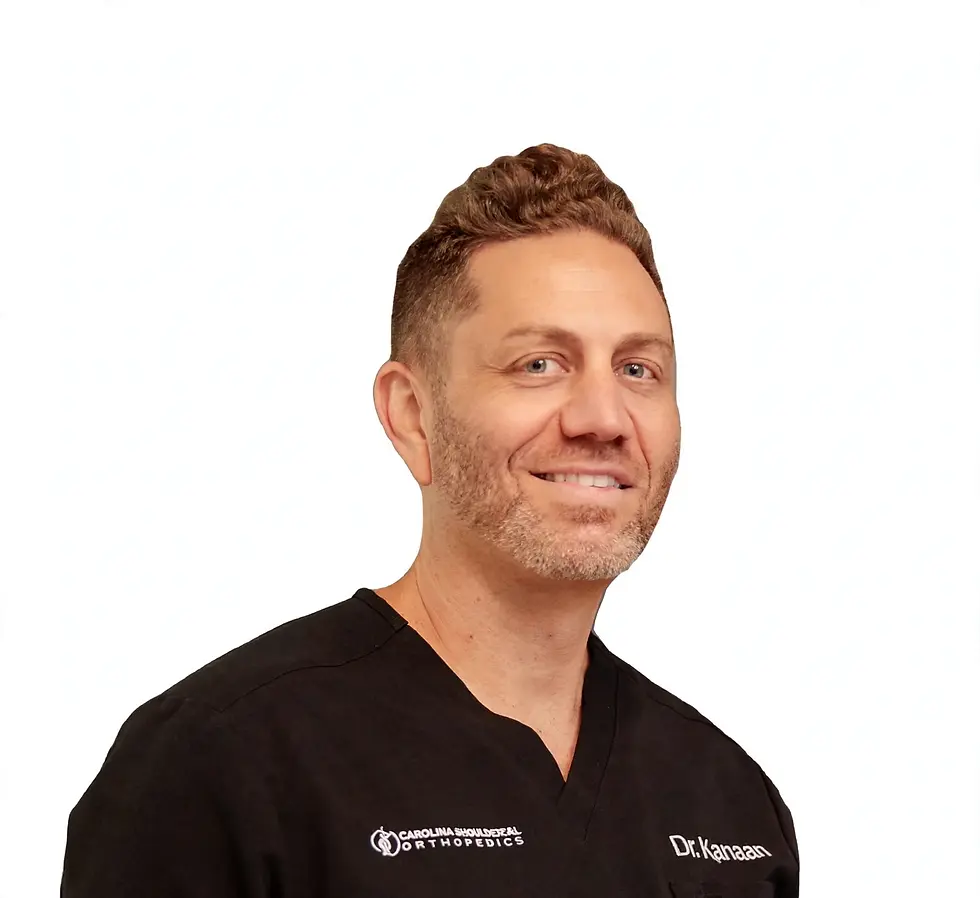
Dr. Matthew Kanaan
Nonsurgical Orthopedic Specialist
Founder of Carolina Nonsurgical Orthopedics. Fellowship trained in sports medicine at Duke; residency in family medicine at Duke, where he served as Chief Resident.
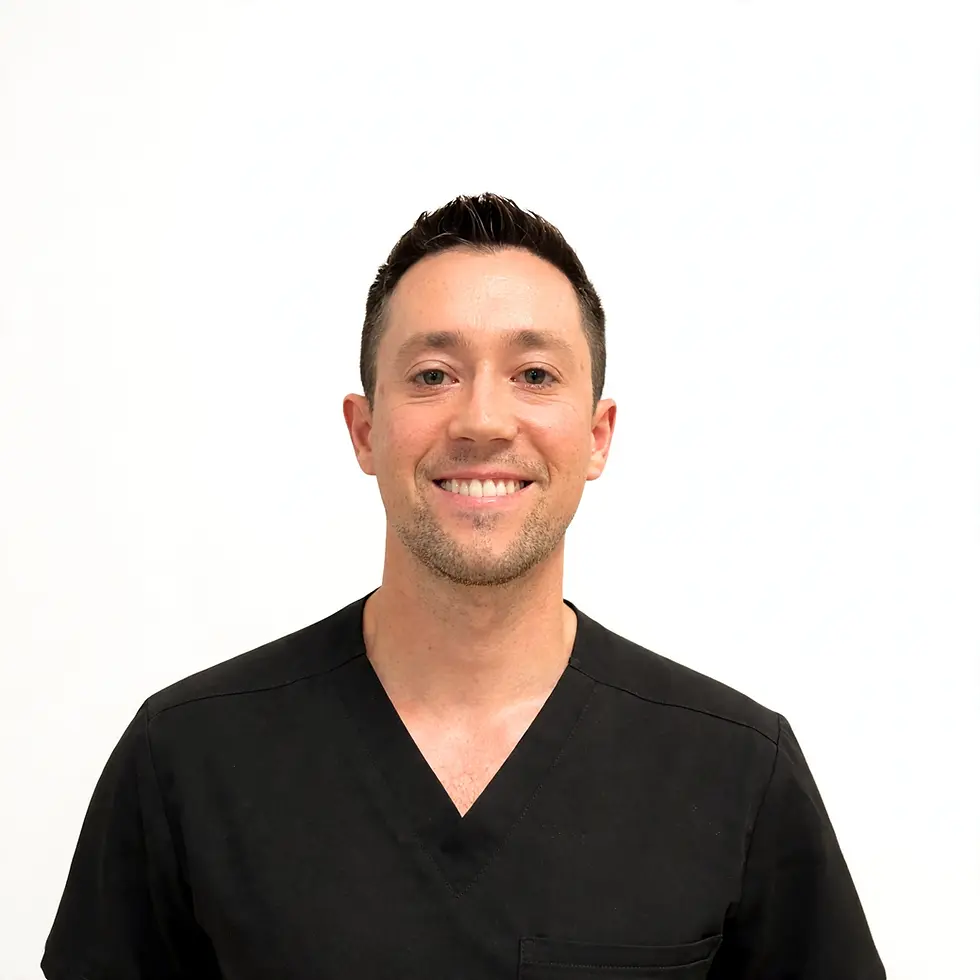
Dr. Pierce Knox
Nonsurgical Orthopedic Specialist
Fellowship trained in nonsurgical sports medicine at Penn Medicine; residency in primary care at Christiana Care.


