
)_edited_pn.png)


Rotator Cuff Tears: Can PRP or Cell Therapy Help You Avoid Surgery?
Updated: Oct 15
Quick answer: PRP and MFAT cell therapy are both nonsurgical, cash-pay regenerative treatments we offer in Raleigh & Cary, using your own blood or your own adipose tissue. Which one fits depends on the joint or tendon, how advanced the problem is, and what the evidence supports. At Carolina Nonsurgical Orthopedics, we help patients explore evidence-based nonsurgical options first.
If an MRI just told you that you have a rotator cuff tear, you're probably wondering whether surgery is inevitable. It isn't — not always. Many people with rotator cuff tears manage their symptoms, regain strength, and return to the activities they love without an operation. At Carolina Nonsurgical Orthopedics, we help patients explore evidence-based nonsurgical options first.
Understanding Rotator Cuff Tears
Your rotator cuff is a group of four muscles and tendons that wrap around your shoulder joint, holding the ball of your upper arm bone in its socket while letting you lift, reach, and rotate your arm. These tendons can tear in several ways: a sudden injury (falling on an outstretched arm, lifting something too heavy), gradual wear from years of repetitive overhead motion, or simply the natural aging of tendon tissue.
Here's something that surprises many patients: rotator cuff tears are extremely common in people with no symptoms at all. A large share of adults over 60 have a partial or even full-thickness tear and feel fine — which means an MRI finding alone doesn't automatically mean surgery. What matters is how your shoulder functions and how much pain you're in.
Tears range from partial-thickness (some fibers remain attached) to full-thickness, and from small to massive. Smaller partial tears often respond well to nonsurgical care, while large retracted tears in younger, active patients are more likely to need surgery. Most people fall somewhere in between — exactly where nonsurgical treatment earns its place.
What Nonsurgical Treatment Looks Like
The foundation of nonsurgical rotator cuff care is the same approach surgeons recommend before operating: relative rest from aggravating movements, physical therapy focused on strengthening the intact cuff and the muscles around the shoulder blade, and sometimes anti-inflammatory medication or a cortisone injection to calm pain enough to participate in rehab.
Physical therapy is genuinely important: a well-designed program can restore function even when the tear itself doesn't heal, because surrounding muscles can compensate. But many patients reach a point where faithful exercise still leaves significant pain or weakness — the gap where regenerative treatments like high-dose platelet-rich plasma (PRP) and adipose-derived cell therapy enter the conversation.
How PRP Works for Rotator Cuff Tears
PRP is made from your own blood. After a blood draw, the blood is processed to concentrate the platelets — the cell fragments responsible for clotting and for releasing growth factors that coordinate healing. The resulting concentrate, injected precisely into the torn tendon under ultrasound guidance, delivers a high concentration of those signaling molecules directly where healing needs to happen.
The idea is straightforward: tendons have limited blood supply, which is part of why they heal slowly. The concentrated growth factors are intended to recruit the body's repair machinery — and ultrasound guidance ensures the injection lands in the tear itself, not just somewhere near the shoulder.
A 2024 systematic review found that many patients with partial-thickness tears reported meaningful pain reduction and improved shoulder function after PRP, often sustained for a year or more. Results for full-thickness tears are more mixed — which is why evaluating your tear's size and pattern matters before recommending treatment.
We use high-dose PRP formulations because the evidence suggests dose and preparation influence outcomes. Results vary — not everyone responds the same way, and no honest clinician will promise a specific result.
How Cell Therapy (MFAT) Fits In
MFAT — microfragmented adipose tissue — is a same-day cell therapy derived from your own fat tissue. A small amount of fat is gently harvested, processed to preserve its natural population of regenerative cells, and injected into the injured tendon under ultrasound guidance. Because it comes from your own body, there is no rejection concern and no synthetic implant involved.
Patients often hear the phrase "stem cell therapy" applied to this category of treatment. Fat tissue is a rich source of regenerative cells, and researchers have studied adipose-derived treatments for tendon injuries for over a decade. The theoretical advantage over PRP is that cell therapy brings living cells to the site of injury, not just signaling molecules — potentially a more complete repair signal for tendons struggling to heal on their own. Early clinical reports describe reduced pain and improved function in patients with partial tears, with temporary soreness at the harvest and injection sites as the most common side effects. As with PRP, results vary from person to person, and cell therapy is not a substitute for surgery in every case.
Is Surgery Always Necessary? Understanding Your Options
The decision between nonsurgical and surgical care for a rotator cuff tear should be individualized. Here are the factors a physician should weigh with you:
Tear characteristics. Small and medium partial-thickness tears are the best candidates for nonsurgical management. Large, full-thickness tears with significant tendon retraction — especially in younger, active patients — are more likely to need surgery.
Your age and activity demands. A 35-year-old overhead athlete and a 68-year-old recreational golfer face very different risk-benefit calculations, and tendons heal less readily with age.
How you've responded so far. If months of quality physical therapy haven't moved the needle, that suggests the tear needs a more active intervention.
Whether the tear may progress. Not all tears enlarge over time, but some do — and larger tears are harder to fix surgically. This is a genuine trade-off to discuss, not a scare tactic.
Surgical recovery. Rotator cuff repair typically means months in a sling plus a long rehabilitation course. For many patients, avoiding that recovery is itself a major reason to try nonsurgical options first.
One practical approach: if your tear pattern makes you a reasonable candidate, a course of regenerative treatment followed by structured rehab gives you a meaningful window to improve — and if you don't respond, surgery remains available. Trying PRP or cell therapy first doesn't close the surgical door.
What to Expect at Your Evaluation
A thoughtful nonsurgical evaluation for a rotator cuff tear starts with your story — how the injury happened, what movements hurt, what you've already tried — followed by a physical examination and a careful review of your actual MRI images: tear size, location, tendon quality, and the condition of the muscle behind the tear. In-office ultrasound can visualize the tendon dynamically as well.
This comprehensive picture lets the physician tell you plainly whether you're a good candidate for regenerative treatment, whether you should stay the course with rehab alone, or whether a surgical consultation would serve you better. If you're not a candidate for PRP or cell therapy, you should hear that clearly — not be sold a treatment anyway.
For patients across Raleigh, Cary, and the surrounding Triangle dealing with shoulder pain, this kind of sports-medicine evaluation is often the missing step between "your MRI shows a tear" and "let's schedule surgery."
Frequently Asked Questions
Can a torn rotator cuff heal without surgery?
A torn tendon rarely "heals" in the sense of fibers reattaching on their own — partial tears sometimes fill in, but full-thickness tears generally do not spontaneously reattach. The more meaningful question is whether your shoulder can become pain-free and functional without surgery — for many patients, the answer is yes. Nonsurgical care aims to reduce pain, restore strength, and improve mechanics so the tear no longer limits your life. Regenerative treatments like PRP and cell therapy are designed to support tendon repair, though results vary and not everyone responds the same way.
How many PRP injections will I need for a rotator cuff tear?
It depends on the tear and how you respond. Many protocols involve one to three injections spaced several weeks apart, combined with structured rehabilitation. Your physician should individualize the plan based on tear size, symptoms, and progress — be cautious of one-size-fits-all packages.
Is cell therapy safe?
Because MFAT comes from your own tissue, the main risks are those of any injection: temporary soreness, bruising, and a small infection risk, plus mild discomfort at the fat harvest site. Published studies report a favorable safety profile. These treatments remain an evolving area of medicine, so discuss the specific risks, benefits, and unknowns with your physician — and view anyone who guarantees a result with skepticism.
What if nonsurgical treatment doesn't work — did I waste time?
No. A well-structured trial of nonsurgical care does not burn any bridges: your tear can still be repaired surgically if needed, and the strength you build during rehab will help your surgical recovery. The exception is certain large tears where delay could allow the muscle to deteriorate — which is exactly why your initial evaluation should address whether waiting is safe for your specific tear.
Take the Next Step
A rotator cuff tear doesn't have to mean surgery — but it deserves a careful, individualized evaluation. If you're in the Raleigh or Cary, NC area and want to explore nonsurgical options including high-dose PRP and cell therapy, call 919.719.2270 or visit our schedule page. We'll review your imaging, examine your shoulder, and give you an honest assessment.
Had PRP somewhere else — and it didn't work?
A failed PRP injection doesn't always mean PRP can't help you. The two most common reasons we see when we review outside treatments are dose — many clinics deliver a fraction of the platelet dose used in the studies that showed benefit, and often never measured it — and placement, when the injection was done without ultrasound guidance and never reached the target it was meant for. If your first treatment was underdosed or unguided, having it done properly is a different procedure, not a repeat of the same one. At an evaluation with us, we'll review what was actually done and tell you honestly whether redoing it right makes sense — or whether something else would serve you better.
About Your Physicians
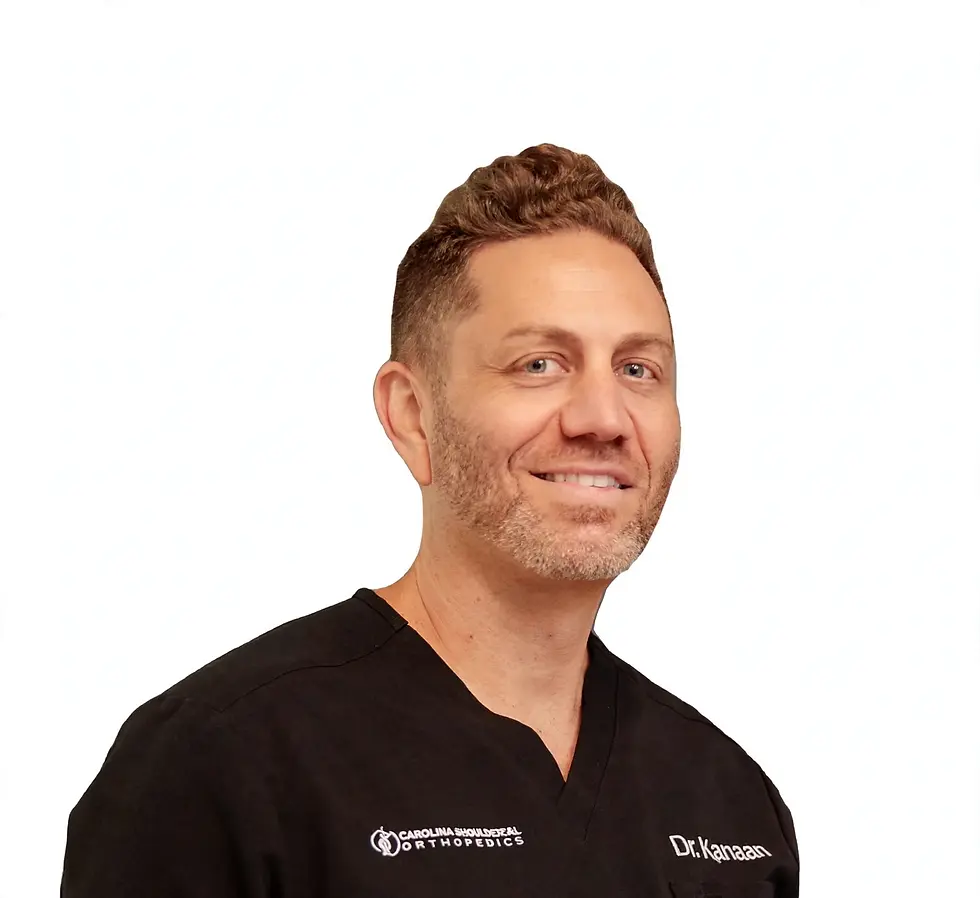
Dr. Matthew Kanaan
Nonsurgical Orthopedic Specialist
Founder of Carolina Nonsurgical Orthopedics. Fellowship trained in sports medicine at Duke; residency in family medicine at Duke, where he served as Chief Resident.
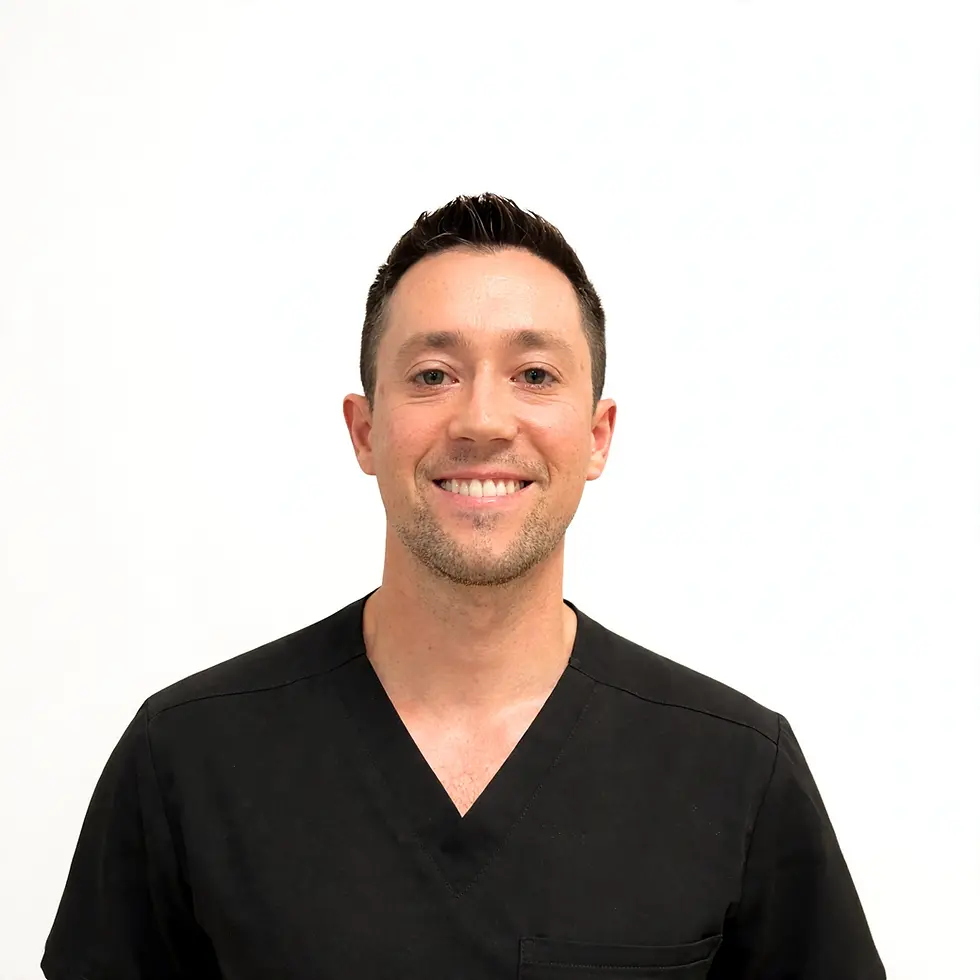
Dr. Pierce Knox
Nonsurgical Orthopedic Specialist
Fellowship trained in nonsurgical sports medicine at Penn Medicine; residency in primary care at Christiana Care.


