
)_edited_pn.png)


Stem Cell Therapy for Shoulder Arthritis: A Nonsurgical Option in Raleigh & Cary
Quick answer: Cell therapy (MFAT) uses your own microfragmented adipose tissue, prepared and injected the same day under ultrasound guidance. It is a cash-pay, nonsurgical option we offer in Raleigh & Cary for selected joint and tendon problems, and candidacy is decided at an evaluation. Cell therapy sits on the rung between "injections aren't enough anymore" and "I'm not ready for a replacement." You can read more about how MFAT works on our stem cell therapy page.
Shoulder arthritis has a particular way of shrinking your life. First it's reaching the top shelf. Then it's sleeping on that side, throwing a ball with your kid, or getting through a workout without paying for it the next day. When patients come to our Raleigh and Cary offices asking about shoulder replacement, many of them aren't actually asking for surgery — they're asking whether anything else can be done first.
For the right patient, cell-based therapy — often searched as "stem cell therapy" — is one of those options. Here's an honest look at how it works, what the evidence supports, and who it fits.
What shoulder arthritis actually is
The shoulder is a ball-and-socket joint. In a healthy shoulder, smooth cartilage lets the ball glide in the socket through a huge range of motion. Osteoarthritis wears that cartilage down. As it thins, the joint gets stiffer, weaker, and more painful — often with grinding, night pain, and progressive loss of motion.
Shoulder arthritis is less common than knee or hip arthritis, but it tends to hit active people hard, including former overhead athletes, weightlifters, and manual workers whose shoulders have logged decades of load.
Where cell therapy fits in the treatment ladder
Most shoulder arthritis care follows a ladder:
Activity modification and physical therapy — the foundation, especially rotator cuff and scapular strengthening
Medications and occasional corticosteroid injections — helpful for flares, but repeated steroids aren't a long-term plan
PRP (platelet-rich plasma) — a reasonable regenerative step for milder arthritis
Cell-based therapy (MFAT) — a stronger regenerative option for mild-to-moderate arthritis that hasn't responded to simpler steps
Shoulder replacement — a genuinely successful operation, and the right answer for advanced, bone-on-bone arthritis with major motion loss
Cell therapy sits on the rung between "injections aren't enough anymore" and "I'm not ready for a replacement." You can read more about how MFAT works on our stem cell therapy page.
What MFAT treatment involves
MFAT stands for microfragmented adipose tissue. A small amount of your own fat — usually from the flank or abdomen — is collected through a tiny poke-hole incision under local anesthetic. It's processed in a closed system to concentrate the cell-rich fraction, then injected into the shoulder joint under ultrasound guidance so we can watch the needle go exactly where it needs to be.
The whole visit takes one to two hours. There's no general anesthesia, no hospital stay, and you go home with your arm in a sling for comfort, not a cast.
What does the evidence actually say?
We want to be straight with you, because this is where a lot of marketing outruns the science:
The strongest research on cell-based therapy is in the knee. Shoulder-specific studies are smaller and fewer, though published series report meaningful pain and function improvement for many patients with mild-to-moderate shoulder arthritis.
No study shows these treatments regrow cartilage or reverse arthritis. The realistic goal is less pain, better function, and delaying or avoiding replacement.
Results build over weeks to months, not days. Most patients who respond notice meaningful change by about three months.
If a clinic promises you a brand-new shoulder joint from an injection, that promise isn't supported by evidence — here or anywhere.
Who tends to be a good candidate?
Cell therapy for the shoulder tends to fit patients who:
Have mild-to-moderate arthritis on imaging (not severe bone-on-bone with deformity)
Have a functioning rotator cuff — the cuff muscles and tendons still doing their job
Have already tried therapy and simpler injections without enough relief
Want to delay or avoid replacement — often younger patients concerned about a prosthetic joint's lifespan, or anyone hoping to stay active without major surgery
Are willing to do the follow-up physical therapy that protects the result
Who it usually does not fit: advanced arthritis with severe motion loss, arthritis driven by a massive irreparable rotator cuff tear, inflammatory arthritis in an active flare, or an active infection. For those patients, we'll say so plainly — and for many of them, replacement is honestly the better operation.
Recovery: what to expect
Days 1–7: soreness at the harvest site and some shoulder aching. Most people are back to desk work in a day or two.
Weeks 2–6: gentle motion work, then progressive strengthening with physical therapy. Heavy overhead lifting waits.
Months 2–6: this is when improvement typically declares itself. We'll reassess your pain, motion, and function together.
Avoid anti-inflammatory medications (like ibuprofen) for about two weeks after treatment, since they can blunt the biological response we're trying to create. We'll tell you what you can use for soreness instead.
The bottom line
Stem cell therapy for shoulder arthritis isn't a replacement for replacement — and it isn't magic. It's a legitimate middle option for the right shoulder: mild-to-moderate arthritis, a working rotator cuff, and a patient who wants to stay active and put off surgery. The evaluation — your exam, your imaging, and what you've already tried — is what tells us whether you're that patient.
If shoulder pain is deciding what you can and can't do, come in for an honest assessment. We'll tell you if you're a candidate, and we'll tell you if you're not.
Call 919.719.2270 to schedule an evaluation at our Raleigh or Cary office.
About Your Physicians
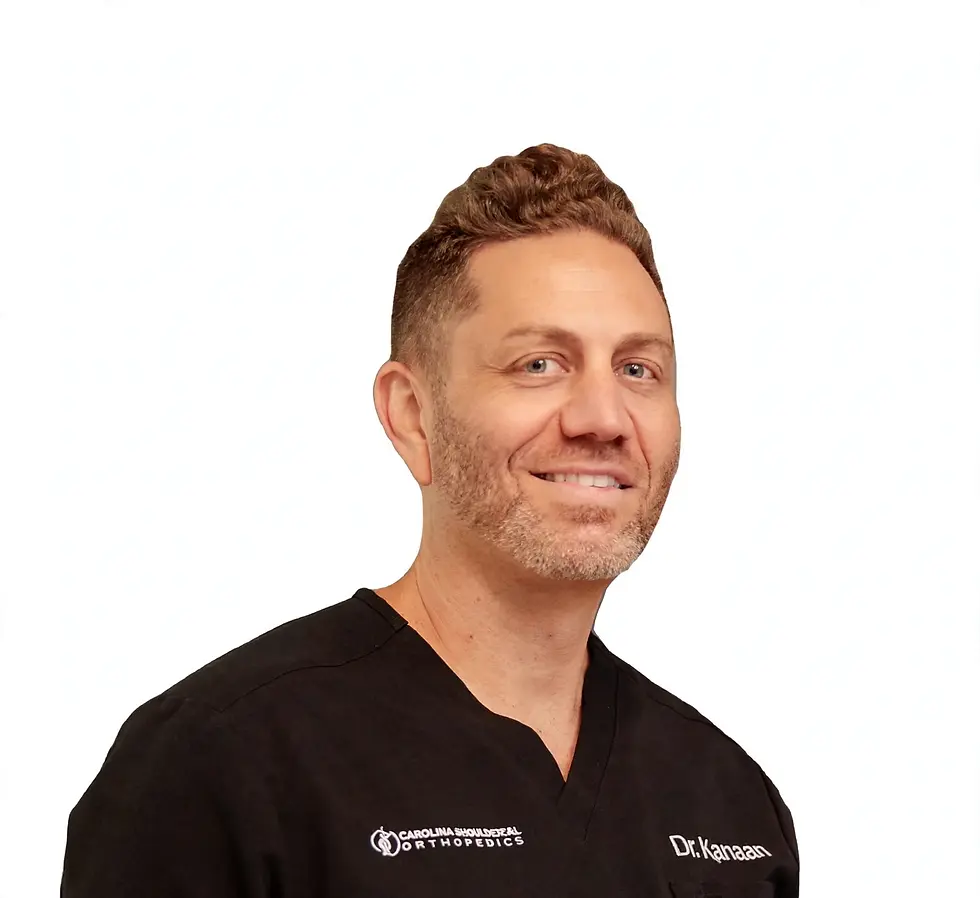
Dr. Matthew Kanaan
Nonsurgical Orthopedic Specialist
Founder of Carolina Nonsurgical Orthopedics. Fellowship trained in sports medicine at Duke; residency in family medicine at Duke, where he served as Chief Resident.
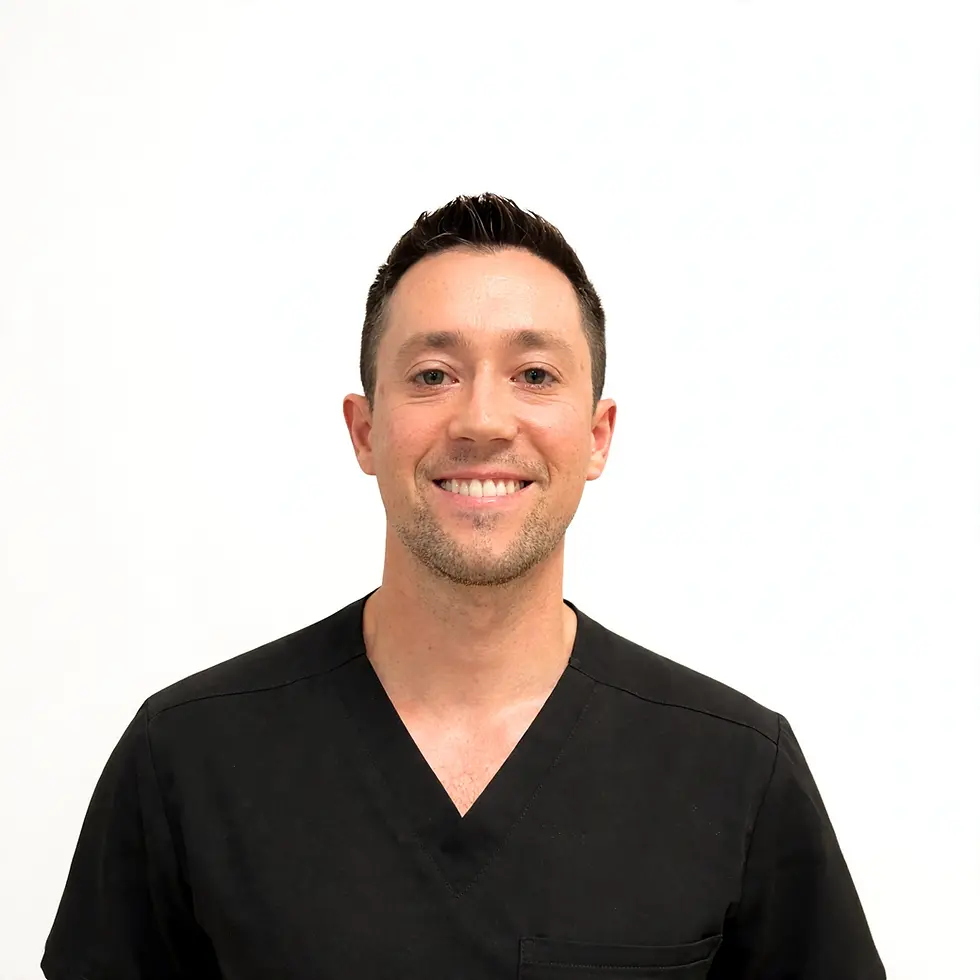
Dr. Pierce Knox
Nonsurgical Orthopedic Specialist
Fellowship trained in nonsurgical sports medicine at Penn Medicine; residency in primary care at Christiana Care.


