


Sports Hernia: The Groin Pain With No Bulge
Updated: Oct 14
Quick answer: The name is misleading; the pain is real; and it's one of the most underdiagnosed causes of chronic groin pain in athletes.
The Groin Injury That Isn't a Hernia
You're a cutting-sport athlete — soccer, hockey, football, tennis — and there's a deep ache in the groin when you plant and twist, kick, or sprint. You've checked: no bulge, no lump. Your doctor says "it's not a hernia." But it hurts like one, and it isn't getting better with rest.
Welcome to the sports hernia — more accurately called athletic pubalgia — a soft-tissue injury of the lower abdominal and groin structures that produces hernia-like pain without any actual herniation. The name is misleading; the pain is real; and it's one of the most underdiagnosed causes of chronic groin pain in athletes.
What Athletic Pubalgia Actually Is
Despite the name, there's no protruding intestine. The injury is a tear or attenuation of the soft tissues where the abdominal muscles and adductors anchor to the pubic bone — typically involving the rectus abdominis insertion, the adductor longus origin, or the inguinal canal's posterior wall.
The mechanism: sports that demand repetitive twisting, cutting, and kicking create a shear force across the pubic symphysis — the abdominals pull up, the adductors pull down, and the pubic bone is the rope in their tug-of-war. Over time, the attachment fails.
Common co-travelers that must be sorted out: adductor strains, hip impingement (FAI) and labral tears (which refer pain to the groin and frequently coexist), osteitis pubis (inflammation of the pubic bone itself), and true inguinal hernias.
Symptoms
Deep groin pain with cutting, twisting, kicking, or sprinting — often one-sided
Pain that eases with rest but returns immediately when the sport resumes
Tenderness over the pubic bone and lower abdominal insertion
Pain with sit-ups, coughing, or sneezing (abdominal loading)
Sometimes radiation into the inner thigh or lower abdomen
The frustrating pattern: rest helps, return-to-sport flares it within days
How We Diagnose It
Athletic pubalgia is a clinical diagnosis supported by imaging — there's no single definitive test:
History and exam — the sport, the movement pattern, resisted sit-up and adductor testing, palpation of the pubic tubercle, and a careful hernia exam to rule out true herniation
Hip exam — because FAI/labral pathology mimics and coexists; we screen every groin-pain athlete for hip mechanics
MRI — the key study: shows pubic bone marrow edema, adductor or rectus abdominis tearing, and the posterior inguinal wall deficiency; also evaluates the hip labrum in the same study
Dynamic ultrasound — can visualize posterior wall bulging with Valsalva in real time; in-office
Diagnostic injection — a precisely placed anesthetic injection that temporarily eliminates the pain confirms the pain generator
Nonsurgical Treatment
The first line is always conservative — and it works for a meaningful share of athletes:
1. Relative rest, then graded reloading. Complete rest rarely cures it (the tissue needs progressive loading to remodel), but the aggravating movements pause while rehab begins.
2. Rehabilitation — the cornerstone. A structured program targeting the actual imbalance:
Core and pelvic stability — restoring the abdominal/adductor force balance across the pelvis
Adductor strengthening — progressive, pain-guided; the Copenhagen adduction protocol has real evidence here
Hip mobility and mechanics — addressing the FAI-type movement patterns that overload the pubic structures
Return-to-sport progression — cutting and kicking reintroduced in stages, not all at once
3. Anti-inflammatory measures. Short-term NSAIDs and ice for flares during the rehab process.
4. Ultrasound-guided injections. Corticosteroid around the pubic structures can calm the inflammatory component; **PRP** and prolotherapy have a selective role for the soft-tissue injury component — we offer these when the exam and imaging support a tissue-healing target, not as a blind groin injection.
5. Addressing the hip. When FAI or a labral tear coexists — common — the groin won't stay quiet until the hip mechanics are managed. Treating the pubalgia while ignoring the hip is why symptoms "keep coming back."
When Surgery Is the Honest Answer
Athletes who fail 6–12 weeks of good conservative care, or whose imaging shows significant tissue disruption, are surgical candidates — typically a repair of the abdominal/adductor attachment, sometimes with inguinal wall reinforcement. Outcomes are good when the diagnosis is right, which is why the workup matters more than the rush to the OR. When you've exhausted the nonsurgical path properly, we refer to a surgeon who does a high volume of these.
When to Get Evaluated
Groin pain with cutting or kicking lasting more than 3–4 weeks
The rest-feels-better, sport-flares-it cycle
Any groin pain with a visible bulge (possible true hernia — different workup)
Pain that's spreading to the hip or lower abdomen
Schedule Your Evaluation
Call Carolina Nonsurgical Orthopedics at 919.719.2270 or schedule your visit online. With offices in Raleigh and Cary, NC — and in-office ultrasound plus a sports medicine framework built for cutting-sport athletes — we'll sort out whether your groin pain is athletic pubalgia, a hip problem, or both, and build the rehab path back to full cutting.
About Your Physicians
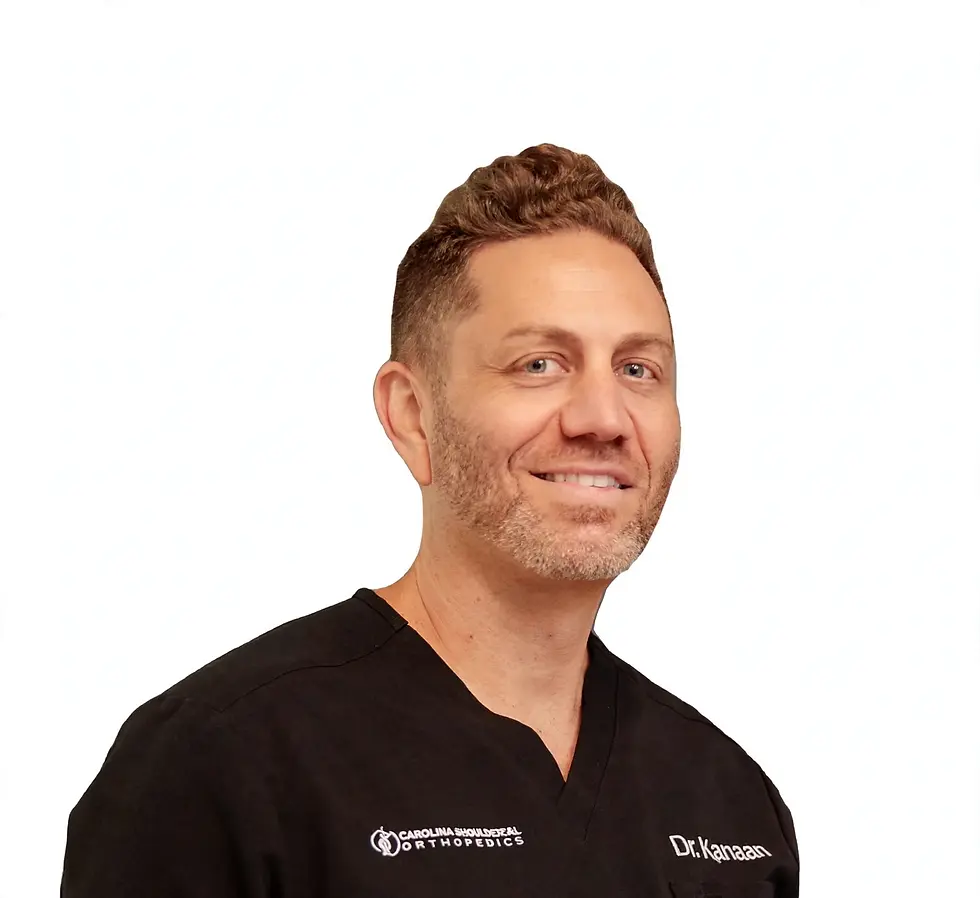
Dr. Matthew Kanaan
Nonsurgical Orthopedic Specialist
Founder of Carolina Nonsurgical Orthopedics. Fellowship trained in sports medicine at Duke; residency in family medicine at Duke, where he served as Chief Resident.
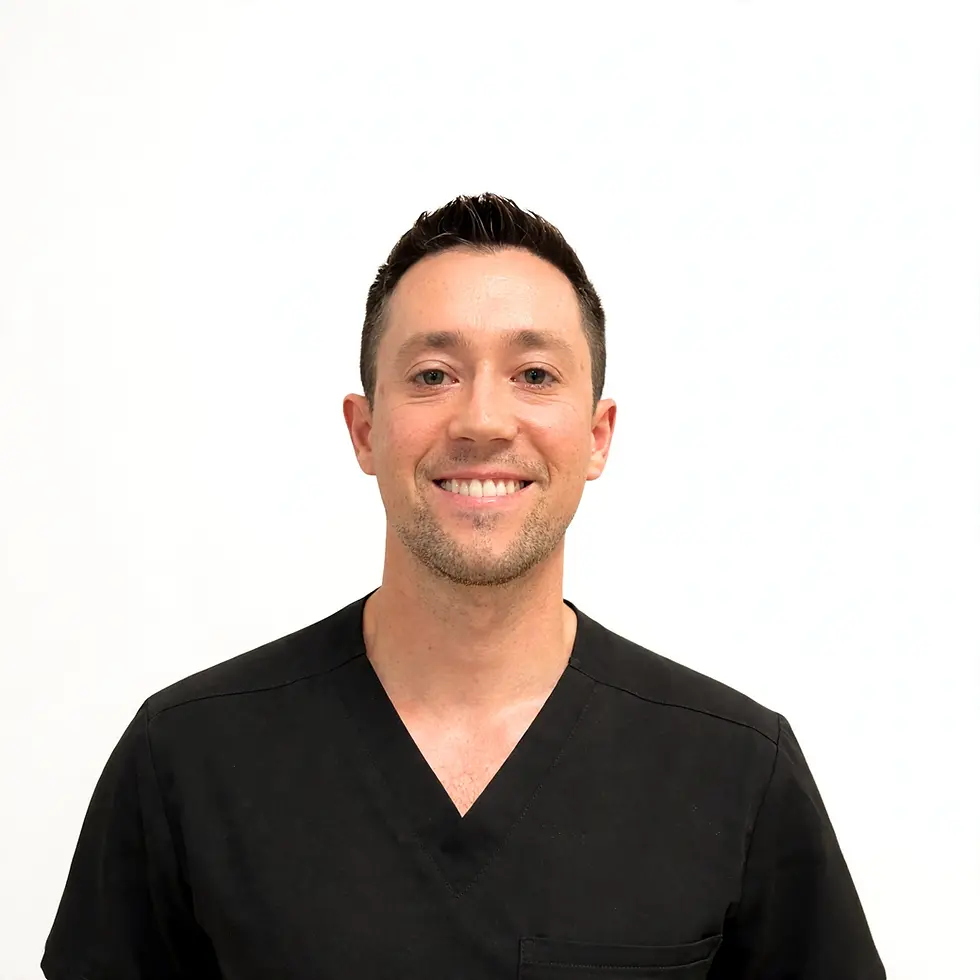
Dr. Pierce Knox
Nonsurgical Orthopedic Specialist
Fellowship trained in nonsurgical sports medicine at Penn Medicine; residency in primary care at Christiana Care.


