


Thumb Arthritis (CMC Joint): Options Beyond Splints and Surgery
Updated: Oct 14
Quick answer: Thumb carpometacarpal (CMC) joint arthritis is one of the most common forms of hand osteoarthritis, particularly in adults over 50, and it affects women more often than men. It is a saddle-shaped joint that gives the thumb its remarkable range of motion — the ability to rotate and oppose the fingers that makes gripping, pinching, and fine manipulation possible.
Opening jars, turning keys, buttoning a shirt, gripping a golf club — the thumb is involved in nearly everything your hand does, and when the joint at its base becomes arthritic, even small tasks can become surprisingly painful. Thumb carpometacarpal (CMC) joint arthritis is one of the most common forms of hand osteoarthritis, particularly in adults over 50, and it affects women more often than men. If aching, stiffness, or weakness at the base of your thumb is limiting your daily life in Raleigh or Cary, NC, it is worth knowing that the choice is not simply "live with it" or "have surgery." There is a meaningful middle ground of nonsurgical options.
This guide explains what thumb CMC arthritis is, which conservative treatments help, where injections fit, what emerging options like PRP involve, and when surgical consultation makes sense. Results vary — not everyone responds the same way — and accurate diagnosis is the foundation of good decisions.
Understanding Thumb CMC Arthritis
The carpometacarpal joint sits at the base of the thumb, where the first metacarpal bone meets the trapezium, a small bone in the wrist. It is a saddle-shaped joint that gives the thumb its remarkable range of motion — the ability to rotate and oppose the fingers that makes gripping, pinching, and fine manipulation possible. That same mobility, combined with the large forces transmitted through the joint during pinch (many times the force you feel at your fingertips), makes it vulnerable to wear over time.
In CMC arthritis, the protective cartilage gradually thins and wears away. As the joint space narrows, bone can rub on bone, producing the deep ache at the thumb base. The joint may become inflamed, stiff (especially mornings), and tender; over time, pinch weakness develops and the thumb may shift out of alignment, creating a visible bump.
Diagnosis is usually straightforward: exam often includes a "grind test" — gently rotating the metacarpal against the trapezium — which typically reproduces the pain. X-rays confirm the diagnosis and show joint space narrowing, bone spurs, and any subluxation. Staging matters, because treatments for early, mild arthritis differ from those for advanced, bone-on-bone disease.
Conservative Care That Actually Helps
For mild to moderate thumb CMC arthritis, conservative measures are the starting point, and they help many people. A well-fitted CMC stabilizing brace — supporting the thumb base while leaving the tip free — is one of the most useful tools. Wearing it during aggravating activities reduces painful motion at the joint while letting you keep using your hand.
Activity modification extends the benefit: larger grips on tools, jar-opening aids instead of brute pinch force, carrying bags on the forearm, and pacing hand-intensive tasks all reduce load through the CMC joint. A hand therapist can teach these strategies plus gentle strengthening for the supporting muscles, which improves stability and can reduce pain during pinch.
Topical anti-inflammatories (such as diclofenac gel) are worth trying before oral medications, delivering local effect with minimal systemic exposure. Short courses of oral anti-inflammatories can help during flares. None of these regrow cartilage, but in combination they reduce pain and preserve function for many patients with early to moderate disease — though results vary.
Injections: Corticosteroid and Beyond
When bracing, therapy, and medications are not enough, an injection into the CMC joint is a reasonable next step. A corticosteroid injection can calm inflammation and often provides meaningful relief lasting weeks to months. Because the CMC joint is small and sits near nerves and tendons, ultrasound guidance improves accuracy, confirming medication reaches the joint space.
Have realistic expectations: corticosteroid injections treat inflammation and pain, not the underlying arthritis, and relief is temporary. Still, a well-timed injection can break a pain cycle, allow more effective therapy, and get you through a demanding period with far less discomfort.
PRP and Cell Therapy: What the Evidence Says
This is the question many patients arrive with: can a regenerative injection help thumb arthritis and possibly delay or avoid surgery? The honest answer is that the evidence is promising but early.
Platelet-rich plasma (PRP) — a concentrated preparation of your own platelets, rich in growth factors — has been studied in small trials for hand and thumb osteoarthritis, with some reporting reduced pain and improved function lasting several months. However, the studies are small, use different preparation methods, and follow patients briefly. PRP for thumb CMC arthritis is an emerging option with encouraging early signals, not an established standard of care.
Cell-based therapies, including adipose-derived (fat-derived) cell treatments, have even less published evidence for the thumb specifically, and claims about them should be viewed with appropriate skepticism. Any physician offering these treatments for thumb arthritis should be transparent about the state of the evidence.
Who might consider PRP? Patients with mild to moderate CMC arthritis who have tried standard conservative care, understand the evidence is still developing, and wish to explore options before surgery. It is least likely to help in advanced bone-on-bone arthritis with deformity. Any discussion of nonsurgical wrist and hand treatment options should include both what these therapies might offer and what they cannot promise — not everyone responds the same way.
When to Consider Surgery
For some patients, conservative care and injections eventually no longer provide acceptable relief — and a surgical consultation is the appropriate next step, not a failure. Hand surgeons offer well-established procedures for advanced thumb CMC arthritis, including ligament reconstruction with tendon interposition (LRTI), joint fusion, and newer implant options, with generally high patient satisfaction when performed for the right indications.
Signs it may be time include persistent pain despite bracing and injections, progressive pinch weakness interfering with daily activities, increasing deformity, and X-rays showing advanced joint destruction. Exploring the full range of arthritis treatment options first ensures that if you proceed to surgery, you do so confident the nonsurgical path was given a fair chance.
FAQ
Will a thumb brace weaken my hand if I wear it all the time?
Wearing a brace only during aggravating activities — rather than around the clock — minimizes deconditioning risk, and combining bracing with a hand therapist's strengthening exercises keeps supporting muscles active.
How many cortisone injections can I have in my thumb?
Most physicians space them at least a few months apart and become cautious after several injections in the same joint within a year or two, since repeated corticosteroid exposure can affect tendons and soft tissues. Needing injections frequently just to function suggests it may be time to discuss other options.
Can PRP regrow the cartilage in my arthritic thumb?
No — be wary of anyone who claims it can. Evidence suggests PRP may reduce pain and improve function for some patients, but there is no good evidence it regrows cartilage in an arthritic joint. Symptom improvement is the realistic goal.
Is thumb CMC arthritis the same as carpal tunnel syndrome?
No, though they can occur together. CMC arthritis is a joint problem at the thumb base causing aching, stiffness, and pinch weakness; carpal tunnel syndrome is nerve compression causing tingling and numbness in the fingers. The treatments differ — one more reason accurate diagnosis comes first.
Take the Next Step in Raleigh & Cary, NC
If thumb pain is making everyday gripping, pinching, and lifting difficult, you have more options than simply enduring it or scheduling surgery. At Carolina Nonsurgical Orthopedics, Dr. Matt Kanaan — a primary-care sports-medicine physician — provides thorough evaluation of thumb and hand arthritis, ultrasound-guided injection treatments, and honest guidance about emerging options like PRP, including when a surgical referral is the better path. Call 919.719.2270 or visit our schedule page to request an appointment at our Raleigh or Cary office.
About Your Physicians
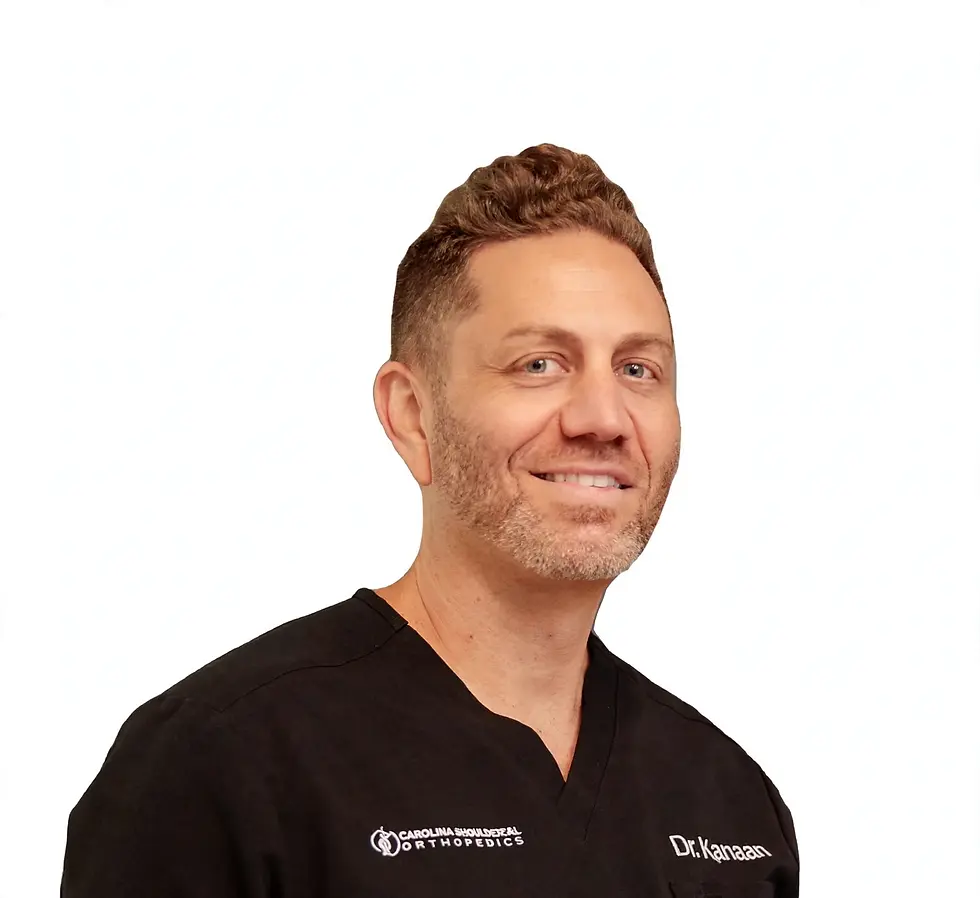
Dr. Matthew Kanaan
Nonsurgical Orthopedic Specialist
Founder of Carolina Nonsurgical Orthopedics. Fellowship trained in sports medicine at Duke; residency in family medicine at Duke, where he served as Chief Resident.

Dr. Pierce Knox
Nonsurgical Orthopedic Specialist
Fellowship trained in nonsurgical sports medicine at Penn Medicine; residency in primary care at Christiana Care.


