


Turf Toe & Hallux Rigidus: When the Big Toe Stops Bending
Updated: Oct 14
Quick answer: Named for the artificial turf it was first described on, turf toe happens when the big toe is forcibly bent upward — a football player tackled with the toe planted, a dancer, a soccer player pushing off. Who gets it: runners and field-sport athletes (repetitive jamming), people with long first metatarsals or flat feet, and anyone with a history of turf toe — the sprain is a known setup for later arthritis.
Two Problems, One Joint
The big toe's base joint (first MTP joint) takes a beating — it's the last thing to leave the ground with every step, absorbing multiples of body weight at push-off. When it goes wrong, it goes wrong in two distinct ways that get confused constantly:
Turf toe: an acute sprain of the joint's ligaments and capsule — a sudden hyperextension injury
Hallux rigidus: arthritis of the same joint — a slow, stiffening degeneration ("rigidus" = stiff)
Same joint, different disease, different treatment. Getting the label right is everything.
Turf Toe: The Sprain
Named for the artificial turf it was first described on, turf toe happens when the big toe is forcibly bent upward — a football player tackled with the toe planted, a dancer, a soccer player pushing off. The plantar ligaments and capsule underneath the joint tear, partially or completely.
Symptoms: sudden pain and swelling at the base of the big toe, bruising, pain with push-off and with bending the toe upward. Severe cases can't bear weight through the toe at all.
Treatment: relative rest, stiff-soled shoe or walking boot to prevent toe bend, ice, taping the toe to its neighbor for stability. Most Grade I–II sprains recover in 2–6 weeks. Complete tears (Grade III) with joint instability need specialist evaluation — occasionally surgical.
Hallux Rigidus: The Arthritis
This one creeps in over years. The cartilage in the big-toe joint wears down, bone spurs form on top of the joint, and the toe progressively loses its ability to bend upward — which is exactly the motion push-off requires.
Symptoms: aching at the top of the big-toe joint, a visible bony bump on top (not the side — that's a bunion), stiffness that's worst first thing in the morning or after sitting, and pain that worsens as the toe is forced to bend during walking. In advanced stages, the toe barely moves at all.
Who gets it: runners and field-sport athletes (repetitive jamming), people with long first metatarsals or flat feet, and anyone with a history of turf toe — the sprain is a known setup for later arthritis.
How We Diagnose Them
History and exam — the story separates them immediately (sudden injury vs. gradual stiffening); we measure the joint's range of motion, palpate the dorsal bump, and test push-off pain
Weight-bearing X-ray — the decisive test for hallux rigidus: joint space narrowing, dorsal bone spurs, and loose bodies grade the severity; for turf toe, X-ray rules out fracture or sesamoid injury; in-office, same visit
Ultrasound — evaluates the plantar ligaments and capsule in turf toe, guides injections; in-office
MRI when indicated — for suspected complete plantar plate rupture or sesamoid fracture in severe turf toe
Nonsurgical Treatment
For turf toe:
Immobilize the bend — stiff-soled shoe, carbon-fiber plate insert, or boot; the joint must not hyperextend while ligaments heal
Graduated return — range of motion and strengthening once pain allows; taping for early sport return
Don't rush it — returning before the ligaments heal is how acute turf toe becomes chronic instability and early arthritis
For hallux rigidus:
Stiff-soled shoes and rocker soles — reducing the bend the arthritic joint is forced through; the single most effective conservative measure
Orthotics with a Morton's extension — a rigid extension under the big toe that limits painful motion
Activity modification — low-impact alternatives during flares; hill running and deep lunges are the usual aggravators
Ultrasound-guided injections — corticosteroid into the joint for flares; PRP has a limited, honestly-framed role — the evidence in small-joint arthritis is thinner than in the knee, and we say so
Footwear counseling — high heels and flexible forefoot shoes are the enemy of this joint
When Surgery Is the Honest Answer
Advanced hallux rigidus with minimal remaining motion and constant pain is a surgical conversation — cheilectomy (spur removal) for moderate disease, fusion for end-stage. A fused big toe sounds drastic, but it reliably eliminates pain and most patients walk and even run comfortably afterward. When you've reached that point, we refer to a trusted foot and ankle surgeon rather than selling more injections.
When to Get Evaluated
Big-toe pain with push-off lasting more than 2–3 weeks
Visible bump on top of the joint, or the toe visibly stiffening
A turf-toe injury with significant swelling, bruising, or inability to push off
Pain that's changing your gait — limping off the big toe overloads everything upstream
Schedule Your Evaluation
Call Carolina Nonsurgical Orthopedics at 919.719.2270 or schedule your visit online. With offices in Raleigh and Cary, NC — and in-office weight-bearing X-ray for same-day grading — we'll determine whether your big-toe problem is sprain, arthritis, or the first turning into the second, and treat accordingly.
About Your Physicians
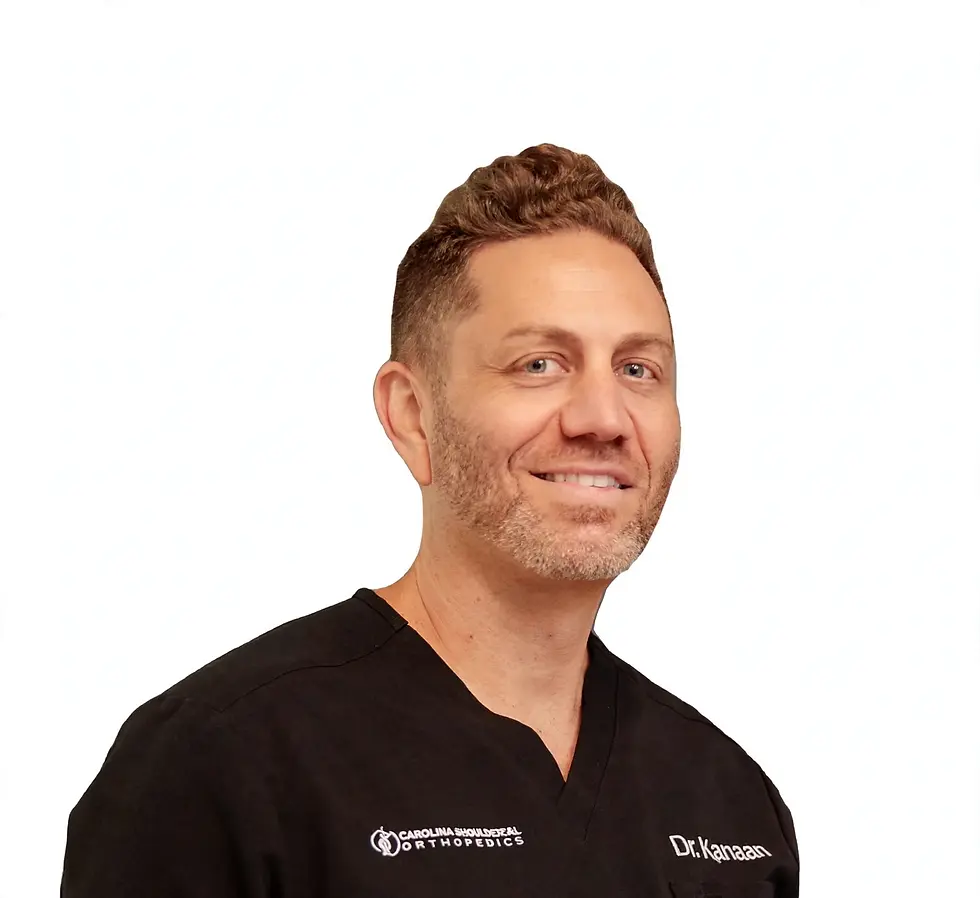
Dr. Matthew Kanaan
Nonsurgical Orthopedic Specialist
Founder of Carolina Nonsurgical Orthopedics. Fellowship trained in sports medicine at Duke; residency in family medicine at Duke, where he served as Chief Resident.
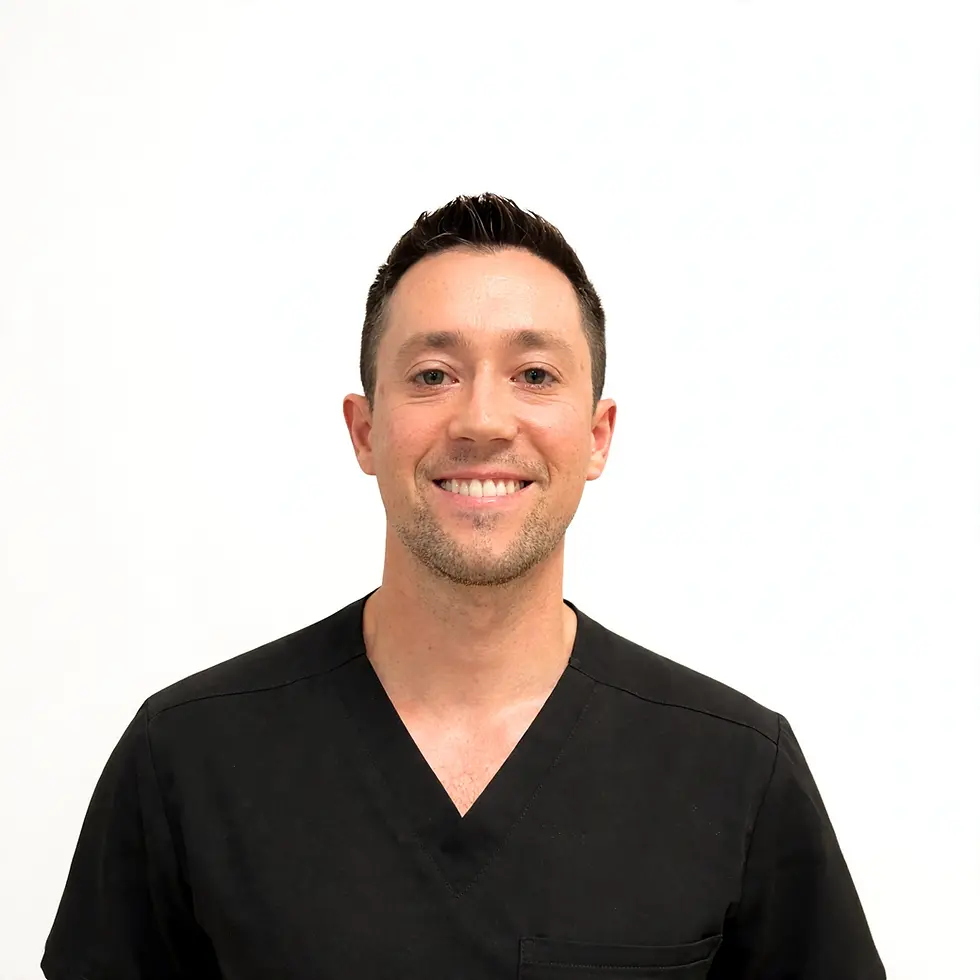
Dr. Pierce Knox
Nonsurgical Orthopedic Specialist
Fellowship trained in nonsurgical sports medicine at Penn Medicine; residency in primary care at Christiana Care.


