


UCL Elbow Injury (Thrower's Elbow): Medial Elbow Pain, Partial Tears, and When It's Not Tommy John Surgery
Updated: Oct 14
Quick answer: The first step is a defined rest period from throwing — typically 6+ weeks for partial tears — while maintaining conditioning, lower-body work, and kinetic-chain rehab. The surgery — ulnar collateral ligament reconstruction — has become so routine in baseball that the injury behind it gets less attention than it deserves.
The Inside of the Elbow, the Outside of the Headlines
Every spring, a famous pitcher disappears for a year with two words: Tommy John. The surgery — ulnar collateral ligament reconstruction — has become so routine in baseball that the injury behind it gets less attention than it deserves. Because for every major leaguer getting a new ligament, there are thousands of high school pitchers, javelin throwers, wrestlers, and weekend warriors with the same ligament stretched, partially torn, and aching on the inside of the elbow — most of whom will never need a surgeon's drill.
The UCL is the primary stabilizer against valgus stress at the elbow — the force that tries to bend the elbow inward during the late cocking and early acceleration phases of throwing. Its anterior bundle takes enormous repetitive load: biomechanical studies estimate each hard throw applies near-failure stress to the ligament. Do that thousands of times with poor mechanics, inadequate rest, or year-round throwing, and the ligament starts to fail.
How a UCL Injury Feels
Pain along the inside (medial) elbow during throwing, especially in the late cocking/acceleration phase
Loss of velocity or control — the classic "dead arm" that isn't the shoulder
Tenderness right over the UCL, just below the medial epicondyle (the bony bump on the inside)
A sense the elbow might "open up" on the inside with hard throws
In acute injuries: a pop followed by immediate pain and inability to continue throwing
Numbness or tingling in the ring and small fingers — the ulnar nerve runs right behind the UCL and gets irritated in many UCL injuries
It's worth distinguishing from its neighbors: golfer's elbow (medial epicondylitis) is tendon pain at the flexor-pronator attachment — achy with gripping and wrist flexion, not the valgus "opening" sensation. Ulnar neuritis is primarily nerve symptoms. They often coexist, which is why the exam matters.
Grading the Injury
Grade I (sprain): Ligament stretched, no tear. Sore but stable.
Grade II (partial tear): Some fibers torn. Pain with valgus stress, but the elbow remains functionally stable. This is the sweet spot for nonsurgical care.
Grade III (complete tear): Ligament fully disrupted, valgus instability. In competitive throwers, this is usually a surgical conversation.
How We Diagnose It
History and physical exam — the throwing history (velocity changes, pitch counts, year-round play), tenderness mapping, and valgus stress testing. The moving valgus stress test (applying valgus load through the throwing arc) reproduces the pain in a way static tests miss.
Diagnostic ultrasound lets us visualize the ligament, surrounding tendons, and the ulnar nerve in the office, same visit — useful for distinguishing sprains from more significant partial tears and for guiding precise injections.
MRI (usually with contrast arthrogram for throwers) remains the gold standard for grading partial vs. complete tears and spotting associated injuries — flexor-pronator strain, ulnar nerve irritation, posteromedial impingement. We order it when the diagnosis or the treatment decision requires that level of detail, not reflexively.
X-ray rules out fracture or avulsion in acute injuries, particularly in adolescents where the medial epicondyle growth plate is the weak link (Little League elbow — a related but distinct growth-plate injury we evaluate differently).
Nonsurgical Treatment: What Actually Works
Shut down the throwing, not the athlete. The first step is a defined rest period from throwing — typically 6+ weeks for partial tears — while maintaining conditioning, lower-body work, and kinetic-chain rehab. Complete rest of everything isn't required; rest of the valgus stress is.
Rehabilitation with a throwing focus. This isn't generic PT. Effective UCL rehab rebuilds the dynamic stabilizers — the flexor-pronator mass that backs up the ligament — corrects mechanical flaws (early trunk rotation, poor follow-through, over-throwing), and follows a structured interval throwing program for return. Mechanics video review is worth its weight here; most UCL injuries have a mechanical fingerprint.
**PRP for partial UCL tears.** This is the best-studied regenerative application in the throwing elbow, and the results are genuinely encouraging — with honest limits. Multiple case series in baseball players with partial UCL tears treated with PRP have reported return-to-play rates in the 70–90% range, often with a single ultrasound-guided injection followed by structured rehab. That's real-world meaningful. The caveat: these are case series, not large randomized trials, and patient selection matters enormously — good candidates are partial tears in throwers willing to do the full rehab and throwing program. PRP doesn't replace the ligament; it appears to support healing of partially torn fibers in the right setting. We place it precisely into and around the injured ligament under ultrasound guidance.
Prolotherapy. Dextrose prolotherapy has pilot-level data for chronic ligament injury including the elbow, and we consider it in selected partial-tear cases, particularly when cost or other factors make PRP less suitable. The evidence base is thinner — we'll tell you that directly.
What about shockwave and laser? Less relevant here than in tendinopathy. The UCL is a ligament under tensile load, not a degenerative tendon, and the evidence for shockwave in ligament healing is limited. We don't force tools where they don't fit.
The Tommy John Conversation — Without the Hype
Reconstruction (the "Tommy John" procedure, where a tendon graft replaces the ligament) is an excellent operation for the right patient: typically a competitive thrower with a complete tear or a high-grade partial tear that failed quality nonsurgical care. But it's a 12–18 month recovery, and the trend of young pitchers getting it casually is worth pushing back on. Most partial tears in non-elite throwers do well without reconstruction.
Red Flags: When It's Urgent or Surgical
A complete tear with gross valgus instability — the elbow visibly "opens" on stress testing
Persistent ulnar nerve symptoms — numbness, tingling, or weakness in the ring/small fingers that doesn't resolve with rest (may need nerve evaluation or transposition discussion)
Locking, catching, or loss of motion — suggests loose bodies or impingement that may need arthroscopy
An adolescent with medial elbow pain and widening on X-ray — possible growth-plate injury needing specialized management
Failure of a quality nonsurgical program — if 3–4 months of real rehab plus appropriate injection therapy hasn't restored throwing, surgical consultation is the honest next step, and we'll make that referral
When to Get Evaluated
Medial elbow pain that alters your throwing — velocity down, control off, or pain in the throwing motion
A pop with immediate medial elbow pain during a throw
Recurrent "dead arm" episodes that rest alone keeps failing to fix
Any ulnar nerve symptoms accompanying the elbow pain
Schedule Your Evaluation
Call Carolina Nonsurgical Orthopedics at 919.719.2270 or schedule your visit online. With offices in Raleigh and Cary, NC — and in-office X-ray and ultrasound for same-day answers — we'll grade the injury accurately and build a throwing-elbow plan around getting you back on the mound, not just getting you an MRI.
About Your Physicians
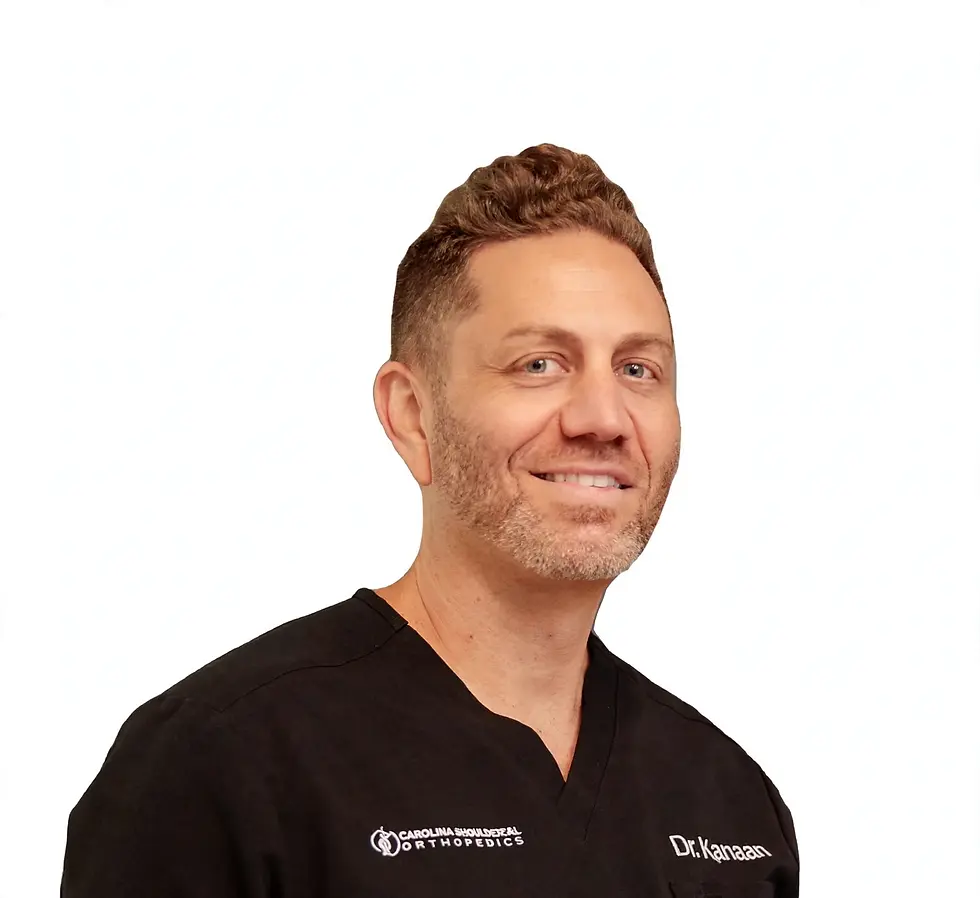
Dr. Matthew Kanaan
Nonsurgical Orthopedic Specialist
Founder of Carolina Nonsurgical Orthopedics. Fellowship trained in sports medicine at Duke; residency in family medicine at Duke, where he served as Chief Resident.
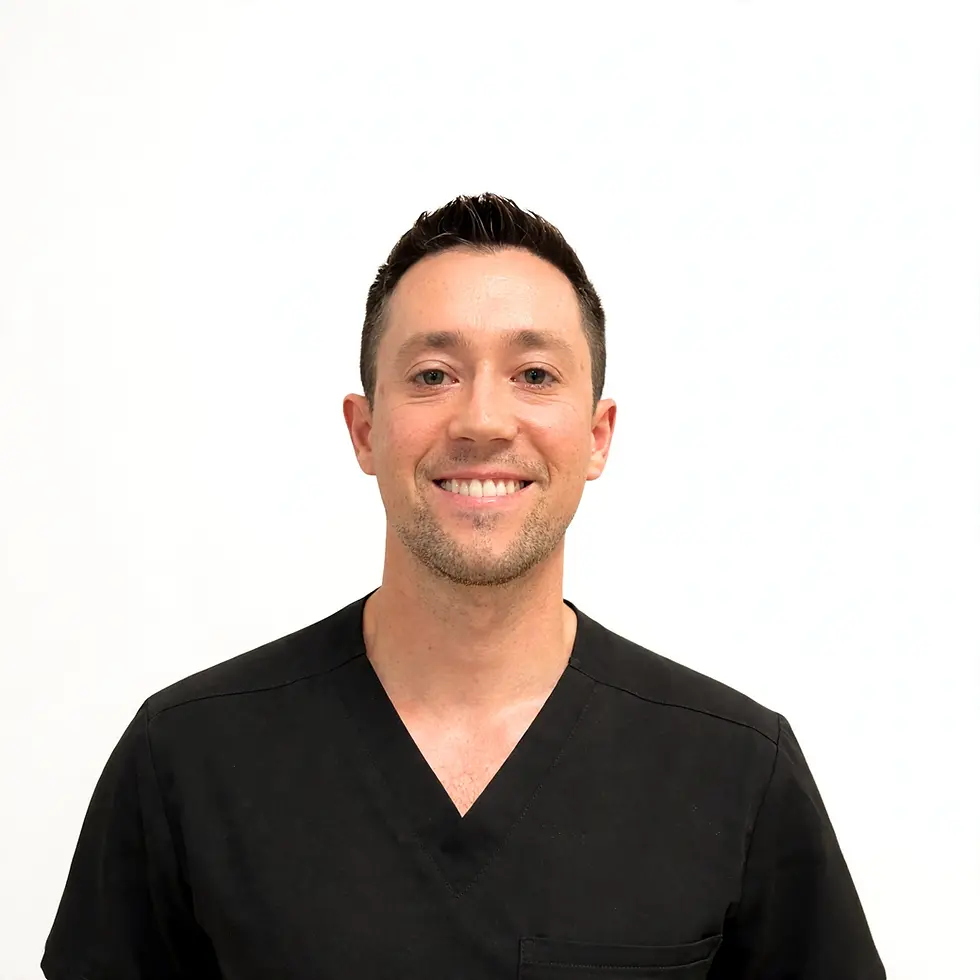
Dr. Pierce Knox
Nonsurgical Orthopedic Specialist
Fellowship trained in nonsurgical sports medicine at Penn Medicine; residency in primary care at Christiana Care.


