


ACL Tears: What Does the Research Show About Nonsurgical Options?
Updated: Oct 14
Quick answer: The nonsurgical path starts with an accurate diagnosis, then activity changes, therapy, and — when appropriate — image-guided treatment, with surgery considered only when conservative care isn't enough. That is the approach we take at Carolina Nonsurgical Orthopedics in Raleigh & Cary. But patients increasingly ask whether a nonsurgical path is possible, and whether regenerative treatments like PRP have a role.
Few injuries carry as much fear as a torn ACL. The classic story — a sudden pop during a pivot or landing, rapid swelling, the knee giving way — is something athletes and weekend warriors across Raleigh and Cary know all too well. For decades, the standard answer for many ACL tears has been surgery. But patients increasingly ask whether a nonsurgical path is possible, and whether regenerative treatments like PRP have a role.
This article takes an honest, evidence-grounded look. The bottom line up front: the research on regenerative approaches to ACL healing is early and emerging. Some findings are interesting, but nothing currently establishes that PRP or similar treatments can reliably heal an ACL tear. A proper in-person evaluation is essential, because the right decision depends on your tear type, activity level, and goals. We never promise a return to sport — no responsible physician can.
Understanding the ACL and How It Tears
The anterior cruciate ligament (ACL) is one of four major ligaments in the knee. It runs diagonally through the center of the joint, preventing the shin bone from sliding forward relative to the thigh bone while providing rotational stability. It's most commonly torn during sports involving sudden stops, changes of direction, pivoting, jumping, or direct contact — soccer, basketball, football, and skiing among them.
ACL tears vary. A complete tear means the ligament is fully ruptured; a partial tear means some fibers remain intact. Location matters too — tears near the ligament's attachment points behave differently from mid-substance tears. An in-person examination, often combined with MRI, determines what type of tear you're dealing with, and that distinction shapes every decision that follows.
Typical symptoms include a popping sensation at the time of injury, rapid swelling within hours, significant pain, a feeling that the knee is unstable or "giving way," limited range of motion, and difficulty bearing weight comfortably.
Surgical vs. Nonsurgical: The Traditional Framework
For many active patients, especially those in pivoting and cutting sports, ACL reconstruction surgery has been the standard recommendation. Surgery rebuilds the ligament using a graft, and rehabilitation is a long road — typically nine to twelve months before a safe return to high-demand sports.
But surgery isn't automatically right for everyone. Studies comparing structured rehabilitation alone with reconstruction have found that a meaningful number of patients do well with nonsurgical management — particularly those less active in pivoting sports, those willing to modify activities, or whose knees prove functionally stable after guided rehab. Some patients managed without surgery never need an operation; others try rehab first and elect for surgery later if instability persists.
This is sometimes called "coper vs. non-coper" decision-making: after a period of structured rehabilitation, some people cope well without a reconstructed ACL and some don't. That screening takes time, expertise, and honest self-assessment of activity goals — which is exactly why the evaluation matters so much.
What Early Research Is Exploring
Given the limits of both options, researchers have been exploring whether biological treatments can change the equation. The most studied is platelet-rich plasma (PRP). Here's what we can honestly say about the current evidence:
Most research has focused on PRP alongside surgery, not instead of it. Some studies explored whether PRP improves graft healing or reduces pain after ACL reconstruction. Findings have been mixed.
Research on PRP healing ACL tears without surgery is early and limited. A small number of published studies and case series have reported on PRP injected into partial ACL tears, with some patients showing improvement on follow-up imaging or symptoms. These studies are small, use varying PRP preparations, and lack the rigorous comparison groups needed for firm conclusions.
The biology is genuinely difficult. The ACL has limited blood supply, and once fully ruptured, the torn ends often retract and sit in joint fluid that interferes with natural healing. These are real obstacles no current treatment has clearly overcome. Anyone who tells you otherwise is overstating the evidence.
Cell therapies and other approaches are also being explored in early research, but they remain investigational for ACL healing.
To be direct: there is no established, reliable nonsurgical regenerative treatment that heals ACL tears today. Early research is interesting and worth following, but it should not be mistaken for proven therapy.
Why Individualized Evaluation Matters So Much
The "right" answer for an ACL tear is personal. Key factors include:
Tear type. A partial tear and a complete tear are different injuries with different prognoses.
Activity level and goals. A competitive soccer player, a recreational cyclist, and a desk worker with knee instability each face different demands.
Age and overall knee health. Associated injuries — meniscus tears, cartilage damage, other ligament injuries — change the picture.
Knee stability after rehabilitation. How your knee functions after structured rehab is one of the strongest predictors of how you'll do without surgery.
Your willingness to commit to rehabilitation. Both paths — surgical and nonsurgical — require serious rehab. There's no shortcut.
No article can replace a thorough evaluation: history, physical examination, imaging review, and an honest discussion about what your knee needs to do for the life you want to live.
What a Nonsurgical Path Can Look Like
When nonsurgical management is chosen — as the definitive plan or a first step — it isn't "doing nothing." A serious nonsurgical plan typically includes:
Structured physical therapy focused on restoring range of motion, rebuilding quadriceps and hamstring strength, and retraining neuromuscular control.
Activity modification during the healing and strengthening phase, avoiding pivoting and cutting until the knee proves stable.
Bracing in some cases, particularly early on or for specific activities.
Ongoing reassessment. This is critical. If the knee gives way repeatedly or instability interferes with daily life, the plan needs to change — and surgery remains a valid option.
Our practice focuses on nonsurgical knee pain treatment for a range of knee conditions, and we treat sports medicine injuries with this same individualized, evidence-first approach. You can also read about how we perform PRP injections — while being clear that PRP is not an established treatment for ACL tears, patients often want to understand the therapy before discussing whether it has any role in their specific case.
A Note on Expectations
We want to be straightforward about what we don't promise. We don't promise that a nonsurgical approach will restore a torn ACL. We don't promise return to sport on any timeline — rehabilitation is measured in months, and re-injury is a real risk. What we do promise is an honest evaluation: a clear explanation of your injury, the evidence behind each option, and a recommendation based on your knee and your goals.
FAQ
Can an ACL tear heal on its own?
Complete ACL tears rarely heal on their own due to limited blood supply and the joint fluid environment. Some partial tears may show healing on imaging over time. Many patients function well without surgery after structured rehabilitation — but "functioning well" and "healed" are different things, and only an evaluation with imaging can determine your situation.
Is PRP proven to heal ACL tears?
No. Research on PRP for ACL healing without surgery is early, limited to small studies, and has not established reliable healing. Be cautious of any clinic presenting PRP as a proven ACL cure.
How do I know if I'm a candidate for nonsurgical management?
It requires an in-person evaluation with examination and imaging review, followed in most cases by a trial of structured rehabilitation. Tear type, knee stability, activity demands, and associated injuries all weigh into the decision.
What should I do right after a suspected ACL tear?
Seek prompt medical evaluation. Meanwhile: rest the knee, apply ice, use compression and elevation, and avoid pivoting or bearing full weight if it's painful. Don't try to "test" the knee with sports movements — an early, accurate diagnosis gives you the most options.
Take the Next Step
An ACL injury is too important to navigate on guesswork. Whether you're hoping to avoid surgery, weighing reconstruction, or simply want to understand your injury, a thorough evaluation is the right first step.
Call 919.719.2270 or visit our schedule page to request an appointment at our Raleigh or Cary office. We'll examine your knee, review your imaging, and give you an honest assessment — including when surgery, rather than anything we offer, is the right call.
About Your Physicians
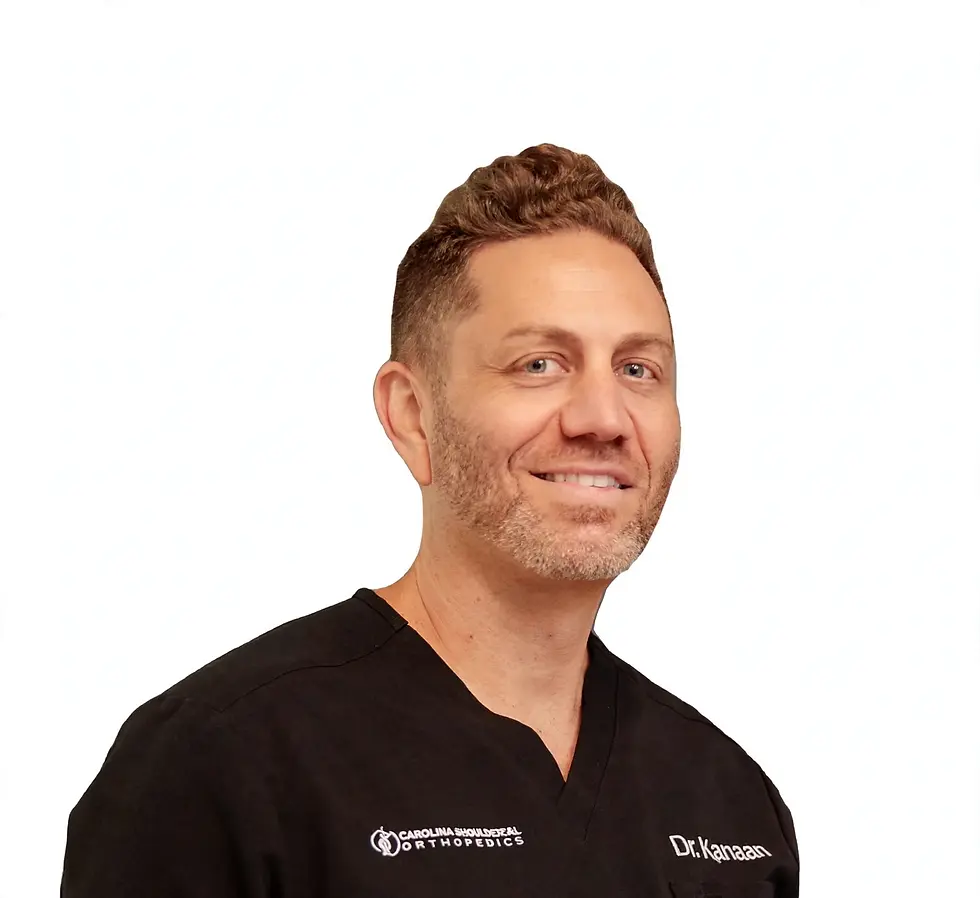
Dr. Matthew Kanaan
Nonsurgical Orthopedic Specialist
Founder of Carolina Nonsurgical Orthopedics. Fellowship trained in sports medicine at Duke; residency in family medicine at Duke, where he served as Chief Resident.
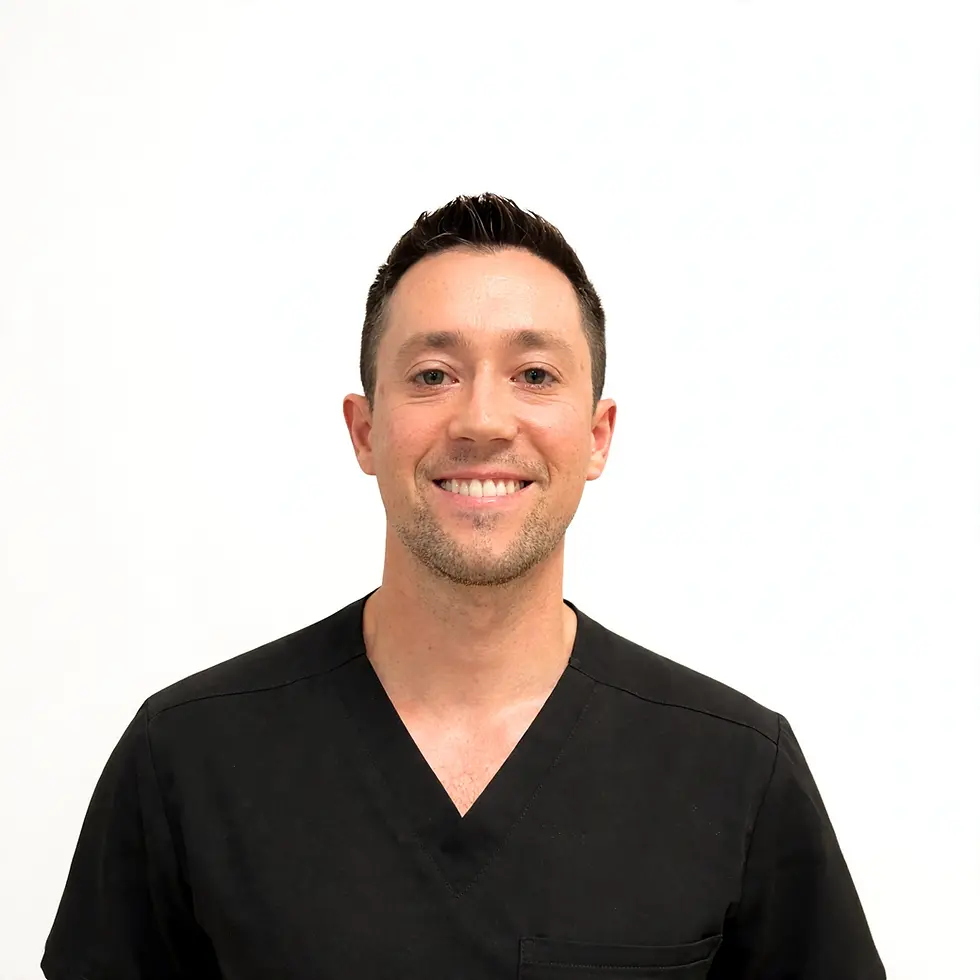
Dr. Pierce Knox
Nonsurgical Orthopedic Specialist
Fellowship trained in nonsurgical sports medicine at Penn Medicine; residency in primary care at Christiana Care.


