
)_edited_pn.png)


Meniscus Tears: A Nonsurgical Path With PRP and Cell Therapy
Updated: Oct 15
Quick answer: PRP and MFAT cell therapy are both nonsurgical, cash-pay regenerative treatments we offer in Raleigh & Cary, using your own blood or your own adipose tissue. Which one fits depends on the joint or tendon, how advanced the problem is, and what the evidence supports. Evidence increasingly supports nonsurgical management of meniscus tears, and regenerative options like high-dose PRP and adipose-derived cell therapy give patients more tools than ever to avoid the operating room.
Few phrases cause as much anxiety in active adults as "torn meniscus." The knee swells, it catches or locks, stairs become a negotiation — and the first thought is often that an operation is unavoidable. In many cases it isn't. Evidence increasingly supports nonsurgical management of meniscus tears, and regenerative options like high-dose PRP and adipose-derived cell therapy give patients more tools than ever to avoid the operating room.
What the Meniscus Does — and How It Tears
Each knee has two menisci: C-shaped wedges of cartilage between the thigh bone and shin bone. They act as shock absorbers, distribute load across the joint, and help stabilize the knee. Without them, the cartilage covering the bones wears down much faster.
Meniscus tears come in two broad flavors. Traumatic tears happen in younger, active people — a twist during a soccer game or a deep squat under load. Degenerative tears happen in middle-aged and older adults, often with no memorable injury: the tissue weakens over time, and a routine movement like rising from a chair finishes the job. Many adults over 50 have a meniscus tear on MRI without any symptoms.
Tear location matters enormously. The outer rim of the meniscus (the "red zone") has a blood supply and can potentially heal; the inner portion (the "white zone") has almost none. Tear pattern matters too: some tears are stable and cause intermittent symptoms, while others create a loose flap that catches painfully in the joint.
The Case for Trying Nonsurgical Care First
For degenerative meniscus tears — the kind most middle-aged patients have — the evidence increasingly favors starting with nonsurgical treatment. Multiple clinical trials have found that structured physical therapy produces outcomes comparable to arthroscopic partial meniscectomy for degenerative tears, particularly when arthritis is also present. Trimming the meniscus also removes load-sharing tissue, which can accelerate arthritis over the years — a real long-term cost.
Traumatic tears in young athletes are a different conversation — some patterns, like a "bucket handle" tear that locks the knee, may genuinely need surgical repair. But many traumatic tears in adults can be managed without surgery if the knee is stable. The key is an evaluation that distinguishes which tear you have, not a blanket recommendation in either direction.
Physical Therapy: The Foundation
Any nonsurgical plan for a meniscus tear starts with rehabilitation: quadriceps and hip strengthening, restored range of motion, better balance and neuromuscular control, and a gradual return to activity. Many patients are surprised by how much better the knee feels after several weeks of well-directed therapy, even though the tear itself hasn't changed on imaging.
That said, rehab alone doesn't work for everyone. Persistent pain, recurrent swelling, or a knee that still catches after a dedicated course of therapy signals that the tear needs a more direct intervention — where regenerative injections enter the picture.
How PRP Can Help Meniscus Tears
PRP uses your own blood, concentrated to deliver a high dose of platelets and their growth factors, injected precisely into the knee under ultrasound guidance — typically into the joint and, when anatomy allows, targeted toward the meniscal tissue itself.
The growth factors in PRP signal the body's repair cells to migrate to the area, encourage new blood vessel formation, and modulate inflammation inside the joint. Laboratory and early clinical research suggests PRP may support healing of tears in the vascular outer zone and can reduce the pain and inflammation associated with tears elsewhere in the meniscus.
A 2024 systematic review found that patients receiving PRP reported greater pain relief and functional improvement than control treatments in several trials, with benefits persisting a year or more. As with all regenerative treatments, results vary — not everyone responds the same way, and tears in the avascular inner zone remain the hardest to influence.
Cell Therapy (MFAT) for Meniscus Injuries
MFAT — microfragmented adipose tissue — is a same-day procedure using your own fat tissue. A small amount of fat is harvested, gently processed to preserve its natural regenerative cell population, and injected into the knee under ultrasound guidance. Patients often hear this described as "cell therapy" or "stem cell" treatment.
The rationale for meniscus tears: instead of only signaling molecules, cell therapy delivers living cells to the injured area — potentially a more complete repair stimulus for tissue with limited blood supply. Early clinical studies of adipose-derived cell therapy for knee injuries, including meniscus tears, have reported reduced pain and improved function with a favorable safety profile; the most common side effects are temporary soreness at the harvest and injection sites.
The evidence base for cell therapy is still growing, and these treatments remain an evolving area of medicine rather than a guaranteed fix. You should have an honest discussion about the state of the research, the specific risks, and realistic expectations. What regenerative treatment should never be is a substitute for sound judgment: some tear patterns genuinely need a surgeon, and a trustworthy clinic will tell you when that's the case.
When Surgery Might Still Be the Right Call
Mechanical locking. If a torn flap wedges in the joint and the knee physically locks or gives way repeatedly, that's a mechanical problem injections can't reposition — surgical evaluation is warranted.
Young athletes with repairable tears. A traumatic tear in the vascular zone of a young patient is sometimes an excellent candidate for surgical repair (stitching, not trimming), which preserves the meniscus.
Failed nonsurgical trial. If quality rehab and a course of regenerative treatment still leave significant symptoms, surgery remains reasonable. Trying nonsurgical options first doesn't harm your surgical outcome — and the strength built in rehab helps recovery either way.
Progressive arthritis with malalignment. In some advanced cases, the overall joint condition drives the decision more than the meniscus itself.
The patients who do best are the ones whose treatment matches their actual tear — which is why the initial evaluation, including a careful MRI review and physical examination, matters more than any single treatment.
What a Nonsurgical Treatment Plan Looks Like
A typical nonsurgical pathway unfolds in stages. First, a comprehensive evaluation: your history, a knee examination, and a detailed review of your MRI to classify the tear's location, pattern, and stability, plus an assessment of the surrounding cartilage. Second, structured rehabilitation — often with a physical therapist — to restore strength and mechanics. Third, if symptoms persist, ultrasound-guided regenerative injections: high-dose PRP, cell therapy, or a combination, followed by guided rehab. Throughout, progress is reassessed functionally — because the goal is a knee that works, not a pretty picture.
For patients dealing with knee pain in Raleigh and Cary, NC, this stepwise approach offers a genuine alternative to being scheduled for arthroscopy at the first visit.## Frequently Asked Questions
Will my meniscus tear heal on its own?
It depends on the tear. Tears in the outer, vascular "red zone" have some capacity to heal, especially in younger patients; tears in the inner, avascular "white zone" rarely heal spontaneously. However, many tears become asymptomatic with rehabilitation and time as inflammation settles and surrounding muscles compensate. Regenerative treatments like PRP and cell therapy aim to improve the odds of meaningful healing and symptom relief, though results vary and not everyone responds the same way.
Is PRP better than cortisone for a meniscus tear?
They do different things. Cortisone calms inflammation and can provide relatively quick pain relief, but it doesn't promote tissue repair, and repeated cortisone may weaken cartilage over time. PRP is intended to support the body's repair processes, with effects that build over weeks. Many physicians use cortisone sparingly — for example, to settle a severe flare so rehab can proceed — while considering PRP or cell therapy when the goal is longer-term improvement.
How long does recovery take after PRP or cell therapy for a meniscus tear?
Expect a gradual course, not an overnight fix. Most patients notice improvement building over 6 to 12 weeks, with continued gains over several months as rehabilitation progresses. You'll typically rest briefly after the injection, then return to activity in a structured way guided by your symptoms. Your physician should give you a realistic timeline — and tell you at what point a lack of progress would prompt reconsidering the plan.
Can I avoid a knee replacement later by treating my meniscus tear now?
No one can promise that, but preserving meniscal tissue is associated with slower arthritis progression than removing it. Regenerative treatments aim to reduce pain, improve function, and support joint health. Whether they change the long-term trajectory of arthritis is still being studied, so think of treatment as addressing today's knee, not as insurance against every future problem.
Take the Next Step
A meniscus tear doesn't automatically mean surgery. If you're in the Raleigh or Cary, NC area and want an honest, sports-medicine evaluation of your options — including high-dose PRP and cell therapy — call 919.719.2270 or visit our schedule page. We'll review your MRI, examine your knee, and help you decide whether a nonsurgical path makes sense.
Had PRP somewhere else — and it didn't work?
A failed PRP injection doesn't always mean PRP can't help you. The two most common reasons we see when we review outside treatments are dose — many clinics deliver a fraction of the platelet dose used in the studies that showed benefit, and often never measured it — and placement, when the injection was done without ultrasound guidance and never reached the target it was meant for. If your first treatment was underdosed or unguided, having it done properly is a different procedure, not a repeat of the same one. At an evaluation with us, we'll review what was actually done and tell you honestly whether redoing it right makes sense — or whether something else would serve you better.
About Your Physicians
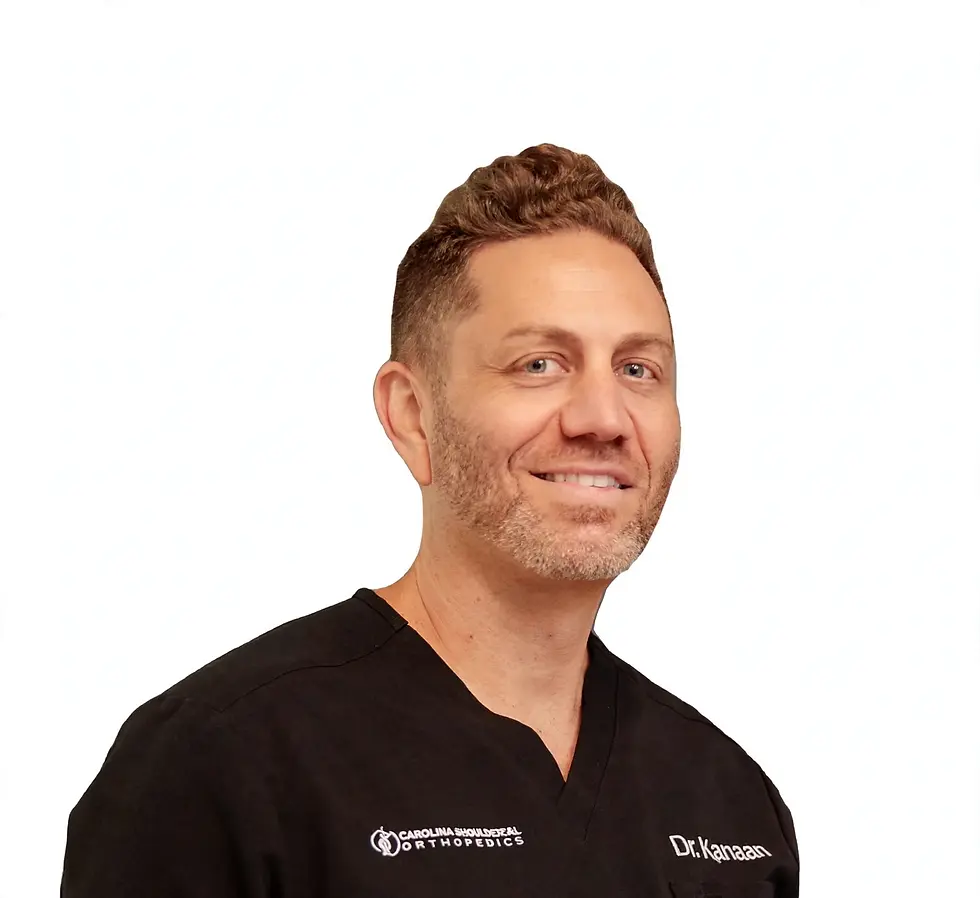
Dr. Matthew Kanaan
Nonsurgical Orthopedic Specialist
Founder of Carolina Nonsurgical Orthopedics. Fellowship trained in sports medicine at Duke; residency in family medicine at Duke, where he served as Chief Resident.
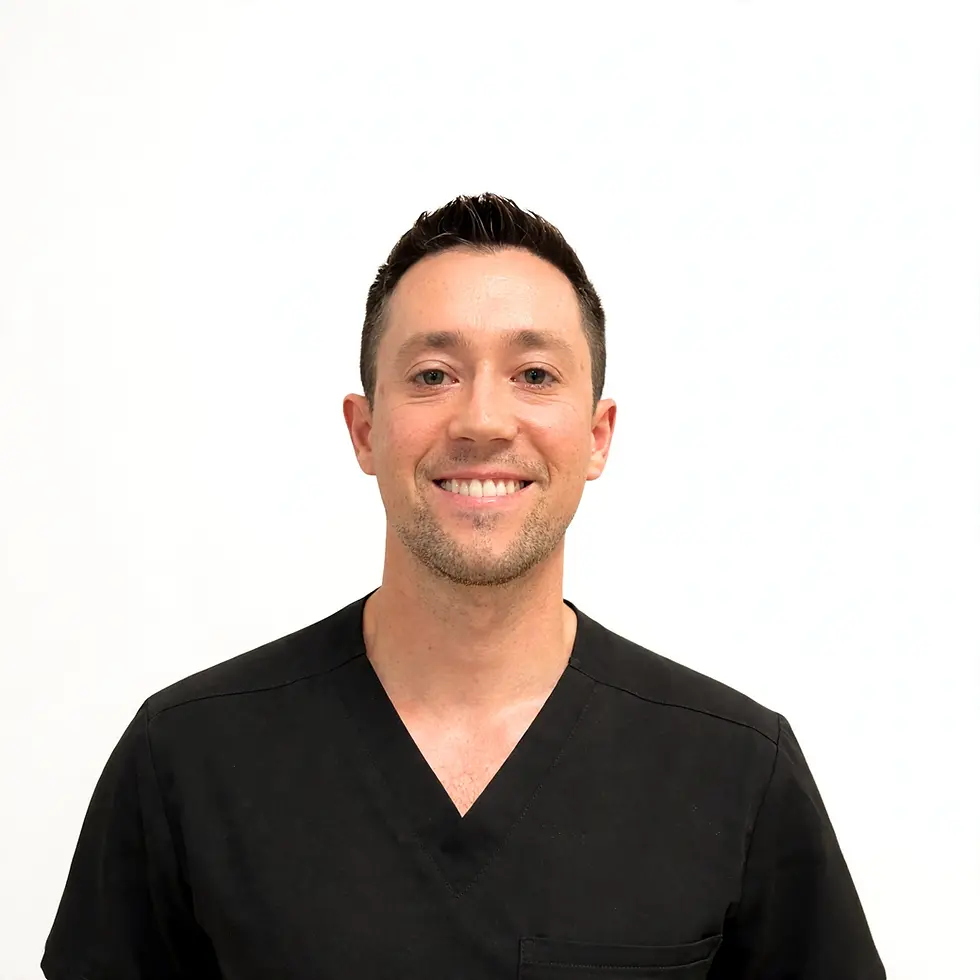
Dr. Pierce Knox
Nonsurgical Orthopedic Specialist
Fellowship trained in nonsurgical sports medicine at Penn Medicine; residency in primary care at Christiana Care.


