
)_edited_pn.png)


Elbow Bursitis (Olecranon Bursitis): The Swollen Elbow Tip — When to Watch, When to Drain, When to Worry
Updated: Oct 14
Quick answer: The olecranon bursa is a thin, fluid-filled sac that sits between the pointy tip of your elbow (the olecranon) and the skin. That's olecranon bursitis, and it's one of the most visually alarming, usually-benign problems in orthopedics.
That Swollen "Water Balloon" on Your Elbow
It usually starts with a bump. You lean on a desk, bang your elbow on a doorframe, or just wake up to find the tip of your elbow has ballooned into something that looks — and feels — like a water balloon under the skin. It might not even hurt much. That's olecranon bursitis, and it's one of the most visually alarming, usually-benign problems in orthopedics.
The olecranon bursa is a thin, fluid-filled sac that sits between the pointy tip of your elbow (the olecranon) and the skin. Its job is to let the skin glide smoothly over the bone when you bend your elbow. When it gets irritated, it fills with excess fluid and swells — sometimes dramatically.
What Causes Elbow Bursitis?
Trauma. A direct blow — a fall onto the elbow, a hard knock — is the classic trigger. Blood can leak into the bursa (hemorrhagic bursitis), which makes the swelling appear fast and look bruised.
Prolonged pressure. This is the "student's elbow" or "miner's elbow" pattern: hours of leaning on hard surfaces — desks, workbenches, armrests. Plumbers, mechanics, students, and desk workers are the usual suspects.
Repetitive motion. Repeated bending and straightening under load can irritate the bursa over time.
Gout and inflammatory arthritis. Gout crystals and rheumatoid inflammation can both set up shop in the bursa. If your bursitis keeps coming back without an obvious cause, this deserves a look.
Infection. This is the one that matters most, covered in detail below.
Septic vs. Aseptic: The Critical Distinction
Most elbow bursitis is aseptic — inflamed but not infected. It looks swollen, maybe mildly tender, but the surrounding skin looks fairly normal and you feel fine otherwise.
Septic (infected) bursitis is a different animal and needs prompt medical attention. Red flags include:
The skin over the elbow is red, hot, and increasingly painful — not just swollen
Red streaks spreading up the arm
Fever, chills, or feeling ill
A recent cut, scrape, puncture, or insect bite over the elbow
Swelling that appeared rapidly over hours with escalating pain
You have diabetes or an immune-compromising condition (higher infection risk)
If infection is suspected, don't wait it out. An infected bursa can spread to surrounding tissue and, rarely, into the bloodstream. This is one of the few elbow problems that belongs in urgent care or the ER the same day.
How We Diagnose It
Physical exam tells most of the story — the location (right over the olecranon tip), the fluctuant fluid feel, and the condition of the overlying skin.
Diagnostic ultrasound — which we perform in-office — is genuinely useful here. It confirms the fluid collection, measures it, checks the bursal wall thickness, and helps distinguish a simple fluid collection from something more complex. It also guides any aspiration precisely.
Aspiration (fluid sampling) is the key test when infection is a question. We draw fluid from the bursa and send it for cell count, crystals, and culture. This is the definitive way to rule infection in or out.
X-ray doesn't show the bursa, but we use it to rule out a fracture (after trauma), a foreign body, or underlying bone spurs that may be aggravating the area.
Nonsurgical Treatment
For uncomplicated aseptic bursitis, the playbook is straightforward:
Protect and offload. Stop leaning on it. Elbow pads or a donut cushion take pressure off while it calms down. This single step resolves a large share of cases.
Ice and NSAIDs. Fifteen minutes of ice a few times daily, plus an anti-inflammatory if you tolerate them, for the first week or two.
Activity modification. Ease off the specific activity that provoked it — the desk habit, the sport, the work task — until the swelling resolves.
Compression. A light elastic wrap can discourage fluid re-accumulation.
When it won't quit: ultrasound-guided aspiration and injection. If the bursa stays swollen for weeks despite protection, we can drain the fluid under ultrasound guidance in the office — quick, precise, and far more comfortable than a blind stick. For persistent aseptic bursitis, a small corticosteroid injection into the emptied bursa can calm the lining and reduce recurrence. One honest note: aspiration alone has a meaningful recurrence rate, because the irritated bursal lining refills. Combining drainage with strict protection afterward gives the best odds.
A word on PRP and regenerative injections for bursitis: we'll be straight with you — this isn't where PRP shines. Bursitis is an inflamed fluid sac, not a degenerating tendon or arthritic joint, and there's no meaningful evidence base for PRP in bursitis. For chronic, multiply-recurrent aseptic bursitis that has failed aspiration and protection, we'd rather have an honest conversation about bursectomy (surgical removal of the bursa, a small outpatient procedure) than sell you an injection the literature doesn't support.
For septic bursitis: antibiotics, sometimes with serial aspirations, and close follow-up. Severe or non-responding infections need surgical washout — we'll get you to the right surgeon fast rather than watch and hope.
When to Get Evaluated
Swelling that hasn't improved after 2–3 weeks of protection and rest
Recurrent bursitis — same elbow, swelling keeps coming back
Any suspicion of gout (you have a gout history, or the fluid looks crystal-laden)
You can't tell whether it's bursitis or something else — triceps tendon problems and fractures can coexist after trauma
Go urgently for the infection red flags above: spreading redness, fever, severe pain, or rapid worsening.
Schedule Your Evaluation
Call Carolina Nonsurgical Orthopedics at 919.719.2270 or schedule your visit online. With offices in Raleigh and Cary, NC — and in-office X-ray and ultrasound for same-day answers — we'll sort out whether that swollen elbow is a simple bursa that needs protection, a case for guided aspiration, or something that needs more urgent attention.
About Your Physicians
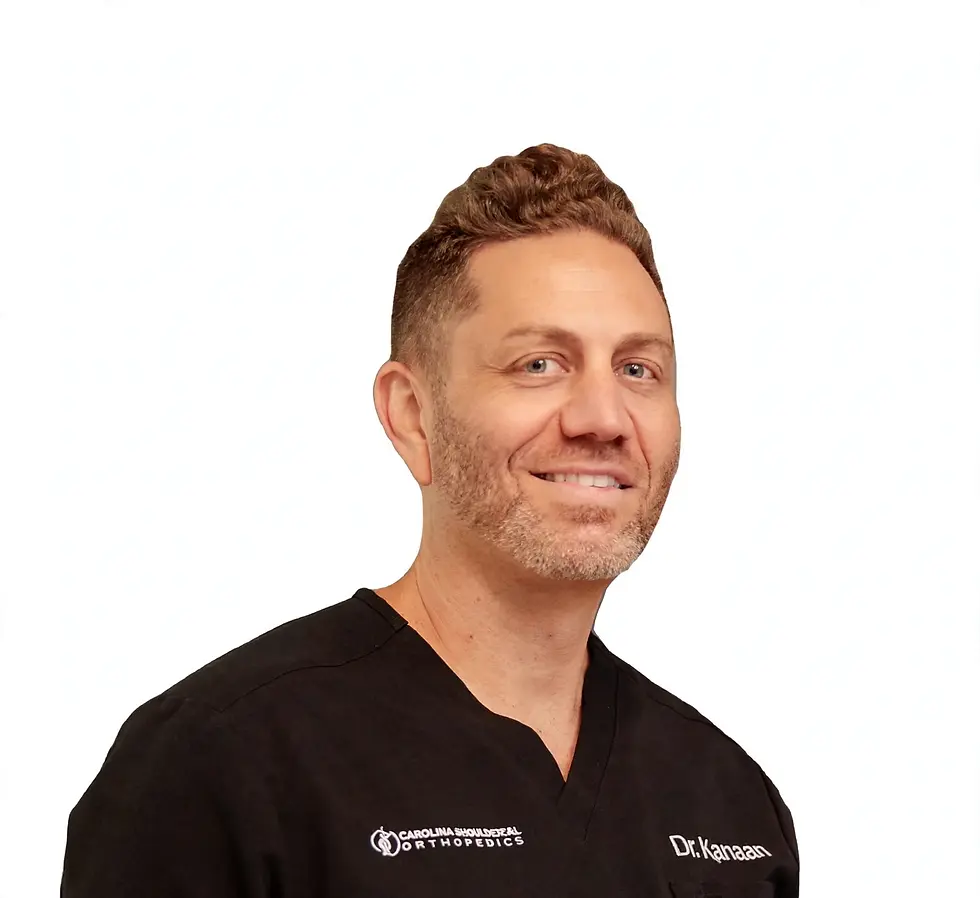
Dr. Matthew Kanaan
Nonsurgical Orthopedic Specialist
Founder of Carolina Nonsurgical Orthopedics. Fellowship trained in sports medicine at Duke; residency in family medicine at Duke, where he served as Chief Resident.
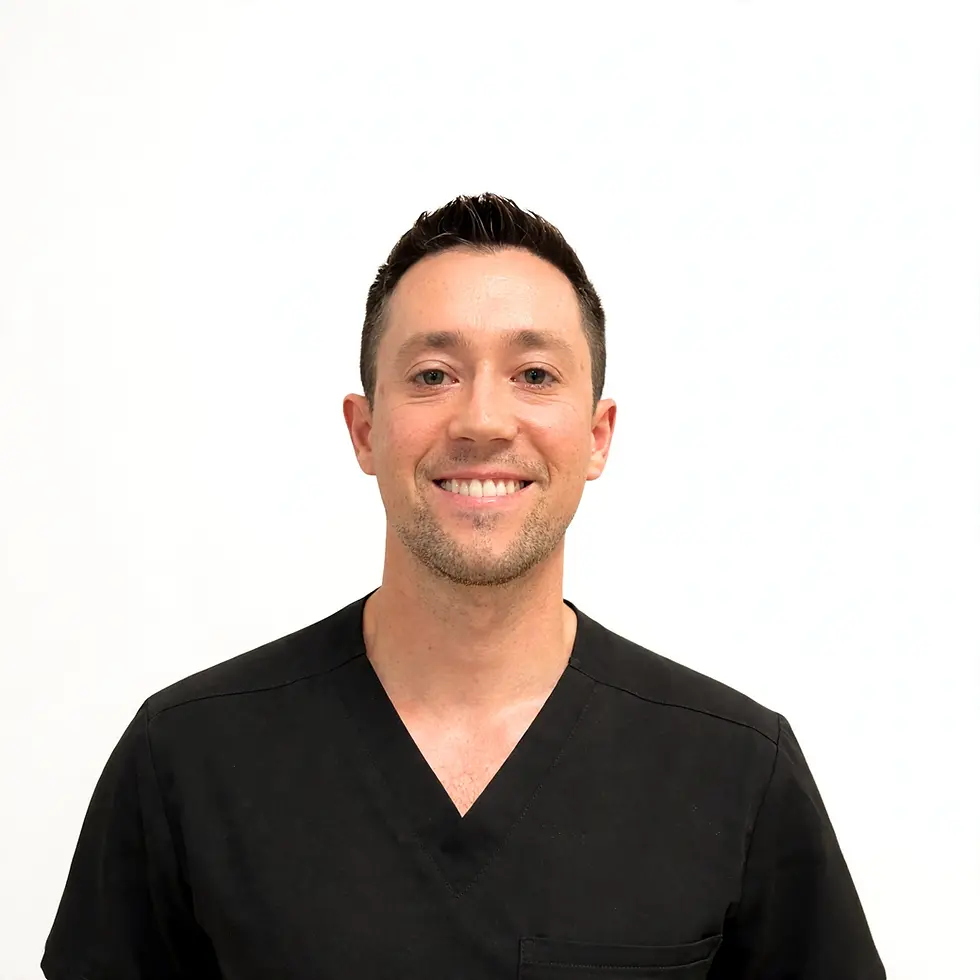
Dr. Pierce Knox
Nonsurgical Orthopedic Specialist
Fellowship trained in nonsurgical sports medicine at Penn Medicine; residency in primary care at Christiana Care.


