
)_edited_pn.png)


PRP Didn't Work? Why Your First PRP Injection May Not Have Been a Fair Test
Quick Answer: When PRP "doesn't work," the failure usually traces to how the treatment was performed, not to the treatment itself. The two most common reasons we see are dose — the injection delivered far fewer platelets than the doses that showed benefit in research — and placement, when the injection was done without ultrasound guidance and never reached the target. A failed first attempt doesn't prove PRP can't help you, but it doesn't guarantee a second one will, either. The only way to know is to review what was actually done.
You did your homework. You paid out of pocket — PRP is rarely covered by insurance — you went through the blood draw, the spin, the injection, the sore week afterward. And then: nothing. Or a few good weeks that faded.
Most people land on one of two conclusions: "PRP is a scam," or "my joint must be too far gone." Sometimes one of those is true. But in our experience reviewing these cases, the more common story is that the treatment itself was never really delivered — what was injected, or where it went, fell short of what the research is based on. Here's how that happens.
Reason 1: The dose was too low
"PRP" is not a standardized product. It's whatever comes out of a particular clinic's preparation process, and that varies enormously — how much blood is drawn, which system is used, how efficiently it captures platelets, and your own platelet count to begin with. Two injections with the same name can differ several-fold in the total number of platelets delivered.
This matters because platelet dose appears to be one of the main drivers of whether PRP works. In analyses of the knee arthritis research that sort trials by dose, treatment arms delivering roughly 5.5 billion platelets improved significantly over control, while arms delivering 2.3 billion or fewer did not separate from placebo. The best-known "PRP doesn't work" trial — the RESTORE study, which made headlines in 2021 — used a dose of about 1.6 billion platelets, squarely in the range now considered likely too low. (We wrote a full explainer on this: PRP Dose Matters: Why Two PRP Injections May Not Be the Same Treatment.)
Here's the uncomfortable question to ask about your first treatment: do you know your dose? Most patients don't, because most clinics never measured it. If your blood draw was small and the system basic, there's a real chance your "PRP" was a fraction of the dose used in the studies that showed benefit.
Reason 2: Nobody watched where it went
Platelets only work where they're placed. PRP deposited outside the joint — or beside a tendon instead of in it — is an expensive injection of your own plasma into tissue that didn't need it.
Injections done by feel ("landmark-guided" or "blind") miss more often than most patients realize. Accuracy studies consistently show landmark-guided injections failing to reach the intended target in a substantial share of cases, and the miss rate climbs for deep joints like the hip and for small, specific targets like a tendon insertion. With ultrasound guidance, the physician watches the needle arrive at the target in real time and confirms the PRP goes where it was supposed to.
This is especially decisive for tendon problems — tennis elbow, gluteal tendons, Achilles, patellar tendon — where the treatment is the placement. It's also decisive in the other direction: sometimes the injection went into the joint when the real pain generator was a tendon or bursa outside it. Guidance doesn't just improve aim; it forces the question of what the target actually is.
Reason 3: The target was wrong
No dose and no aim fixes a wrong diagnosis. PRP injected into a knee will not help pain that's actually coming from the hip, or from a bone marrow lesion, or from a meniscus tear that is mechanically catching and locking. Part of a proper PRP evaluation is confirming — by exam and, in our offices, diagnostic ultrasound — that the structure being treated is the structure generating the pain. If your first treatment started with the injection rather than the diagnosis, that's a reason it may have failed that has nothing to do with PRP itself.
Reason 4: The protocol around it worked against it
Smaller things add up:
Anti-inflammatory medication. NSAIDs like ibuprofen affect platelet function, and many PRP protocols — ours included — ask patients to pause them around the procedure. If you were taking them straight through, that's a variable worth knowing about.
Judging too early. PRP is not a steroid shot. It's a biologic nudge toward repair, and the timeline is weeks to months, not days. A treatment written off at two weeks may simply not have been given its timeline.
One and done. Some conditions respond to a single adequate treatment; others are planned as a series from the start. A single low-dose injection followed by "it didn't work" is sometimes an unfinished plan rather than a failed one.
Loading too fast. Returning to full activity immediately, against post-procedure guidance, can squander a treatment that was done correctly.
The honest part: sometimes PRP just isn't the answer
We would rather say this plainly than sell you a second injection: PRP done perfectly still doesn't help everyone. The positive trials don't show 100% response rates, and some situations are poor bets from the start — end-stage, bone-on-bone arthritis with deformity; large structural tears; instability; pain from a source PRP can't reach. If that's your situation, the correct answer isn't a better PRP treatment. It's a different plan, and a clinic willing to tell you so before taking your money is the clinic you want.
A failed PRP treatment also doesn't close every door. Depending on the joint and the problem, the conversation may turn to cell-based treatment (MFAT), shockwave, or a referral to a surgeon when surgery is honestly the right tool. That triage is what an evaluation is for.
What a second look actually involves
If you're considering whether PRP deserves another chance, bring whatever records you have from the first treatment. The questions we'd work through:
What system prepared it, and how much blood was drawn?
Was the platelet dose or concentration ever measured — and what was it?
Was it leukocyte-rich or leukocyte-poor?
Was the injection ultrasound-guided, and what exactly was targeted?
How many injections were done, and what were you told about medications and activity around them?
Often the records answer the question by themselves: a small draw, no dose measured, no guidance, one injection. That's not a failed treatment — that's an incomplete one, and redoing it properly is a genuinely different procedure. Other times the records show a treatment that was done well and simply didn't take, and then the honest recommendation is to stop spending money on PRP.
Every PRP treatment at our Raleigh and Cary offices is ultrasound-guided, prepared under a standardized protocol, and preceded by an evaluation whose entire job is to tell you whether you're a reasonable candidate — including when the answer is no.
The bottom line
"PRP didn't work for me" is the start of a review, not a verdict. If your first injection was underdosed or unguided — the two most common failures we see — it wasn't a fair test of the treatment. And if it was done right and still failed, you deserve to hear that clearly and be pointed at what might actually help. Either way, the next step is the same: an evaluation that starts with what was actually done last time. To schedule one in Raleigh or Cary, call 919-719-2270.
About Your Physicians
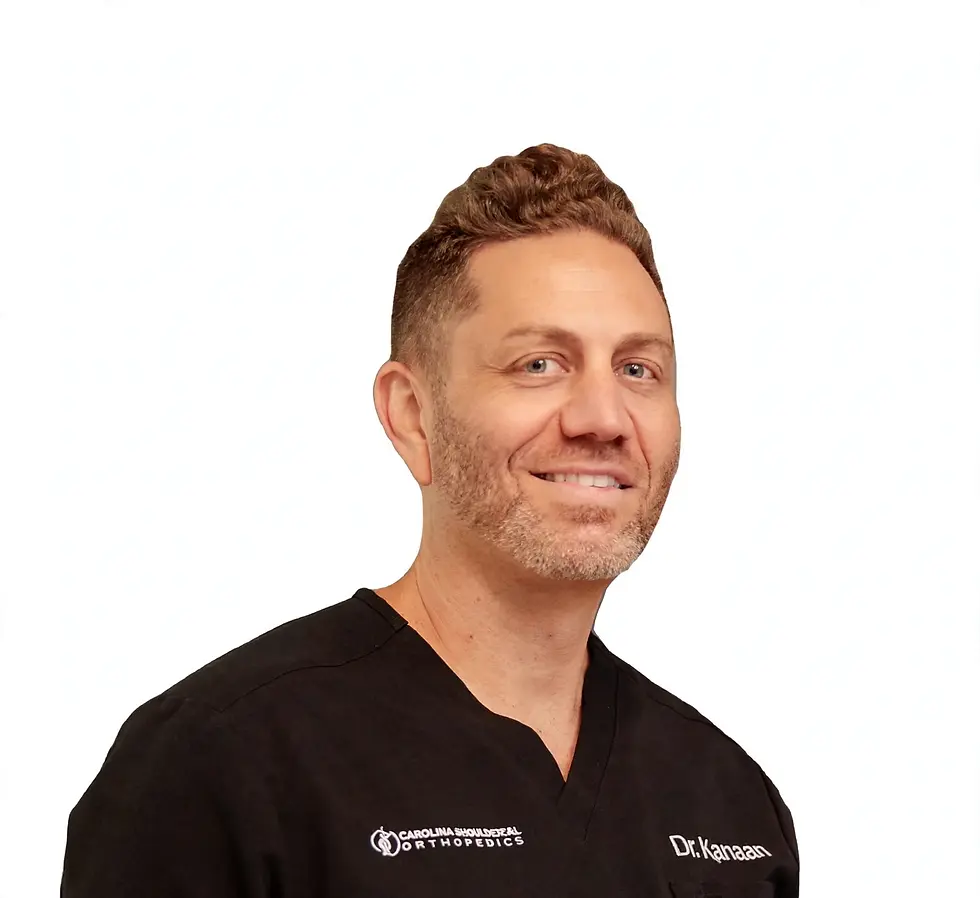
Dr. Matthew Kanaan
Nonsurgical Orthopedic Specialist
Founder of Carolina Nonsurgical Orthopedics. Fellowship trained in sports medicine at Duke; residency in family medicine at Duke, where he served as Chief Resident.
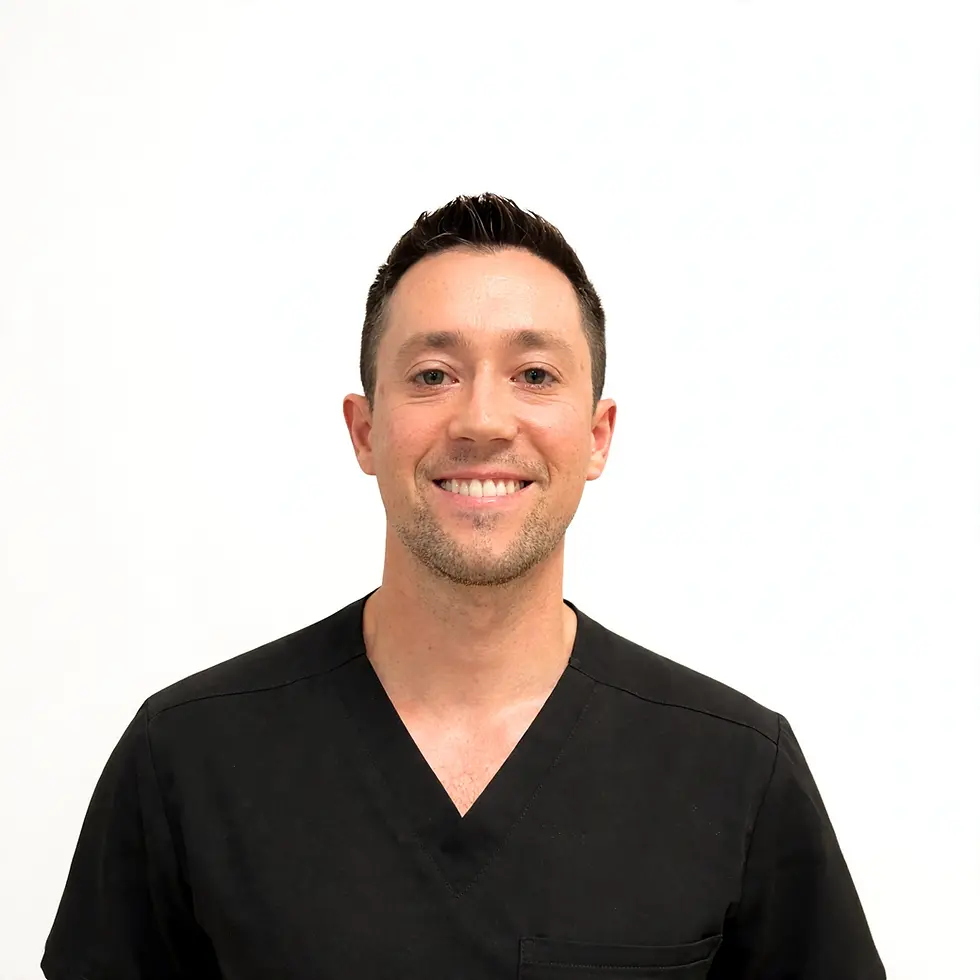
Dr. Pierce Knox
Nonsurgical Orthopedic Specialist
Fellowship trained in nonsurgical sports medicine at Penn Medicine; residency in primary care at Christiana Care.


