
)_edited_pn.png)


PRP vs Stem Cell Therapy: What's the Difference?
Quick answer: PRP uses concentrated platelets from your own blood; cell-based therapy (MFAT) uses a concentrated sample of your own adipose tissue. Both are nonsurgical, cash-pay treatments we offer in Raleigh & Cary, and neither has been proven to regrow cartilage — the real differences are how involved the procedure is, which conditions each fits best, and where the evidence is strongest.
Two patients, same waiting room, same diagnosis of knee arthritis. One leaves with a PRP injection scheduled. The other gets a longer workup for a cell-based treatment. As a sports medicine physician in Raleigh and Cary, this is one of the most common questions I get: what's the actual difference between PRP and stem cell therapy, and how do you know which one fits your situation?
The one-sentence difference
PRP (platelet-rich plasma) uses a concentrated sample of your own blood's platelets and growth factors to support healing. Cell-based therapy (what most people mean by "stem cell therapy" in orthopedics) uses a concentrated sample of your own tissue — fat or bone marrow — that contains repair-signaling cells along with growth factors.
Both are autologous (from your own body). Neither has been proven to regrow cartilage. The real differences are in how involved the procedure is, what conditions each fits best, and where the evidence is strongest.
What PRP actually is
PRP starts with a simple blood draw — much like giving blood at a lab. The blood is spun in a centrifuge to concentrate the platelets (the part of blood that forms clots and releases growth factors). That concentrate is then injected, usually under ultrasound guidance, into the injured tendon, joint, or ligament.
The whole visit typically takes 30 to 60 minutes. There's no incision, no tissue harvesting, and you walk out the same day.
PRP has the broadest evidence base of the two. Randomized trials and clinical studies support its use for several conditions:
Tendinopathies — tennis elbow, Achilles tendinopathy, patellar tendinopathy ("jumper's knee"). This is where the evidence is strongest.
Mild-to-moderate knee osteoarthritis — studies show meaningful pain and function improvement for many patients, generally for 6–12 months or longer.
Some ligament and muscle injuries — evidence is more mixed and condition-specific.
PRP is often our first-line regenerative step for milder arthritis or tendons that haven't responded to physical therapy.
What "stem cell therapy" actually means here
"Stem cell therapy" is the umbrella term patients search for, but in orthopedics it usually refers to a cell-based treatment: a concentrated sample of your own tissue, rich in repair-signaling cells and growth factors, injected precisely into the problem area.
The two tissue sources you'll read about are fat and bone marrow:
MFAT (microfragmented adipose tissue): a small sample of fat is collected — usually from the flank or abdomen — through a tiny poke-hole incision under local anesthetic, processed to concentrate the cell-rich fraction, and injected under ultrasound guidance.
Bone marrow concentrate (BMC): marrow is drawn from the back of the pelvis, processed the same day, and injected similarly.
One clarification: at our practice, the cell-based treatment we offer is MFAT. Bone marrow concentrate is used at some other centers, and we include it here because patients researching their options will run into it.
Treatment day takes one to two hours — more involved than PRP because there's a harvest step, but it's still an office procedure. You walk out the same day.
The published research — including randomized trials — reports that cell-based treatments like MFAT and bone marrow concentrate improve knee pain and function for many people with mild-to-moderate osteoarthritis. Follow-up in these studies typically runs one to two years, and a meaningful share of patients report they're doing better and have postponed or avoided surgery.
What is not proven: that these treatments regrow cartilage or reverse arthritis. The realistic goal is less pain, better function, and more of your life back — not a brand-new joint. Anyone promising guaranteed cartilage regrowth is selling something the science doesn't support yet.
Side-by-side comparison
Source. PRP: your blood. Cell-based therapy: your fat tissue or bone marrow.
Treatment time. PRP: 30–60 minutes. Cell-based therapy: 1–2 hours.
Harvest. PRP: a simple blood draw. Cell-based therapy: a small fat collection or marrow draw through a tiny incision.
Anesthesia. Local for both — numbing at the harvest and injection sites.
Best evidence for. PRP: tendinopathies and mild-to-moderate knee OA. Cell-based therapy: mild-to-moderate knee OA and larger or more stubborn joint problems.
Typical cost. PRP: lower — usually $500–$1,500 per injection area. Cell-based therapy: higher — several thousand dollars, reflecting the harvest step.
Recovery. PRP: soreness for a few days, back to normal activity within a week. Cell-based therapy: soreness and swelling for a few days at both the harvest and injection sites, back to normal activity within a week.
Insurance. Typically self-pay for both.
Costs are approximate ranges for our area; we'll give you exact pricing at your evaluation.
Who tends to fit which option?
PRP tends to make sense when:
You have a tendon problem (tennis elbow, Achilles, patellar tendon) that hasn't responded to physical therapy and activity changes.
Your arthritis is mild, or you want to start with the simplest regenerative step before considering anything more involved.
You're looking for a shorter procedure with a lower cost of entry.
Cell-based therapy tends to make sense when:
You have mild-to-moderate osteoarthritis and want to delay or avoid joint replacement.
PRP helped briefly but didn't hold, or the joint problem is more advanced than what PRP usually handles.
You're motivated to stay active and accept a slightly more involved procedure day for a stronger intervention.
Sometimes the answer is neither. Bone-on-bone arthritis with significant deformity or instability is usually better served by a well-done joint replacement — and we'll tell you that. Active joint infection, certain blood disorders, and inflammatory arthritis flares are also reasons to screen out. The evaluation visit is where we sort this out with your imaging in hand.
Can they be combined?
Yes — and they sometimes are. A common pattern at our practice: PRP as the first step, with a cell-based treatment later if the problem warrants it, or cell-based treatment for the joint paired with PRP for a companion tendon issue. The treatments aren't rivals; they're different rungs on the same ladder between conservative care and surgery.
What to avoid after either treatment
The aftercare rules are similar for both, and the important one surprises people: avoid anti-inflammatory medications (NSAIDs like ibuprofen) for about two weeks. They can blunt the healing response we're trying to create. We'll tell you what's safe to use for soreness instead.
Ground rules: relative rest for the first few days (gentle movement is encouraged), gradual return to activity, and physical therapy as part of the plan for most patients. Improvement usually builds over weeks to a few months rather than overnight. A note for our runners and athletes: no marathon training in week one, whatever treatment you choose.
Questions patients ask us most
Does either one regrow cartilage? No. The evidence supports better pain and function, not a new joint surface.
How long do results last? It varies. PRP studies for knee arthritis commonly show benefit through 6–12 months; cell-based studies follow patients one to two years with many maintaining improvement through that window. Your arthritis severity, weight, and activity level all matter, and some patients benefit from a repeat treatment down the line.
Is either covered by insurance? Typically both are self-pay. We'll go over exact cost at your evaluation so there are no surprises — and we'll tell you honestly if we don't think you're a good candidate before you spend anything.
Does it hurt? We use local anesthetic. Most people describe the injection itself as pressure or brief aching. The harvest step for cell-based treatment adds a few days of soreness at the harvest site — most patients rate it as mild.
The bottom line
PRP and cell-based therapy are related but not interchangeable. PRP is simpler, cheaper, and well-suited to tendons and milder joint problems. Cell-based treatment is a bigger step — a longer procedure day and a higher cost — that fits patients with more stubborn or advanced joint problems who want to put off or avoid surgery.
The right choice depends on your diagnosis, your imaging, and what you've already tried — which is exactly what the evaluation visit is for.
If pain is keeping you from the things you enjoy — golf, tennis, running, playing with grandkids — come talk to us. We'll look at your imaging, give you a straight answer about whether you're a candidate for either option, and lay out all your choices, including the ones we don't sell.
Call 919-719-2270 to schedule an evaluation at our Raleigh or Cary office.
About Your Physicians
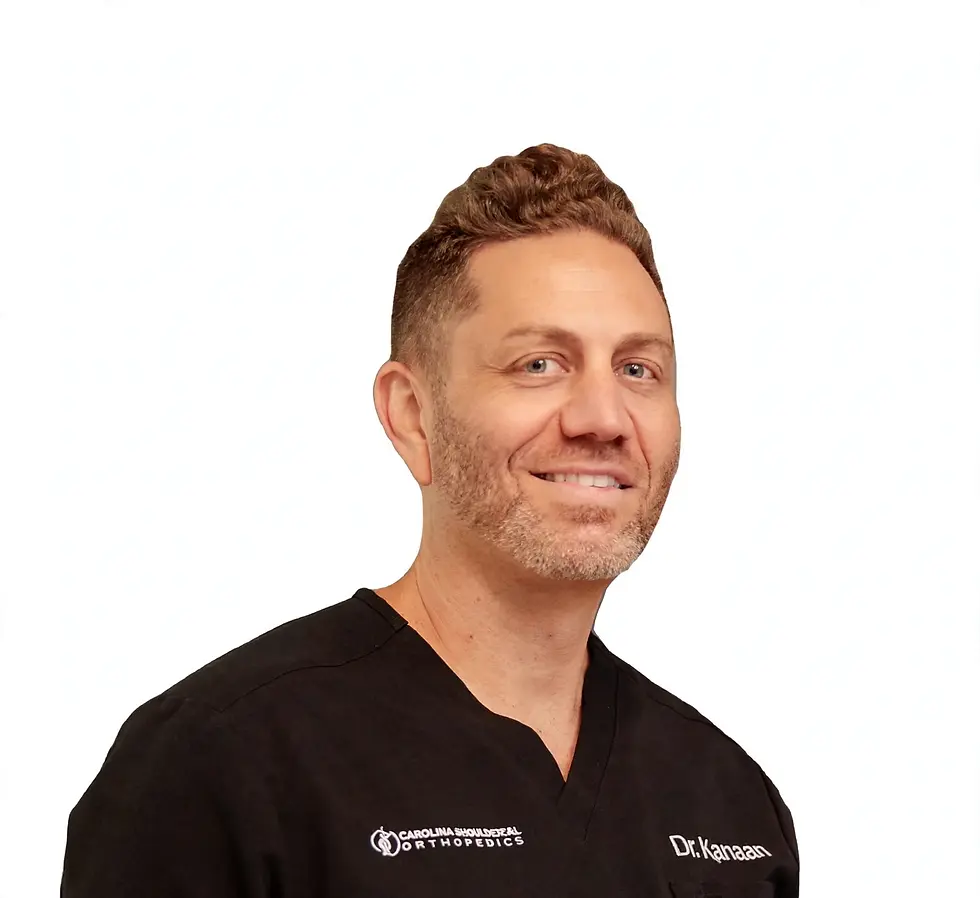
Dr. Matthew Kanaan
Nonsurgical Orthopedic Specialist
Founder of Carolina Nonsurgical Orthopedics. Fellowship trained in sports medicine at Duke; residency in family medicine at Duke, where he served as Chief Resident.
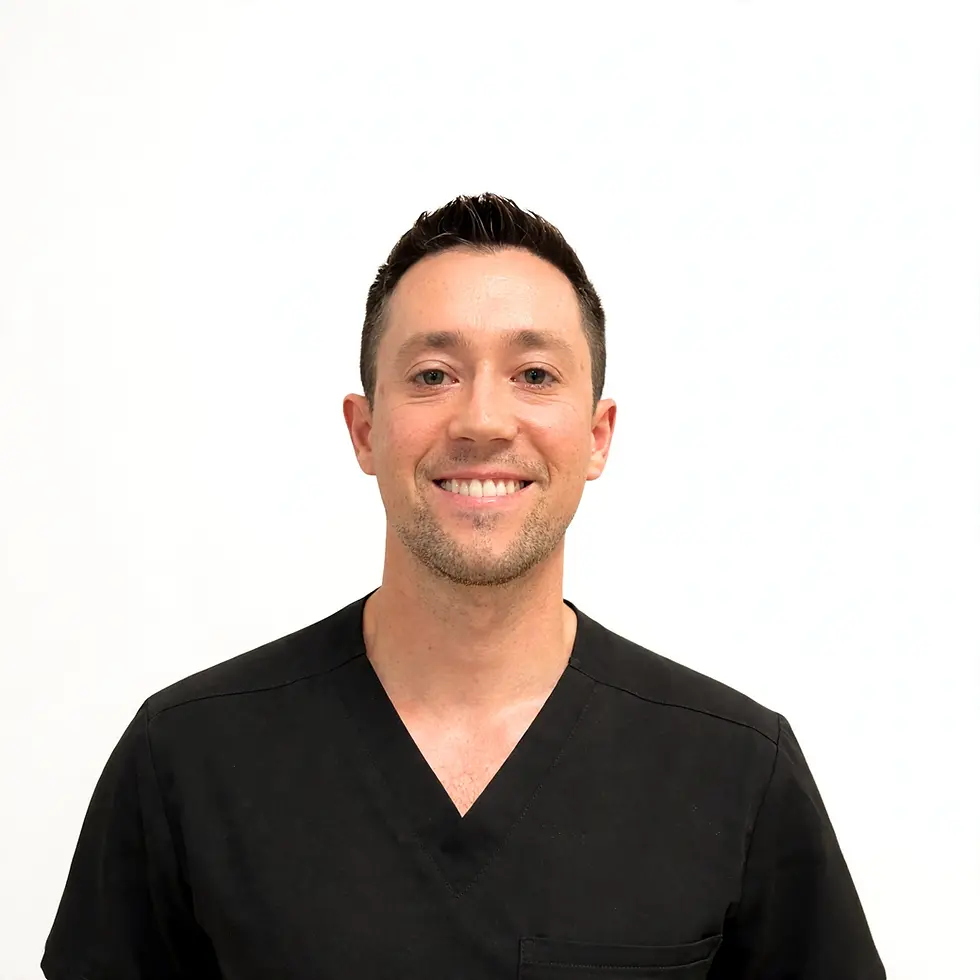
Dr. Pierce Knox
Nonsurgical Orthopedic Specialist
Fellowship trained in nonsurgical sports medicine at Penn Medicine; residency in primary care at Christiana Care.


