


How Long Does Stem Cell Therapy Last? An Honest Answer
Quick answer: Cell therapy (MFAT) uses your own microfragmented adipose tissue, prepared and injected the same day under ultrasound guidance. It is a cash-pay, nonsurgical option we offer in Raleigh & Cary for selected joint and tendon problems, and candidacy is decided at an evaluation. Honest answer: studies follow patients one to two years, with many maintaining improvement through that window. There is no permanent fix: arthritis severity, weight, and activity level all affect how long the benefit lasts.
It's the most reasonable question in regenerative medicine, and the one with the most inflated answers online. You'll see clinics imply results last five years, ten years, forever. Here's what the evidence actually supports for cell-based therapy like MFAT — and what determines whether you're at the long or short end of it.
The short answer
For knee arthritis — where the research is strongest — the best controlled studies follow patients for about one year and show meaningful pain and function improvement through that point. Longer observational studies and case series report many patients maintaining benefit at two to three years, but those studies lack control groups, so they deserve more caution. Beyond that, honest answer: the data thins out, and anyone quoting you a precise number of years is guessing.
Also important: cell therapy doesn't stop arthritis from progressing. It improves the joint environment — pain, inflammation, function — while the underlying wear continues at its own pace. Think of it as turning the clock's volume down, not stopping the clock.
Why results vary so much between patients
Two people can get the same treatment and have completely different durability. The biggest factors:
Arthritis severity. Mild-to-moderate arthritis responds better and longer. Advanced bone-on-bone disease has less to work with — which is why we screen candidacy carefully.
Alignment and mechanics. A knee that bows significantly loads one compartment unevenly, and that mechanical reality wears on any biological improvement.
Weight. Every pound matters more in a joint than on a scale. Patients who lose weight after treatment consistently protect their results better.
Strength and activity. The treatment improves the joint; muscle keeps it that way. Patients who complete physical therapy and stay active generally hold their gains longer.
Which joint. Knee data is strongest. Hip, shoulder, and ankle results are supported by smaller studies, and timelines there are less certain.
What the timeline actually feels like
Durability questions usually hide a second question — when will I know if it worked? The typical arc:
Weeks 1–2: harvest-site and joint soreness. This is the least representative period — don't judge the treatment by it.
Weeks 4–8: early improvement for many patients, as post-procedure irritation settles.
Months 3–6: the window where most responders see their meaningful change — less pain, better function, more activity tolerance.
Month 6 and beyond: reassessment. If you're improved, the goal shifts to maintenance: strength, weight, and activity choices that extend the result.
A treatment that "didn't last" sometimes turns out to be a treatment that never got its rehab — or one performed on a joint that was too far gone to begin with.
Can it be repeated?
Yes. Because MFAT uses your own tissue, there is no drug-style cumulative toxicity concern, and repeat treatment is an option if you responded the first time and symptoms later return. Some patients also use PRP as a maintenance step after an initial cell-based treatment. Whether repeating makes sense depends on how much benefit you got and how far the arthritis has progressed in the meantime — sometimes the honest answer at that point is that surgery has become the better option, and we'll tell you that.
How it compares on durability
Cortisone injections: relief measured in weeks to a few months, and repeated use has downsides for cartilage.
Gel (hyaluronic acid) injections: typically a few months of benefit for responders.
PRP: studies commonly show benefit through 6–12 months.
Cell therapy (MFAT): the longest-supported nonsurgical option — roughly a year in controlled data, longer in observational reports — but not a permanent fix.
That ordering is the fair summary. Cell therapy sits at the top of the nonsurgical durability ladder, with the honest asterisk that the ladder doesn't reach "permanent."
The bottom line
If you're weighing stem cell therapy, plan around this expectation: meaningful improvement that, for good candidates, commonly holds a year or more and sometimes several — paired with the understanding that arthritis continues underneath, and your habits afterward are part of the treatment. Clinics promising a decade are selling certainty the science doesn't have.
If you'd like to know whether you're the kind of candidate who tends to land on the long end of these numbers, an evaluation with your imaging is the way to find out.
Call 919.719.2270 to schedule an evaluation at our Raleigh or Cary office.
About Your Physicians

Dr. Matthew Kanaan
Nonsurgical Orthopedic Specialist
Founder of Carolina Nonsurgical Orthopedics. Fellowship trained in sports medicine at Duke; residency in family medicine at Duke, where he served as Chief Resident.
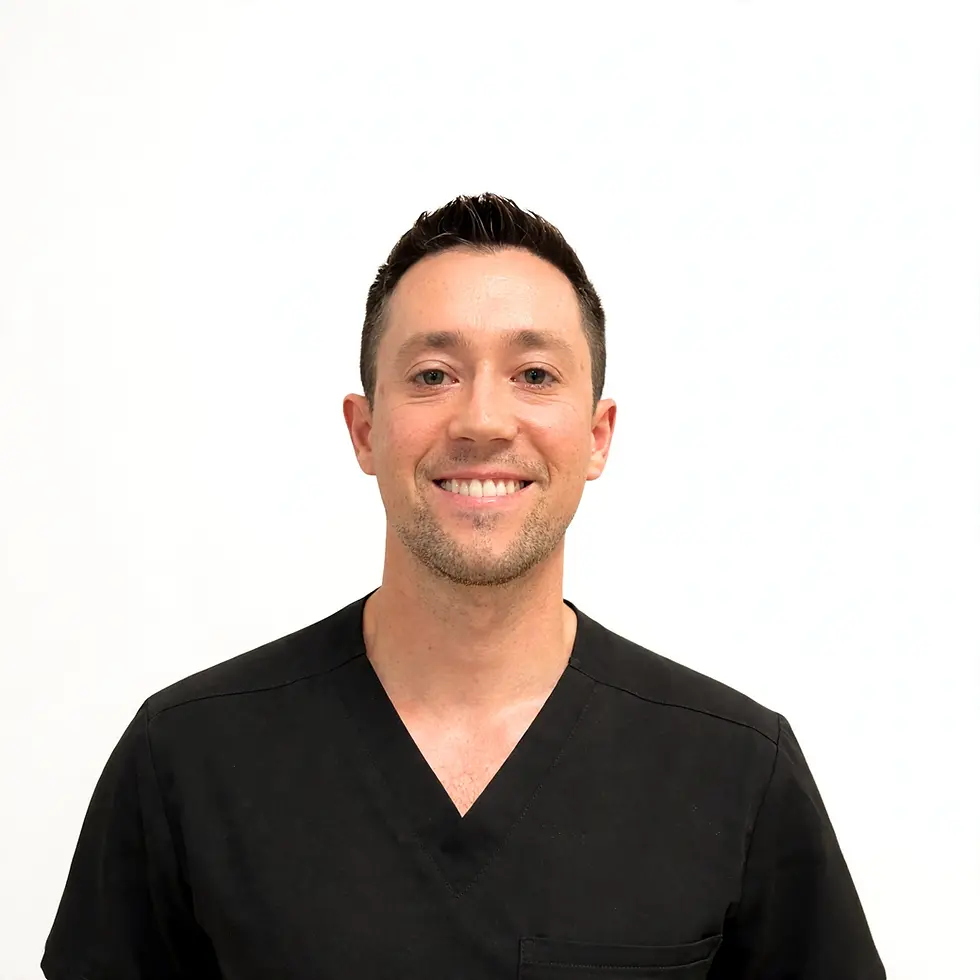
Dr. Pierce Knox
Nonsurgical Orthopedic Specialist
Fellowship trained in nonsurgical sports medicine at Penn Medicine; residency in primary care at Christiana Care.


