


Is PRP Safe? Risks and Side Effects, Explained Honestly
Updated: Oct 15
Quick answer: PRP (platelet-rich plasma) is a concentrated injection of platelets from your own blood, placed under ultrasound guidance. At our Raleigh & Cary offices it is a cash-pay, nonsurgical treatment, and candidacy and exact pricing are reviewed at the evaluation, before you commit. Yes — PRP is one of the lower-risk procedures in musculoskeletal medicine, because it uses your own blood, which eliminates allergic reactions and disease transmission.
Yes — PRP is one of the lower-risk procedures in musculoskeletal medicine, because it uses your own blood, which eliminates allergic reactions and disease transmission. But "natural" doesn't mean risk-free. The real risks are infection, bleeding, nerve or blood vessel injury from needle placement, and a temporary post-injection pain flare. Serious complications are uncommon when the procedure is done with sterile technique and ultrasound guidance.
Here's what safe actually looks like — and what to watch for.
Why PRP Starts From a Low-Risk Baseline
PRP (platelet-rich plasma) is made from your own blood: drawn, spun in a centrifuge to concentrate the platelets, and injected back into the injured tissue. Because it's autologous — your own tissue — there's no risk of allergic reaction, no rejection, and no disease transmission. That's a meaningful safety advantage over donor-derived products.
Compare that to the alternatives. Corticosteroid injections, used repeatedly, can damage cartilage and weaken tendons. Surgery carries anesthesia risks, infection risks an order of magnitude higher, and months of recovery. Oral NSAIDs used long-term carry real GI, kidney, and cardiovascular risks. Against that backdrop, a single autologous injection is a modest intervention.
The Actual Risks
Infection. Any needle that breaks the skin can introduce bacteria. Joint infections (septic arthritis) are the most serious risk — rare, but real, estimated at well under 1 in 1,000 for image-guided musculoskeletal injections. This is why sterile technique is non-negotiable, not a nice-to-have.
Bleeding and bruising. Minor bleeding at the injection site is common and harmless. Patients on blood thinners face higher risk and need a plan — sometimes holding the medication, sometimes proceeding with extra caution, depending on the drug and the target.
Post-injection flare. This is the most common "side effect," and it's really part of the mechanism. PRP is designed to provoke a healing response, and that response involves inflammation. Expect soreness for 3–7 days after treatment — sometimes worse than the original pain for the first 48 hours. It's temporary and expected, but patients deserve to know before, not after.
Nerve or vessel injury. A needle placed blindly can hit things it shouldn't. This is the entire argument for ultrasound guidance: watching the needle in real time, avoiding nerves and vessels, and confirming the injectate lands in the target tissue. A clinic doing PRP without ultrasound is accepting a risk it doesn't need to.
Nocebo of "no effect." Not a medical risk, but a practical one: PRP doesn't work for everything or everyone. An ineffective treatment costs money and time. Honest candidacy screening (more on that in our companion post) is part of safety too.
"Natural" Doesn't Mean Risk-Free — or Effective
The wellness industry has trained people to equate "natural" with "safe" and "safe" with "good idea." PRP benefits from this halo, and it's worth puncturing gently: your own blood injected into the wrong structure, without sterile technique, by someone unqualified, is still a medical procedure with real risks. The safety comes from the technique and the practitioner, not from the word "natural."
By the same token, low risk doesn't mean guaranteed benefit. PRP's evidence is condition-specific — strong for some tendinopathies and knee arthritis, thinner elsewhere. A safe procedure you didn't need is still a procedure you didn't need.
What a Safe PRP Clinic Looks Like
If you're shopping for PRP, these are the markers that matter:
Ultrasound guidance for every injection. Not "available" — used, every time.
Sterile technique. Sterile prep, sterile gloves, no shortcuts.
A physician doing the procedure. Not delegated to whoever's free.
Real candidacy screening. A clinic that turns some patients away is safer than one that treats everyone who walks in.
Clear aftercare instructions. Including what pain to expect and when to call.
No outrageous claims. "Regrows cartilage," "guaranteed results," "FDA-approved for your condition" (PRP devices are cleared; the applications generally aren't FDA-approved) — these are red flags, not selling points.
One More Thing: PRP Sold as "Stem Cells"
A quick consumer-protection note. Some clinics market PRP as "stem cell therapy" — sometimes calling it "stem cell PRP" or implying the injection contains stem cells. It doesn't. PRP contains platelets and growth factors; it is not a stem cell product, and calling it one is misleading. If a clinic can't clearly tell you whether you're getting PRP, bone marrow concentrate, or adipose-derived cells — or uses the terms interchangeably — that's a clinic to walk away from. Honest naming is part of safety too.
The Bottom Line
PRP's safety profile is genuinely favorable — autologous, minimally invasive, no systemic drug exposure. The risks that exist are procedural (infection, bleeding, placement) rather than pharmacological, which means they're controlled by technique. Choose the technique, and you choose the risk level.
If you're considering PRP and want it done with ultrasound guidance, sterile technique, and honest candidacy screening, call Carolina Nonsurgical Orthopedics at 919.719.2270 or schedule your visit online. Offices in Raleigh and Cary, NC, with in-office X-ray and ultrasound for same-day evaluation.
Had PRP somewhere else — and it didn't work?
A failed PRP injection doesn't always mean PRP can't help you. The two most common reasons we see when we review outside treatments are dose — many clinics deliver a fraction of the platelet dose used in the studies that showed benefit, and often never measured it — and placement, when the injection was done without ultrasound guidance and never reached the target it was meant for. If your first treatment was underdosed or unguided, having it done properly is a different procedure, not a repeat of the same one. At an evaluation with us, we'll review what was actually done and tell you honestly whether redoing it right makes sense — or whether something else would serve you better.
About Your Physicians
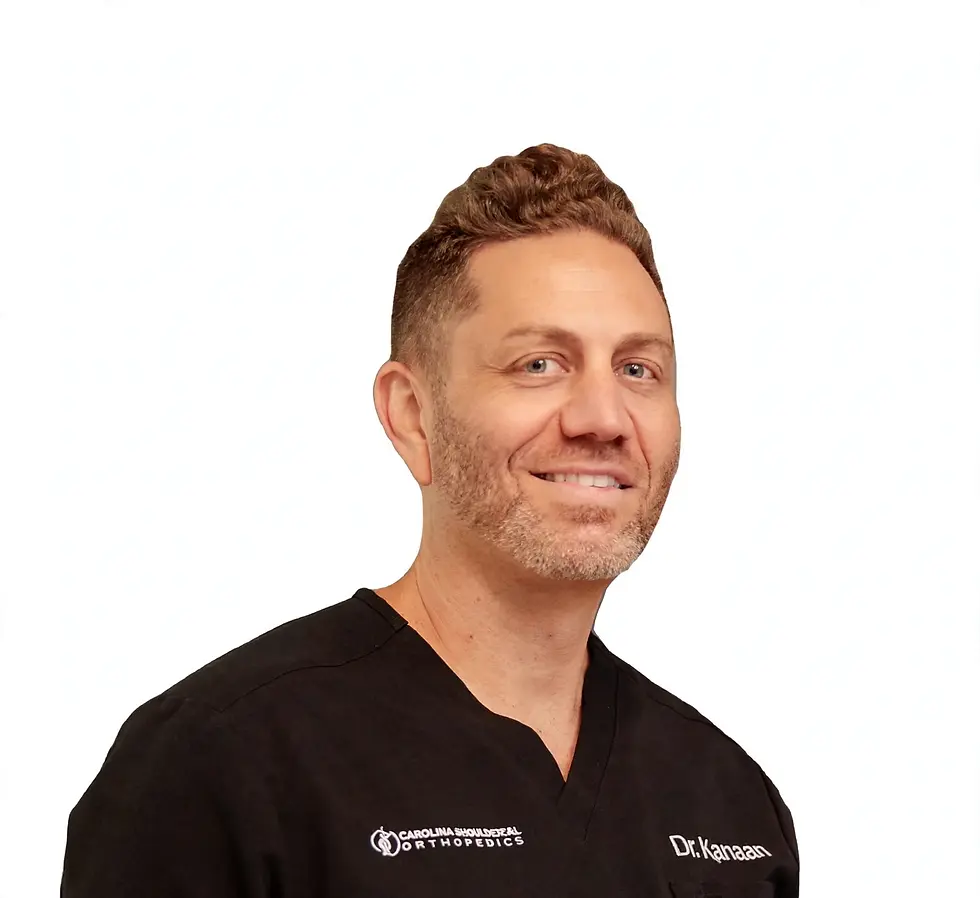
Dr. Matthew Kanaan
Nonsurgical Orthopedic Specialist
Founder of Carolina Nonsurgical Orthopedics. Fellowship trained in sports medicine at Duke; residency in family medicine at Duke, where he served as Chief Resident.
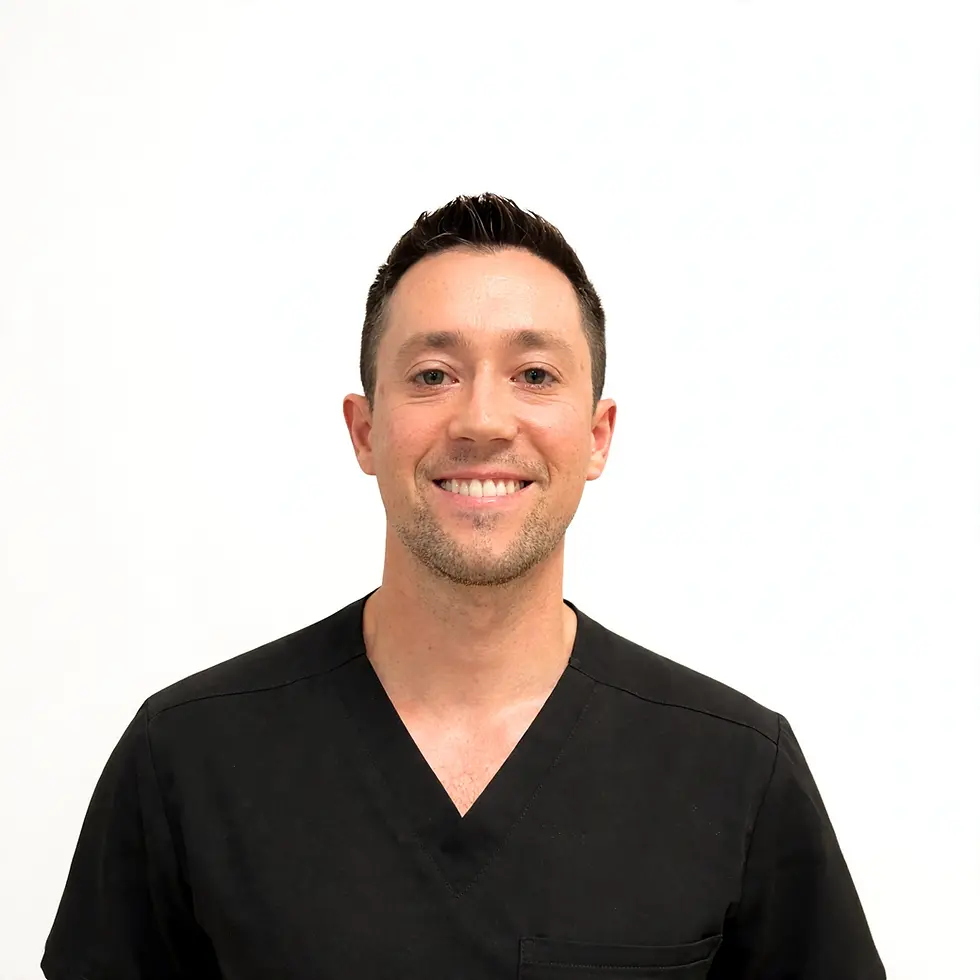
Dr. Pierce Knox
Nonsurgical Orthopedic Specialist
Fellowship trained in nonsurgical sports medicine at Penn Medicine; residency in primary care at Christiana Care.


