


Pain After Meniscus Surgery: Causes & Nonsurgical Relief
Updated: Oct 14
Quick answer: The nonsurgical path starts with an accurate diagnosis, then activity changes, therapy, and — when appropriate — image-guided treatment, with surgery considered only when conservative care isn't enough. That is the approach we take at Carolina Nonsurgical Orthopedics in Raleigh & Cary. Meniscus surgery is one of the most common orthopedic procedures performed — and for many people, it works exactly as hoped: the catching and locking resolve, and the knee feels normal within weeks.
Meniscus surgery is one of the most common orthopedic procedures performed — and for many people, it works exactly as hoped: the catching and locking resolve, and the knee feels normal within weeks. But for others, the pain lingers. Months after the operation, the knee still aches with stairs, swells after activity, or never quite feels trustworthy again.
If that's your experience, you're not imagining it. Persistent pain after meniscus surgery has real, identifiable causes, and most of them can be addressed without another operation. This guide walks through what's normal, what's not, how post-surgical knee pain is evaluated, and the nonsurgical treatments that help people get back to their lives.
Normal Recovery vs. Concerning Pain
First, some perspective on the timeline. After a meniscus trim (partial meniscectomy), most people are walking within days and back to light activity in two to six weeks. After a meniscus repair — where the tear is stitched rather than removed — the recovery is deliberately slower, often three to six months, because the tissue needs protection while it heals.
Some aching, stiffness, and swelling in the first weeks are expected. What's concerning is pain that:
Persists beyond the expected recovery window for your procedure type
Gets worse rather than gradually better
Returns months after a period of feeling fine
Includes new catching, locking, or giving way
Comes with swelling that keeps recurring
Pain like this deserves a proper evaluation — not reassurance to "give it more time" indefinitely.
Common Causes of Pain After Meniscus Surgery
Residual or new meniscus tear. In a partial meniscectomy, the surgeon removes the torn, unstable portion of the meniscus and smooths what remains. Occasionally, a fragment is left behind, or the remaining rim tears again — sometimes from a new injury, sometimes just from loading a knee that's now missing part of its shock absorber. A repaired meniscus can also fail to heal, particularly with larger or complex tears. New catching or locking after surgery is the classic sign.
Arthritis progression. This is the big one, and it's worth understanding honestly. The meniscus is the knee's primary shock absorber. When part of it is removed, contact pressure on the articular cartilage rises — and studies consistently show that partial meniscectomy accelerates the development of knee osteoarthritis over the years that follow. Pain that gradually builds months or years after surgery, with morning stiffness and aching after activity, often reflects this process rather than a surgical failure.
Synovitis and persistent inflammation. The joint lining (synovium) can stay irritated after surgery, producing recurrent swelling and a "full" feeling in the knee.
Scar tissue and stiffness. Arthroscopic surgery is minimally invasive, but any procedure inside the joint creates some scar tissue. Adhesions can restrict motion — particularly full extension — which perpetuates pain.
Rehab gaps and muscle weakness. The quadriceps, especially the inner portion (vastus medialis), weakens quickly after knee surgery and recovers slowly. Persistent quad weakness changes how the kneecap tracks and how forces distribute across the joint. Many cases of "failed" meniscus surgery are really cases of incomplete rehabilitation — the joint is fine, but the muscles protecting it never fully came back.
Malalignment. If the knee bows inward or outward, load concentrates on one compartment. Meniscus surgery doesn't change alignment, so a malaligned knee keeps overloading the same spot.
Nerve irritation or neuroma. Small sensory nerves around the knee can be irritated by surgical portals, producing burning or electric pain along the incision lines. True neuromas are uncommon but worth considering when pain is sharp, localized, and nerve-like rather than deep and achy.
How Post-Surgical Knee Pain Is Evaluated
A good evaluation starts with the story: what was done surgically, how recovery went, when the pain returned, and what it feels like now. The physical exam then tests motion, swelling, joint-line tenderness, ligament stability, and kneecap tracking.
X-ray is usually the first imaging step — not to see the meniscus, but to assess the joint space. Narrowing tells us how much arthritis has developed since surgery, and alignment views show whether malalignment is overloading one side.
MRI is the best tool for evaluating the meniscus itself after surgery, though post-surgical changes can mimic a re-tear, so the images must be correlated carefully with your symptoms and exam.
**In-office ultrasound** is valuable for the structures around the joint: tendons, bursae, and fluid collections. It also guides any injection with live visualization, so treatment goes exactly where it's needed.
Nonsurgical Treatment Options
The right treatment depends on the cause — which is why the evaluation matters. But for the most common scenarios, several nonsurgical options have strong track records.
**High-dose PRP for post-meniscectomy arthritis.** When the underlying problem is cartilage wear after partial meniscus removal, PRP is one of the options patients ask about — but honesty requires saying the evidence for this specific situation is mixed and inconclusive so far. A double-blind randomized trial found no meaningful benefit of PRP over placebo at six months after meniscectomy, while a smaller trial combining PRP with hyaluronate reported positive results. In other words, it may help some patients, but it's far from proven here. To be direct: PRP does not regrow a removed meniscus or reverse advanced bone-on-bone arthritis. We'll discuss candidly whether your case is one where trying it makes sense — and we won't recommend it if the evidence doesn't support your situation.
**Shockwave therapy.** For tendon irritation around the knee — a common companion to post-surgical pain — shockwave uses acoustic pressure waves to stimulate blood flow and tissue remodeling in chronic, degenerative tendon tissue. It's noninvasive, done in the office, and often paired with PRP.
**Laser therapy.** Low-level laser therapy reduces pain and inflammation in soft tissues around the joint and can help with post-surgical stiffness and scar-related discomfort.
Unloader bracing. If malalignment is overloading one compartment, an unloader brace shifts force away from the worn side. For the right knee it can meaningfully reduce pain during activity, and it pairs well with injections by protecting the joint while treatment takes effect.
Targeted physical therapy. A rehab program focused on quadriceps rebuilding, hip stabilizer strength, and movement retraining corrects the weakness patterns that keep post-surgical knees painful.
When Surgical Re-evaluation Is Warranted
Nonsurgical care handles most post-meniscectomy pain, but there are situations where the operating surgeon needs to be back in the loop:
A confirmed re-tear with mechanical catching or locking that doesn't settle
Sudden giving way or instability suggesting a ligament issue
Signs of infection: fever, increasing redness, warmth, or wound drainage — these need prompt surgical evaluation, not an injection appointment
Advanced arthritis with bone-on-bone contact and deformity, where the conversation shifts toward alternatives to joint replacement or replacement itself
The honest framework: nonsurgical treatments excel at inflammation, arthritis, tendon problems, and rehab gaps. They cannot reattach a torn meniscus fragment or fix a mechanical block. Knowing which category you're in is the whole point of the evaluation.
Pain After Meniscus Surgery in Raleigh and Cary
Post-surgical knee pain is one of the more common reasons patients find our Raleigh and Cary offices — often after being told their only options are living with it or having another operation. In many cases, neither is true: a careful workup identifies a treatable cause, and a combination of PRP, shockwave, laser, bracing, and proper rehab gets the knee quiet again.
Frequently Asked Questions
Is it normal to still have pain six months after meniscus surgery? It depends on the procedure. After a meniscus repair, some aching at six months can still be within the healing window. After a simple meniscectomy trim, significant pain at six months is not expected and deserves evaluation — the most common culprits are developing arthritis, incomplete rehab, or a new tear.
Can PRP help if part of my meniscus was removed? PRP doesn't regrow removed meniscus tissue. As for the arthritis that often follows meniscectomy, the research is genuinely mixed: one double-blind trial found no benefit over placebo at six months, while a smaller trial of PRP combined with hyaluronate was positive. It may be worth discussing in selected cases, but we'd be upfront that the evidence is inconclusive — it's not a proven fix for this situation.
Will I eventually need a knee replacement after meniscus surgery? Not necessarily. Partial meniscectomy does raise the long-term risk of arthritis, but many people never progress to that point — especially with maintained muscle strength, healthy weight, and timely treatment of flare-ups. The goal of nonsurgical care after meniscus surgery is to keep you in that group.
Take the Next Step
If your knee never fully recovered after meniscus surgery — or felt fine for a while and then started aching again — don't assume another operation is the only answer. A thorough evaluation can usually identify why it hurts and whether nonsurgical treatment can fix it.
Call Carolina Nonsurgical Orthopedics at 919.719.2270 or schedule your visit online. With offices in Raleigh and Cary, NC, we specialize in figuring out post-surgical knee pain and treating it without surgery whenever possible.
About Your Physicians
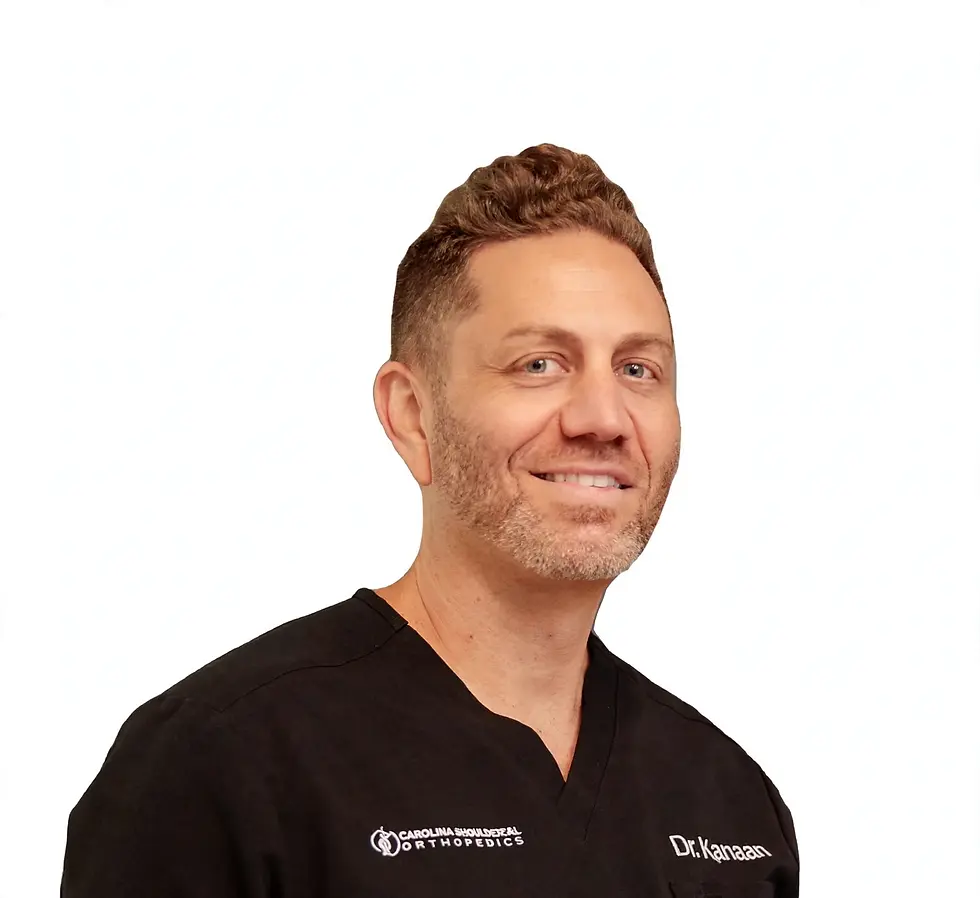
Dr. Matthew Kanaan
Nonsurgical Orthopedic Specialist
Founder of Carolina Nonsurgical Orthopedics. Fellowship trained in sports medicine at Duke; residency in family medicine at Duke, where he served as Chief Resident.
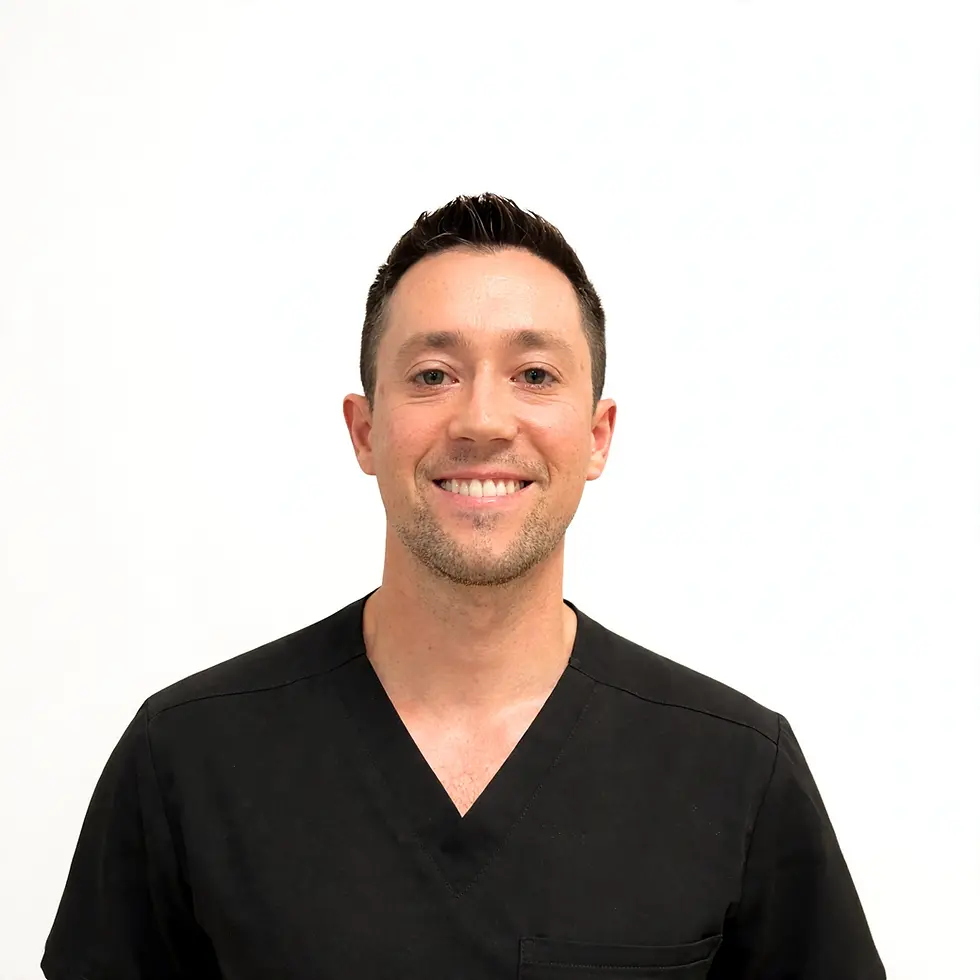
Dr. Pierce Knox
Nonsurgical Orthopedic Specialist
Fellowship trained in nonsurgical sports medicine at Penn Medicine; residency in primary care at Christiana Care.


