
)_edited_pn.png)


PRP Dose Matters: Why Two PRP Injections May Not Be the Same Treatment
Updated: Oct 15
Quick answer: PRP (platelet-rich plasma) is a concentrated injection of platelets from your own blood, placed under ultrasound guidance. At our Raleigh & Cary offices it is a cash-pay, nonsurgical treatment, and candidacy and exact pricing are reviewed at the evaluation, before you commit. Two clinics can both advertise a "PRP injection" for knee arthritis, charge similar prices, and deliver products that differ several-fold in the number of platelets actually injected.
Two clinics can both advertise a "PRP injection" for knee arthritis, charge similar prices, and deliver products that differ several-fold in the number of platelets actually injected. Same name on the price sheet. Very different medicine in the syringe.
This is the least-discussed and most important quality issue in PRP: dose. If you're comparing clinics — or wondering why a friend's PRP worked and yours didn't — this is the variable almost nobody explains.
Concentration is not dose
Clinics love to quote concentration: "our PRP is 5x concentrated." That number sounds precise, but by itself it tells you surprisingly little.
Dose = concentration × volume. A highly concentrated product delivered in a tiny volume can contain fewer total platelets than a moderately concentrated product delivered in a larger volume. What your joint actually receives is the total platelet count in the syringe — usually measured in billions.
Dose also depends on you. A normal platelet count ranges from about 150,000 to 450,000 per microliter — a threefold spread between healthy people. Run two patients' blood through the same machine and you can get very different products. Add in how much blood is drawn (commercial systems process anywhere from under 10 mL to 60 mL or more) and how efficiently the system captures platelets, and "PRP" turns out to be a family of products, not a single one.
What the research shows about dose
Until recently, most PRP studies didn't even report the platelet dose, which is one reason the literature looked contradictory — trials of a weak product and trials of a strong product were averaged together. Newer analyses that sort studies by dose tell a clearer story, at least for knee osteoarthritis, where nearly all of this research has been done:
A systematic review of 29 randomized trials (Berrigan and colleagues) found that treatment arms delivering an average of roughly 5.5 billion platelets reported significant improvements over control at six months, while arms averaging 2.3 billion or fewer did not separate from control.
In a head-to-head comparison (Patel and colleagues), patients who received about 5.5 billion platelets kept improving through six months, while the group that received about 2.8 billion peaked at three months and then faded.
The large RESTORE randomized trial, which made headlines for finding PRP no better than saline at 12 months, used a dose of roughly 1.6 billion platelets — squarely in the range the dose analyses now identify as likely too low.
At the other end, a single-injection study using about 10 billion platelets (Bansal and colleagues) found benefits over hyaluronic acid lasting to 12 months.
Here's the honest complication: more is not automatically better, forever. A 2026 meta-analysis in PM&R sorting trials into low (1–5 billion), moderate (5–10 billion), and high (over 10 billion) total platelets found the moderate range produced the largest effect — the highest doses did not clearly beat it. The emerging picture looks less like "maximum dose wins" and more like a threshold: below a certain dose, PRP may do little; within an adequate range, it performs; the exact sweet spot is still being worked out.
Two more caveats we owe you. First, this dose research is overwhelmingly in knee arthritis. Whether the same numbers apply to a hip, a shoulder, or a tendon is not established. Second, dose is one variable among several, not the whole story.
Dose isn't the only difference
Two other preparation choices matter:
White blood cells. "Leukocyte-rich" PRP keeps most white blood cells in the product; "leukocyte-poor" removes most of them. Each has situations where it's preferred, and each can cause a different amount of post-injection soreness. Neither is universally "better" — but you should know which one you're getting and why.
How it's delivered. An injection placed under ultrasound guidance goes where it's intended. A "blind" injection into a joint or tendon is a matter of educated feel. Guidance doesn't fix a weak product, but a good product placed in the wrong spot wastes both.
Questions worth asking any clinic (including ours)
Before you pay for PRP anywhere, ask:
How much blood do you draw, and what system do you use to prepare the PRP?
Do you know the platelet concentration — or better, the total platelet dose — of what you'll inject?
Is it leukocyte-rich or leukocyte-poor, and why for my condition?
Will the injection be ultrasound-guided?
How many injections are in the plan, and what's the reasoning — a planned series or one at a time with reassessment?
A clinic that can't answer the first two questions isn't necessarily dishonest. But it does mean they're selling a product they haven't measured.
How we approach it
Every PRP injection at our Raleigh and Cary offices is performed under ultrasound guidance, and our preparation protocol is standardized rather than improvised visit to visit. Just as important: if PRP isn't a reasonable bet for your condition, we'll tell you that before you pay for it — that's the entire point of the evaluation.
The bottom line
"PRP" on two different websites can mean two very different treatments. Dose — the total number of platelets delivered — appears to be one of the main reasons. If you're comparing options, compare what's actually in the syringe, not just the label and the price.
If you'd like an evaluation, call Carolina Nonsurgical Orthopedics at 919-719-2270. We'll examine the joint or tendon, review your imaging, and give you a straight answer on whether PRP — at a dose worth paying for — makes sense for you.
---
Selected references: Berrigan WA et al., systematic review of platelet dose in PRP for knee osteoarthritis, Am J Sports Med; Patel S et al., comparison of two PRP platelet doses in knee osteoarthritis; Bennell KL et al., RESTORE trial, JAMA 2021; Bansal H et al., Sci Rep 2021; Hooper N et al., PM&R 2026 (dose-stratified meta-analysis).
Had PRP somewhere else — and it didn't work?
A failed PRP injection doesn't always mean PRP can't help you. The two most common reasons we see when we review outside treatments are dose — many clinics deliver a fraction of the platelet dose used in the studies that showed benefit, and often never measured it — and placement, when the injection was done without ultrasound guidance and never reached the target it was meant for. If your first treatment was underdosed or unguided, having it done properly is a different procedure, not a repeat of the same one. At an evaluation with us, we'll review what was actually done and tell you honestly whether redoing it right makes sense — or whether something else would serve you better.
About Your Physicians

Dr. Matthew Kanaan
Nonsurgical Orthopedic Specialist
Founder of Carolina Nonsurgical Orthopedics. Fellowship trained in sports medicine at Duke; residency in family medicine at Duke, where he served as Chief Resident.
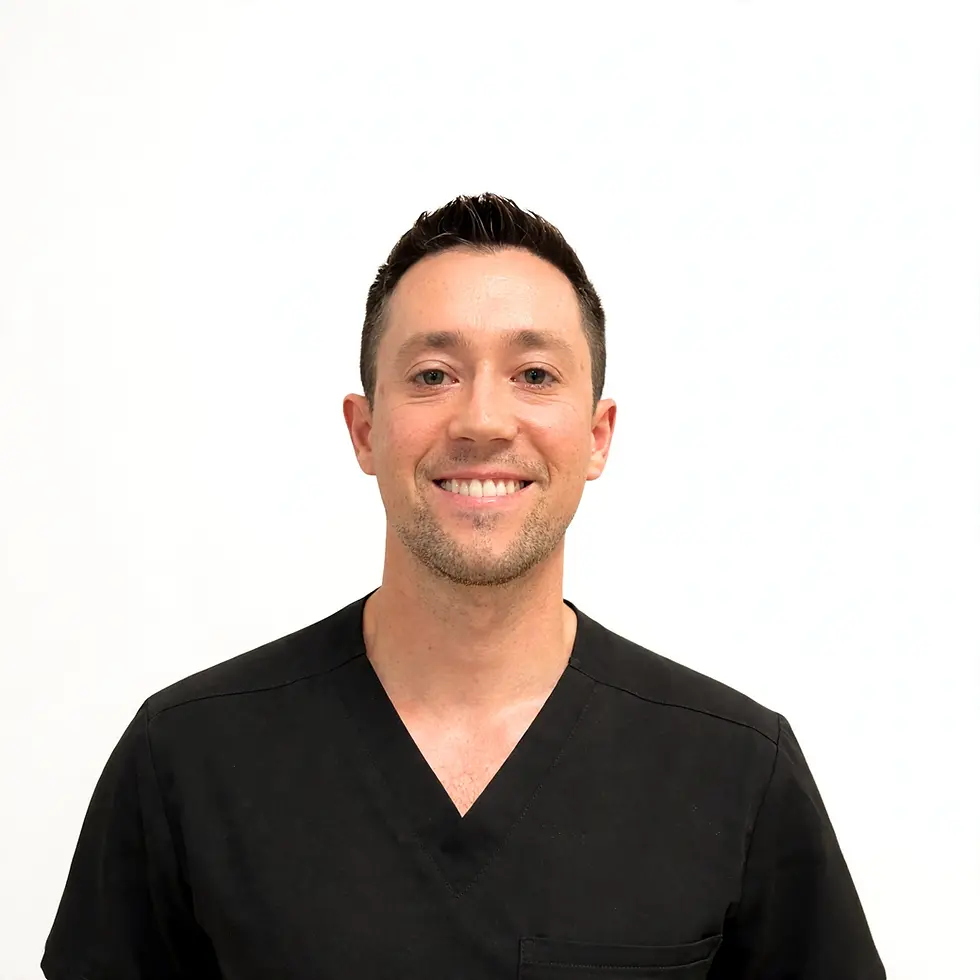
Dr. Pierce Knox
Nonsurgical Orthopedic Specialist
Fellowship trained in nonsurgical sports medicine at Penn Medicine; residency in primary care at Christiana Care.


