
)_edited_pn.png)


PRP for Tennis Elbow: What the Research Shows
Updated: Oct 15
Quick answer: PRP (platelet-rich plasma) is a concentrated injection of platelets from your own blood, placed under ultrasound guidance. At our Raleigh & Cary offices it is a cash-pay, nonsurgical treatment, and candidacy and exact pricing are reviewed at the evaluation, before you commit. This article covers what tennis elbow actually is, how PRP works, what the research says in plain language, and how it compares with other nonsurgical treatments.
If you've been told to "just rest it" for months but your elbow still hurts every time you grip a coffee mug, shake a hand, or swing a racquet, you're not alone. Tennis elbow — also called lateral epicondylitis — is one of the most common causes of elbow pain we see in our Raleigh and Cary offices, and one of the most stubborn. Fortunately, research has identified more options than the old standby of a cortisone shot and a wrist brace, and one of the most studied is platelet-rich plasma (PRP) therapy.
This article covers what tennis elbow actually is, how PRP works, what the research says in plain language, and how it compares with other nonsurgical treatments. Results vary from person to person — not everyone responds the same way — but understanding the evidence can help you have a more productive conversation with your doctor.
What Is Tennis Elbow, Really?
Despite the name, most people who develop tennis elbow never play tennis. It's an overuse injury of the tendons that attach the forearm muscles to the outside of the elbow. Repetitive gripping, lifting, twisting, or typing — painters, plumbers, carpenters, chefs, gardeners, and weekend athletes all face higher risk.
Here's the key point many patients are surprised to learn: tennis elbow is usually not an inflammatory condition. Studies of damaged tendon tissue typically show degeneration — frayed, disorganized collagen fibers with very little active inflammation. That helps explain why anti-inflammatory treatments sometimes fall short and why regenerative approaches like PRP have drawn so much research interest.
Typical symptoms include pain and tenderness on the outside of the elbow, pain with gripping or wrist extension, forearm weakness, and aching that can radiate down the forearm. For many people, symptoms start gradually and can linger six to twelve months — or longer — without the right care.
How Does PRP Work for Tennis Elbow?
Platelet-rich plasma is made from your own blood. We draw a small amount, process it to concentrate the platelets, and inject that concentrated plasma — under ultrasound guidance — directly into the damaged tendon.
Platelets are best known for clotting, but they also carry growth factors: proteins involved in the body's natural repair processes. The idea behind PRP is that delivering a concentrated dose of your own platelets into a degenerating tendon can support the tissue's healing response. Because the material comes from your own body, there's no risk of donor rejection.
At Carolina Nonsurgical Orthopedics, PRP is always performed with ultrasound guidance so the injection reaches the injured tendon precisely, and we offer high-dose PRP formulations. You can read more about our PRP injections.
What the Research Shows
Tennis elbow is one of the conditions where PRP has been studied the most, including several randomized trials and pooled analyses (systematic reviews) that combine multiple studies. In general terms, here's what the body of research suggests:
PRP vs. cortisone injections: Steroid injections often provide faster early relief, but in longer-term follow-up, PRP has frequently shown more durable improvement — benefit that holds or builds over months rather than fading.
PRP vs. saline (placebo) and dry needling: Reviews have generally found PRP outperforming placebo for pain and function scores at medium- and long-term follow-up.
Not all studies agree. Tennis elbow research is tricky: studies use different PRP preparations, platelet concentrations, injection techniques, and outcome measures. Some analyses have found only modest differences between PRP and comparison treatments.
The fairest summary: PRP is a well-studied, evidence-supported option for chronic tennis elbow — particularly when rest, bracing, and physical therapy haven't resolved it — but results vary, and not everyone responds the same way.
PRP vs. Cortisone Shots for Tennis Elbow
Many patients arrive at our office after one or two cortisone injections, so this comparison comes up constantly.
Cortisone (steroid) injections reduce inflammation and can quiet symptoms quickly. For a short-term need — a tournament, a work deadline, a trip — they have real value. But repeated steroid injections carry downsides for tendons: research suggests they can weaken tendon tissue over time, and several long-term studies found that people who received steroid injections for tennis elbow did no better at one year than those who received no injection at all.
PRP injections work on a slower timeline — improvement typically builds over weeks to a few months rather than days. Many researchers consider that trade-off worthwhile: the evidence points toward longer-lasting benefit with no concern about tendon weakening.
The choice isn't always either/or. A proper evaluation helps determine which approach fits your timeline, activity demands, and treatment history. For more detail, see our tennis elbow treatment page and our general elbow pain care information.
What About Other Nonsurgical Options?
PRP is one tool, not the only tool. Depending on your situation, your plan may include or begin with:
Activity modification and load management. Guided adjustments to what you do with the forearm — while keeping it moving safely — form a foundation of care.
Physical therapy and eccentric exercises. Structured forearm strengthening, especially eccentric wrist-extensor exercises, has some of the strongest evidence of any conservative approach.
Bracing. A counterforce strap worn below the elbow can reduce strain on the tendon during activity.
Shockwave therapy. Extracorporeal shockwave therapy uses sound waves to stimulate a healing response in chronic tendon problems and has its own body of research.
Prolotherapy. An injection therapy that aims to stimulate a healing response in ligaments and tendons — another option we offer for appropriate patients.
Often, the best results come from combining approaches — for example, PRP to support tendon healing plus a guided rehab program to rebuild strength correctly.
What to Expect From PRP Treatment at Our Practice
If PRP looks like a reasonable option after your evaluation, here's the typical process:
Consultation and ultrasound evaluation. Dr. Kanaan examines your elbow and uses ultrasound imaging to confirm the diagnosis and assess tendon damage.
Blood draw and processing. On treatment day, we draw your blood and concentrate the platelets in our office.
Ultrasound-guided injection. The PRP goes precisely into the damaged tendon. The visit typically takes under an hour.
Recovery. Most patients have some soreness for a few days. We generally advise avoiding anti-inflammatory medications for a period afterward, since inflammation is part of the healing process PRP aims to support.
Follow-up and rehabilitation. Improvement tends to build over weeks to months. A guided rehab program — often with physical therapy — helps protect your investment by rebuilding strength the right way.
Most patients in research studies received one PRP treatment, though protocols vary. Your plan is individualized to your condition and response.
FAQ
How long does it take for PRP to work on tennis elbow?
Most improvement builds gradually over 6 to 12 weeks, with some patients continuing to improve for several months. PRP is not a quick fix like a steroid shot — if you need relief within days, discuss the timeline honestly with your doctor.
Is PRP for tennis elbow covered by insurance?
In most cases, PRP is considered an elective regenerative treatment and is not covered by insurance. Our office can provide documentation of your condition and treatment if you'd like to check with your insurer.
How many PRP treatments will I need?
Many studies used a single PRP injection for tennis elbow, and that's often the starting point. Some patients benefit from a follow-up treatment depending on their response — decided together with your doctor based on your progress, never as an automatic package.
Can I still exercise or play sports after PRP?
Generally, yes — with modifications. Most protocols recommend relative rest from heavy loading for the first couple of weeks, followed by a progressive rehab program. Many of our patients in Raleigh and Cary are active adults, and returning you to your sport safely is the goal. Your doctor will give you a specific timeline.
Take the Next Step
Chronic tennis elbow doesn't have to be something you just live with. If rest, bracing, and therapy haven't solved the problem — or if you'd like to understand your options before trying a cortisone shot — a consultation can clarify where you stand.
Call 919.719.2270 or visit our schedule page to request an appointment at our Raleigh or Cary office. We'll evaluate your elbow, review the evidence honestly, and help you decide on a plan that fits your goals.
Had PRP somewhere else — and it didn't work?
A failed PRP injection doesn't always mean PRP can't help you. The two most common reasons we see when we review outside treatments are dose — many clinics deliver a fraction of the platelet dose used in the studies that showed benefit, and often never measured it — and placement, when the injection was done without ultrasound guidance and never reached the target it was meant for. If your first treatment was underdosed or unguided, having it done properly is a different procedure, not a repeat of the same one. At an evaluation with us, we'll review what was actually done and tell you honestly whether redoing it right makes sense — or whether something else would serve you better.
About Your Physicians
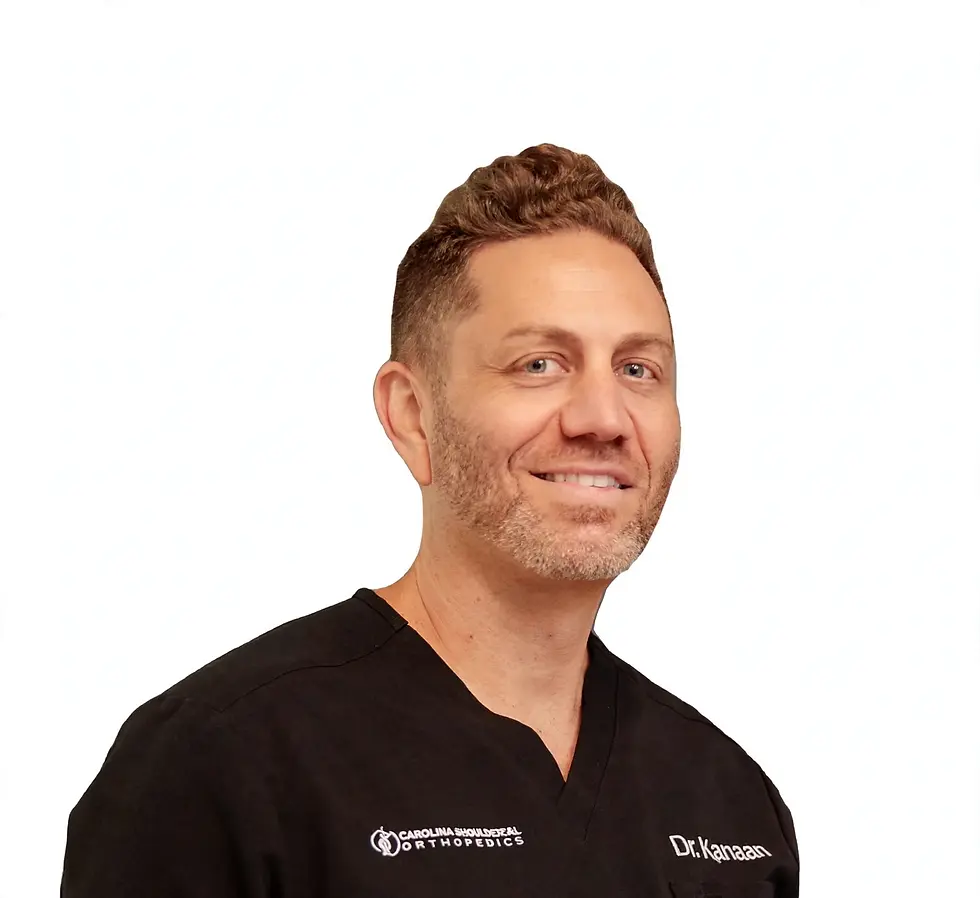
Dr. Matthew Kanaan
Nonsurgical Orthopedic Specialist
Founder of Carolina Nonsurgical Orthopedics. Fellowship trained in sports medicine at Duke; residency in family medicine at Duke, where he served as Chief Resident.
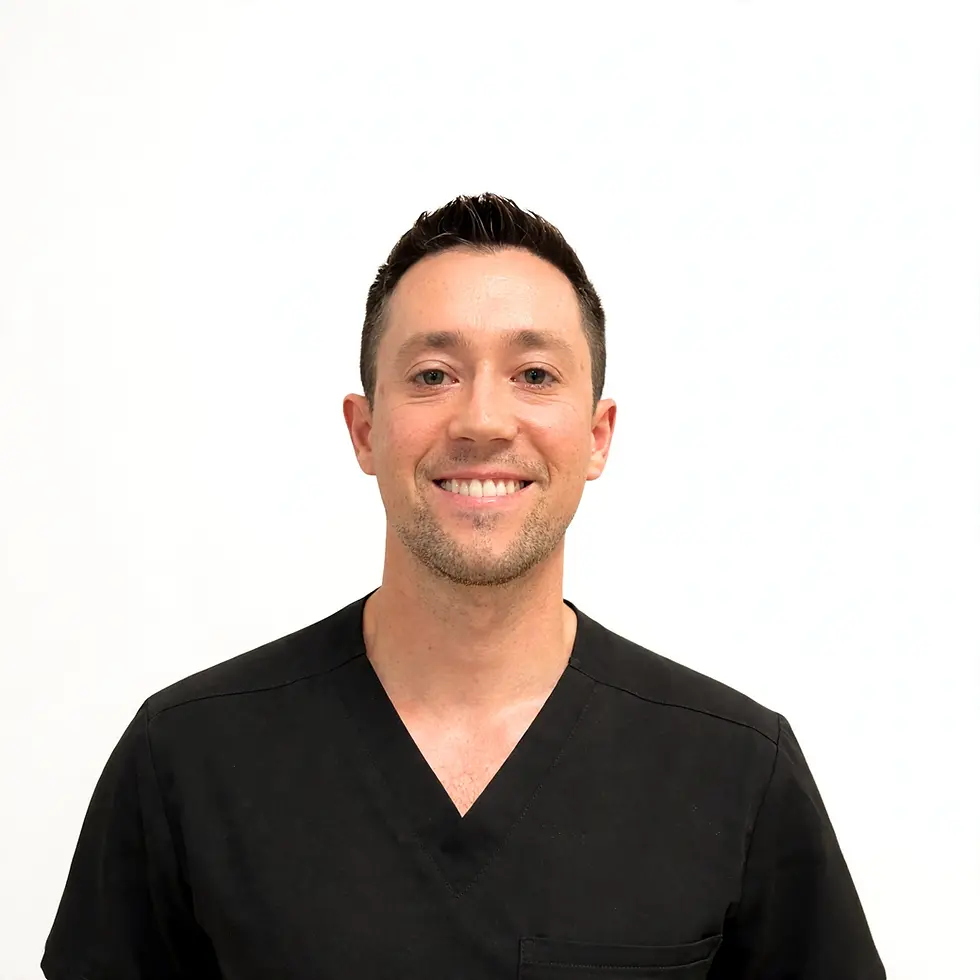
Dr. Pierce Knox
Nonsurgical Orthopedic Specialist
Fellowship trained in nonsurgical sports medicine at Penn Medicine; residency in primary care at Christiana Care.


