


TFCC Tear: Ulnar-Sided Wrist Pain Explained
Updated: Oct 14
Quick answer: Because symptoms can come and go, patients often wait months before getting answers. The triangular fibrocartilage complex is a group of ligaments and cartilage sitting between the end of the ulna (the forearm bone on the pinky side) and the small carpal bones — primarily the lunate and triquetrum.
Pain on the pinky side of the wrist. Clicking or catching when you twist a doorknob. Aching when you push yourself up from a chair or swing a golf club. If that pattern sounds familiar, the culprit may be the TFCC — the triangular fibrocartilage complex, a small but critical structure cushioning and stabilizing the ulnar (pinky) side of the wrist.
TFCC tears are among the most underdiagnosed wrist injuries, frequently mistaken for a simple sprain. Because symptoms can come and go, patients often wait months before getting answers. This guide explains what the TFCC is, how tears happen, how they're diagnosed, and the nonsurgical treatments that resolve most cases.
What Is the TFCC?
The triangular fibrocartilage complex is a group of ligaments and cartilage sitting between the end of the ulna (the forearm bone on the pinky side) and the small carpal bones — primarily the lunate and triquetrum. Think of it as the wrist's equivalent of the knee's meniscus: a fibrocartilage disc that cushions load and smooths motion.
The TFCC transmits roughly 20 percent of the load crossing the wrist — a shock absorber for every grip and push — and its ligaments stabilize the forearm's rotation joint, which is why TFCC injuries hurt with twisting motions. Blood supply is limited to the outer edges (the central disc is largely avascular), so tears heal slowly. That limited healing capacity is exactly why targeted treatment matters.
How TFCC Tears Happen
Traumatic tears come from a fall onto an outstretched hand, a sudden twist under load, or a forceful yank — common in racquet sports, golf, baseball, and gymnastics — often with immediate pain or a pop at the moment of injury.
Degenerative tears wear down over time, especially with positive ulnar variance (a slightly long ulna that concentrates extra load on the complex). Years of manual work, racquet sports, or weight-bearing exercise gradually fray the disc, producing aching that builds over months with no single memorable injury.
The classic symptom pattern: aching or sharp pain on the pinky side of the wrist, clicking or catching with forearm rotation (turning a key, opening a jar), pain when pushing up from a chair or doing push-ups, intermittent swelling, and sometimes a feeling the wrist is weak or going to "give way" under load.
How a TFCC Tear Is Diagnosed
Diagnosis combines a careful exam with the right imaging — exam first.
Physical examination. The ulnocarpal stress test — gripping while the wrist is bent toward the pinky side and rotated — reproduces ulnar-sided pain in TFCC injuries. The fovea sign — pinpoint tenderness in the soft spot just beyond the ulna's bony prominence — is another classic finding. The exam also checks forearm rotation, grip strength, and distal radioulnar joint stability.
X-ray. Plain films don't show the TFCC itself, but they're the right first image: they rule out fractures, reveal ulnar variance (the long-ulna variant predisposing to degenerative tears), and show arthritic changes that change the plan.
Ultrasound. In-office ultrasound visualizes portions of the TFCC and surrounding tendons and provides live guidance for injections, though it can't see the entire complex.
MRI. MRI — particularly MRI arthrogram, where contrast pinpoints the tear — remains the best noninvasive test for confirming a TFCC tear and characterizing its pattern. It also identifies accompanying bone bruising, ganglion cysts, and cartilage wear.
Getting the full picture matters because ulnar-sided wrist pain has mimics: ECU tendonitis, lunotriquetral ligament injuries, ulnar impaction syndrome, and distal radioulnar joint arthritis can produce similar symptoms but need different treatment.
Nonsurgical Treatment: Bracing, Activity Modification, and Rehab
Most TFCC tears — including many traumatic ones — are managed without surgery:
Bracing. A wrist brace limiting forearm rotation and ulnar deviation unloads the TFCC — from a few weeks of activity-based wear to four to six weeks of consistent immobilization depending on severity.
Activity modification. Eliminate the specific motions that load the TFCC — loaded twisting, weight-bearing through an extended wrist, forceful ulnar deviation — while continuing lower-impact cardio, lower-body training, and most daily activities. The golfer or push-up enthusiast needs a temporary detour, not necessarily full rest.
Anti-inflammatories and ice. Short courses of NSAIDs and intermittent icing manage acute pain and swelling — symptom control, not healing by itself.
Physical and occupational therapy. Once the acute phase settles, therapy restores forearm rotation, rebuilds grip and wrist strength, and retrains movement patterns that spare the TFCC.
Corticosteroid injections. An ultrasound-guided injection into the wrist joint can quiet inflammation and pain, particularly in degenerative tears — though relief may be temporary, so they're used judiciously.
A fair trial of conservative care runs about three months. Many patients improve significantly within that window, especially when bracing is taken seriously and aggravating activities are genuinely modified.
PRP Injections for TFCC Tears
When standard conservative care leaves lingering pain, clicking, or weakness — or when a patient wants to optimize healing — regenerative options deserve discussion.
High-dose PRP for the TFCC. The TFCC's poor blood supply is why tears heal slowly. An ultrasound-guided PRP injection delivers concentrated growth factors involved in fibrocartilage and ligament repair directly to the injured tissue. Peripheral, vascularized tears respond best; central disc tears are more challenging, and we'll be candid about where yours falls on that spectrum.
Prolotherapy is another option for chronic ulnar-sided wrist instability, stimulating a controlled healing response in lax ligaments around the joint. **MFAT cell therapy** may be discussed for advanced degenerative disease with associated arthritis, where the goal extends to improving the overall joint environment.
These treatments complement — never replace — accurate diagnosis, bracing, and rehabilitation. And because the wrist's structures are small and densely packed, ultrasound guidance is what makes precise delivery possible.
When Is Surgery Discussed?
Surgery enters the conversation for tears with persistent mechanical symptoms (catching, locking) unresponsive to thorough conservative care, complete peripheral tears in young active patients, associated joint instability, or ulnar impaction from significant positive ulnar variance. Arthroscopic debridement and repair are well-established in properly selected patients.
But the majority of TFCC tears — including many that look concerning on MRI — settle with well-executed nonsurgical care. MRI findings alone don't dictate surgery; your symptoms, function, and response to conservative treatment do.
Ulnar-Sided Wrist Pain in Raleigh and Cary
Pinky-side wrist pain interferes with the twisting, pushing, and gripping motions woven through everyday life. For our patients across Raleigh and Cary, the path forward starts with nailing the diagnosis: confirming the TFCC as the source, characterizing the tear, and ruling out mimics. From there, most journeys run through smart bracing, genuine activity modification, targeted rehab, and — when healing needs support — a precisely guided regenerative injection. If your wrist clicks, catches, or aches on the pinky side and hasn't resolved with rest, don't assume it's just a sprain.
Frequently Asked Questions
How can I tell if my wrist pain is a TFCC tear or just a sprain? Location and behavior are the best clues. TFCC pain sits on the pinky side and is provoked by twisting motions, pushing up from a chair, and weight-bearing through the wrist. General sprains hurt more diffusely and improve steadily over weeks. Clicking with rotation points toward the TFCC — but imaging confirms it.
How long should I try conservative treatment before considering other options? About three months of genuine conservative care — proper bracing, real activity modification, and rehab — is the standard trial. Wearing a brace sporadically while continuing to golf through the pain doesn't count. If you've truly committed and still have significant symptoms, that's the time to discuss injections or surgical consultation.
Can I still work out with a TFCC tear? Usually yes, with modifications. Lower-body training, cardio that doesn't load the wrist, and pulling exercises with neutral wrist positions are typically fine. Avoid push-ups, planks, dips, and loaded twisting until cleared.
What's the difference between a TFCC tear and ECU tendonitis? Both cause pinky-side wrist pain, but they behave differently. ECU (extensor carpi ulnaris) tendonitis hurts with resisted wrist extension, and the tendon sheath may visibly snap over the bone. TFCC tears hurt more with forearm rotation and axial loading — twisting, pushing up from a chair — and produce clicking or catching inside the joint. Ultrasound visualizes the ECU tendon directly, while MRI better characterizes the TFCC; getting the right diagnosis determines the right treatment.
Take the Next Step
If ulnar-sided wrist pain, clicking, or weakness is limiting what you can do, get a definitive answer. An evaluation with in-office X-ray and ultrasound — plus MRI when indicated — can confirm whether a TFCC tear is behind your symptoms and map out the right nonsurgical plan.
Call Carolina Nonsurgical Orthopedics at 919.719.2270 or schedule your visit online. With offices in Raleigh and Cary, NC, we're here to get your wrist back to full function — without surgery whenever possible.
About Your Physicians
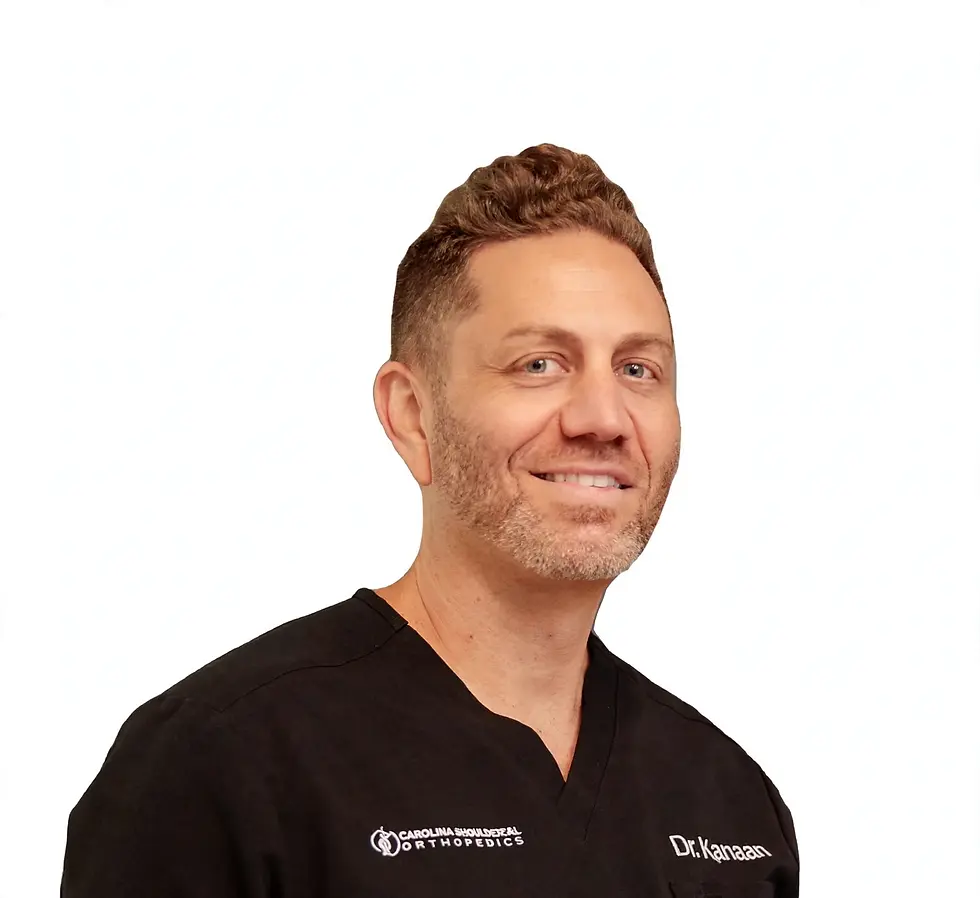
Dr. Matthew Kanaan
Nonsurgical Orthopedic Specialist
Founder of Carolina Nonsurgical Orthopedics. Fellowship trained in sports medicine at Duke; residency in family medicine at Duke, where he served as Chief Resident.
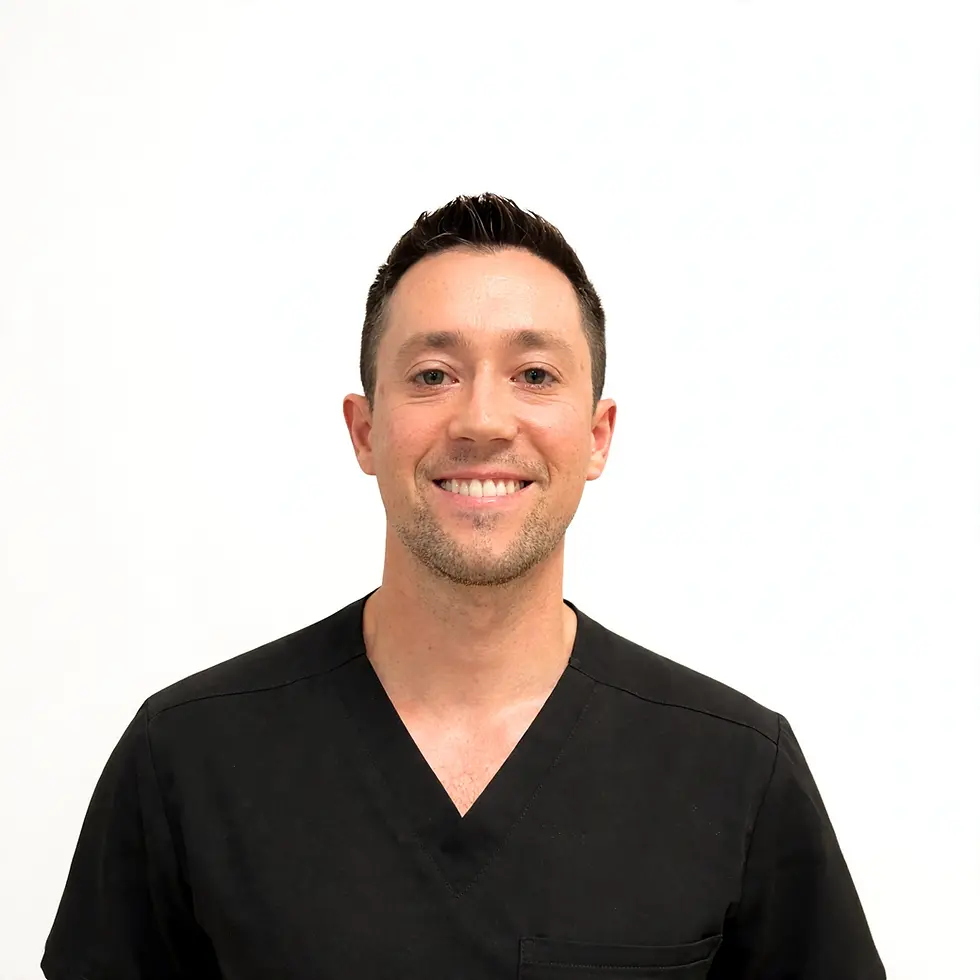
Dr. Pierce Knox
Nonsurgical Orthopedic Specialist
Fellowship trained in nonsurgical sports medicine at Penn Medicine; residency in primary care at Christiana Care.


