


What Does a Torn ACL Feel Like? Signs & Next Steps
Updated: Oct 14
Quick answer: A crucial nuance: not every ACL injury is a complete tear.
You're cutting on the soccer field, landing from a jump, or planting to change direction — and then it happens. A pop. Your knee buckles. Within an hour it's swelling like a balloon. If you've just lived through that sequence, you're probably wondering whether you tore your ACL. Here's what it actually feels like, how the diagnosis is confirmed, and what the nonsurgical path looks like — because surgery isn't the automatic answer many assume.
The Classic Story: What Patients Describe
ACL tears have a remarkably consistent story:
A pop — heard, felt, or both. The single most characteristic feature. Some describe it as a snap or a shift.
Immediate pain, often sharp, though intensity varies widely.
The knee "gives way." A feeling the knee can't be trusted, as if the lower leg shifts beneath the thigh.
Rapid swelling — within hours. Bleeding inside the joint typically balloons the knee within 2 to 12 hours. A knee that swells dramatically the same day as a twisting injury is an ACL tear until proven otherwise.
Loss of motion — the swollen knee won't fully straighten or bend.
Difficulty bearing weight initially — though many people walk with a limp within a day or two, which misleadingly suggests "it can't be that bad."
The mechanism is just as telling: a non-contact plant-and-twist, sudden deceleration, landing with the knee nearly straight, or a direct blow to the side of the knee.
What the ACL Does — and What Happens Without It
The ACL runs diagonally through the center of the knee, preventing the tibia from sliding forward and controlling rotation — the exact forces in cutting and pivoting sports.
When it tears completely, the tibia shifts abnormally during pivoting movements, which is why the hallmark long-term symptom is the knee giving way during cutting, twisting, or even stepping awkwardly off a curb.
A crucial nuance: not every ACL injury is a complete tear. Partial tears exist on a spectrum, and overall stability depends on remaining fibers, secondary stabilizers (menisci, collateral ligaments, capsule), and the demands placed on the knee. That spectrum is why treatment is individualized rather than automatic.
How a Torn ACL Is Diagnosed
The physical exam. An experienced clinician can often diagnose an ACL tear at the bedside. The Lachman test — stabilizing the thigh and pulling the shin forward — is the most sensitive maneuver; excess forward movement with a soft endpoint is the classic finding. The pivot-shift test reproduces the giving-way sensation.
MRI. Confirms the diagnosis, shows partial vs. complete tear, and reveals associated injuries: meniscus tears (present in roughly half of acute ACL tears), cartilage damage, and collateral ligament injuries. The full picture drives treatment planning.
X-ray. Rules out fractures — particularly tibial plateau fractures — that can accompany the same mechanism.
Timing matters. Exam accuracy is best once swelling and guarding settle, typically a week or two after injury. An in-office evaluation with ultrasound and X-ray starts the workup immediately, with MRI arranged to complete the picture.
The Nonsurgical Path: Who Can Avoid Reconstruction?
Here's what surprises many patients: a torn ACL does not automatically mean surgery. The decision depends on the person, not just the ligament. Good candidates for nonsurgical management include:
Partial tears with a firm endpoint on exam and no major instability
Older or less active patients whose sports and work don't involve cutting and pivoting
Patients willing to modify activities — trading pivoting sports for cycling, swimming, straight-line running
Lower baseline instability — some knees cope well without an ACL when secondary stabilizers are intact and muscles are strong
The nonsurgical program has real structure — this isn't "just rest":
Bracing. A functional brace for the first weeks protects healing tissues and provides confidence during early rehab.
Physical therapy. The cornerstone. Early goals: restoring full extension (a knee that won't straighten develops problems fast), controlling swelling, reactivating the quadriceps. Then progressive strengthening — quads, hamstrings, glutes, hip stabilizers — plus balance training. The hamstrings act as a dynamic backup to the ACL, resisting forward tibial slide.
Activity modification. Pivoting and cutting sports are the risk zone. Many patients return to full, satisfying athletic lives in straight-line activities.
Injections for associated injuries. The ACL tear rarely travels alone. Ultrasound-guided PRP injections are an option we consider for partial ACL tears and commonly associated injuries — meniscus tears, MCL sprains, cartilage irritation — aiming to support healing and improve stability without reconstruction. For significant associated arthritis or tissue damage, MFAT cell therapy may enter the discussion.
With dedicated rehab, a substantial fraction of well-selected patients — particularly partial tears and lower-demand individuals — return to their desired activities without surgery. Those who struggle are typically young pivoting-sport athletes with complete tears and recurrent giving-way despite good rehab.
When Reconstruction Is Discussed
ACL reconstruction — replacing the torn ligament with a graft — remains the right call for specific patients:
Young, active patients in cutting and pivoting sports with complete tears
Recurrent giving-way despite quality rehab
Associated injuries needing surgical repair (certain meniscus tears, multi-ligament injuries)
High occupational demands on the knee
What's changed: the decision can be made deliberately rather than reflexively. A trial of structured rehab doesn't "ruin" the chance for later reconstruction — and sometimes reveals surgery was never needed. The patients who do best are those whose treatment matches their knee, their injury, and their life.
Protecting Your Knees Going Forward
Whether your ACL is intact, partially torn, or reconstructed, these reduce future risk:
Neuromuscular training. Programs emphasizing proper landing mechanics — knees over toes, soft landings, hip and core engagement — have cut ACL injury rates significantly in studies of young athletes. These programs work and take only 15 minutes as a warm-up.
Hamstring and glute strength. The hamstrings are the ACL's muscular backup; weak hamstrings relative to quads is a known risk factor. Balanced strength matters more than raw quad power.
Avoid the straight-knee landing. Landing stiff-legged from a jump is the classic non-contact mechanism. Train the crouch — bending at the hips and knees on every landing.
Fatigue management. Tired muscles protect the knee poorly. Most non-contact ACL tears happen late in games and practices, when form deteriorates.
Proper footwear and surfaces. Appropriate shoes for the sport and attention to field conditions — wet grass, worn turf — matter at the margins but the margins add up.
Frequently Asked Questions
How do I know if I tore my ACL or just sprained my knee? The pop, rapid swelling within hours, and giving-way sensation point strongly to the ACL. Milder sprains swell more gradually and the knee feels stable. But only an exam plus MRI gives a definitive answer — a "bad sprain" that keeps giving way deserves evaluation.
Can you walk on a torn ACL? Often, yes — many people walk with a limp within a day or two, which is misleading. Walking ability doesn't rule out a complete tear. The telling feature isn't walking in a straight line; it's what happens when you try to pivot or cut.
Will my knee be unstable forever without surgery? Not necessarily. With dedicated rehab, many patients — especially partial tears and those who avoid pivoting sports — achieve a stable, functional knee. The hamstrings and secondary stabilizers compensate substantially. Recurrent giving-way despite good rehab is the signal that the nonsurgical path isn't sufficient.
How long is recovery without surgery? Typically 3 to 6 months of structured rehab before returning to full activity, depending on the tear severity and associated injuries. The timeline is driven by milestones — full motion, symmetric strength, stable single-leg function — not the calendar alone.
Can PRP heal a torn ACL? PRP doesn't reattach a completely torn ACL — no injection does. Where PRP fits is partial tears, where supporting the remaining fibers' healing may restore enough stability, and associated injuries like meniscus tears and collateral ligament sprains that commonly accompany ACL injuries. An MRI-based evaluation determines whether you're a candidate.
Take the Next Step
A pop, rapid swelling, and a knee that won't be trusted — if that's your story, don't guess. An accurate diagnosis (exam plus MRI) shows exactly what's torn and what's intact, and that picture determines whether the nonsurgical path can work for you.
Call Carolina Nonsurgical Orthopedics at 919.719.2270 or schedule your visit online. With offices in Raleigh and Cary, NC, we'll evaluate the full injury — ACL, meniscus, cartilage, and all — and build an honest plan, surgical referral included if that's genuinely what your knee needs.
About Your Physicians
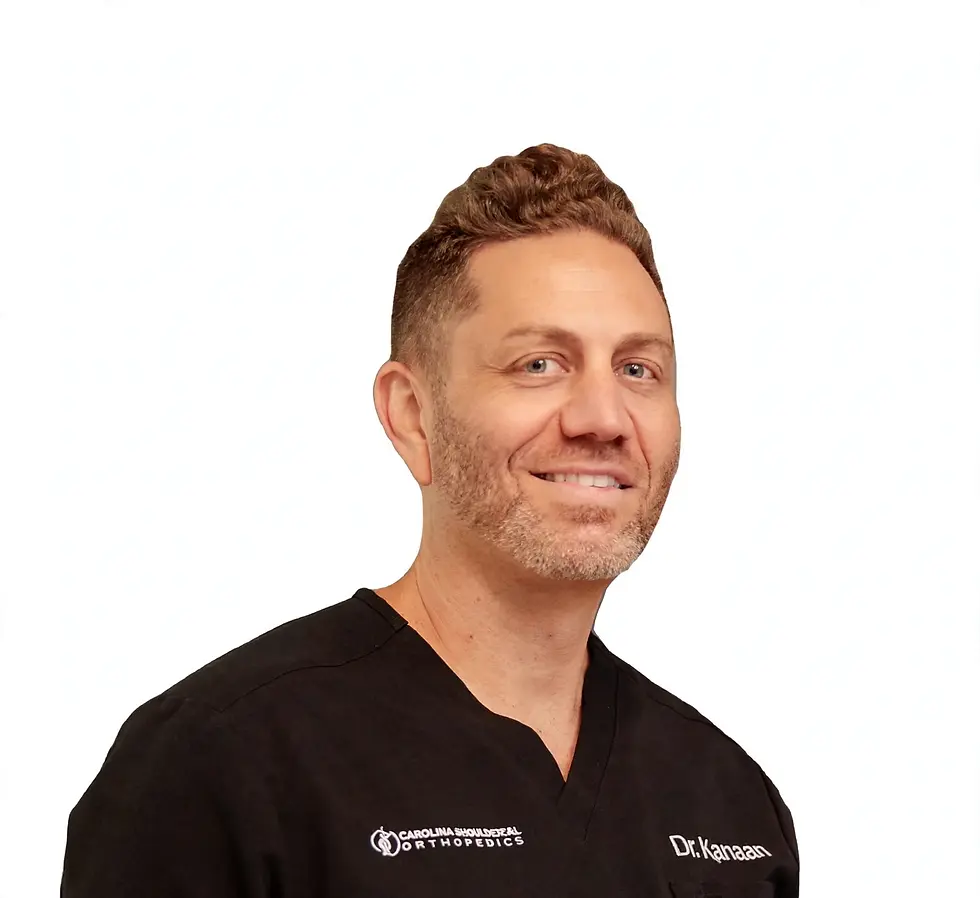
Dr. Matthew Kanaan
Nonsurgical Orthopedic Specialist
Founder of Carolina Nonsurgical Orthopedics. Fellowship trained in sports medicine at Duke; residency in family medicine at Duke, where he served as Chief Resident.
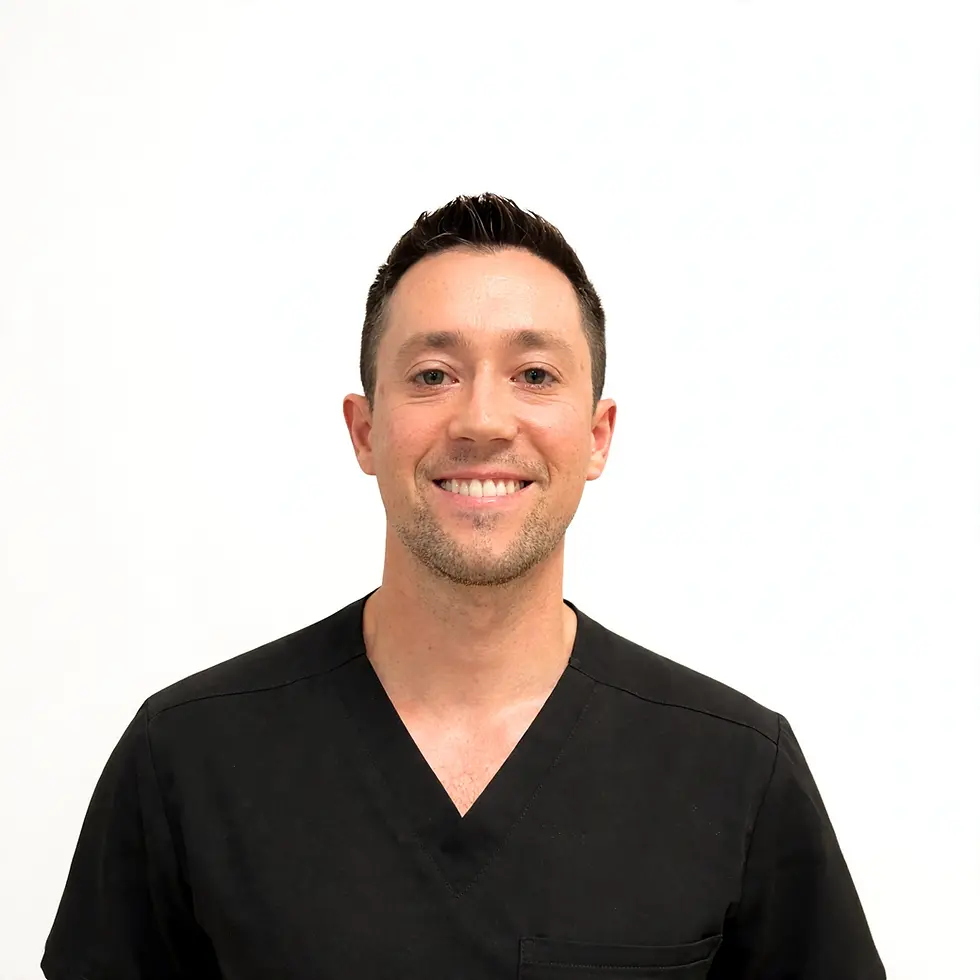
Dr. Pierce Knox
Nonsurgical Orthopedic Specialist
Fellowship trained in nonsurgical sports medicine at Penn Medicine; residency in primary care at Christiana Care.


