


Elbow Arthritis: The Stiff Elbow That Won't Straighten
Updated: Oct 14
Quick answer: Elbow arthritis gets less attention than knee or hip arthritis, partly because it's less common — the elbow is a highly congruent joint that usually needs an injury to start degenerating.
When the Elbow Loses Its Last 20 Degrees
Ask someone with elbow arthritis to straighten their arm fully, and you'll see the signature sign: it stops 15, 20, 30 degrees short. Not from pain alone — from a mechanical block. The elbow, a hinge that once moved freely, now catches, grinds, and aches with the simplest loads: pushing up from a chair, carrying groceries, turning a wrench.
Elbow arthritis gets less attention than knee or hip arthritis, partly because it's less common — the elbow is a highly congruent joint that usually needs an injury to start degenerating. But when it does, the stiffness dominates life in a way that's hard to appreciate until simple reaching becomes a negotiation.
What Causes Elbow Arthritis?
Post-traumatic arthritis — the most common cause: an old fracture, dislocation, or ligament injury that damaged the joint surface years ago; arthritis follows a decade or two later
Osteoarthritis — primary wear-and-tear is less common in the elbow than the knee, but occurs, especially with heavy manual labor
Rheumatoid arthritis — the elbow is a frequent target; bilateral, inflammatory pattern
Osteochondritis dissecans — in young throwers, a fragment of cartilage and bone loosens (related to the UCL/throwing injury spectrum)
The pathology: cartilage thins, bone spurs (osteophytes) form around the joint margins, and loose bodies — small fragments of bone and cartilage — break off and float in the joint, causing the catching and locking.
Symptoms
Loss of extension — can't fully straighten; the hallmark
Loss of flexion — can't fully bend, though extension loss usually comes first
Catching, locking, or grinding — loose bodies
Aching with activity, easing with rest; stiffness after immobility
Swelling around the joint in inflammatory flares
How We Diagnose It
History and exam — measuring the exact arc of motion (a normal elbow goes from 0° to ~145°), palpating for spurs and effusion, testing for loose-body catching, screening the inflammatory pattern
X-ray — shows joint space narrowing, osteophytes, and loose bodies; in-office, same visit
Ultrasound — evaluates effusion and guides injections; less useful for the bony detail, which is X-ray's job
CT or MRI when indicated — CT maps loose bodies and spurs for surgical planning; MRI if there's a ligament or cartilage question underneath the arthritis
Nonsurgical Treatment
The elbow tolerates arthritis management well — many patients do fine for years without surgery:
1. Activity modification. The elbow hates repetitive loading through a limited arc. Adjusting the specific tasks that grind the joint — not abandoning use, which stiffens it further.
2. Rehabilitation. Counterintuitive but essential: gentle, progressive range-of-motion work preserves what motion remains, and forearm strengthening supports the joint. Aggressive stretching into a bony block is pointless and painful — the program works within the available arc.
3. Anti-inflammatory measures. Ice, short-term NSAIDs for flares.
4. Ultrasound-guided injections. The elbow joint is small and surrounded by nerves — guidance isn't optional:
Corticosteroid — reliable short-term relief for inflammatory flares
**PRP** — reasonable option for symptom relief; evidence in elbow arthritis specifically is modest, and we frame it that way
Hyaluronic acid — some evidence for symptom improvement; a consideration when steroids wear off too fast
5. Bracing. A hinged elbow brace during aggravating activities can reduce painful loading.
When Surgery Enters the Conversation
Arthroscopic debridement (cleaning out spurs and loose bodies) helps the catching/locking pattern when conservative care fails; interposition arthroplasty or total elbow replacement are reserved for advanced disease — mostly in lower-demand or rheumatoid patients, since elbow replacements don't tolerate heavy loading. When your arc of motion keeps shrinking despite good care, we'll make the surgical referral directly.
When to Get Evaluated
Progressive loss of elbow motion
Catching or locking episodes
Aching that's limiting work or daily tasks
A history of elbow fracture or dislocation with new-onset stiffness years later
Schedule Your Evaluation
Call Carolina Nonsurgical Orthopedics at 919.719.2270 or schedule your visit online. With offices in Raleigh and Cary, NC — and in-office X-ray plus ultrasound for same-day answers — we'll measure exactly what's happening in the joint and build a plan around preserving your motion.
About Your Physicians
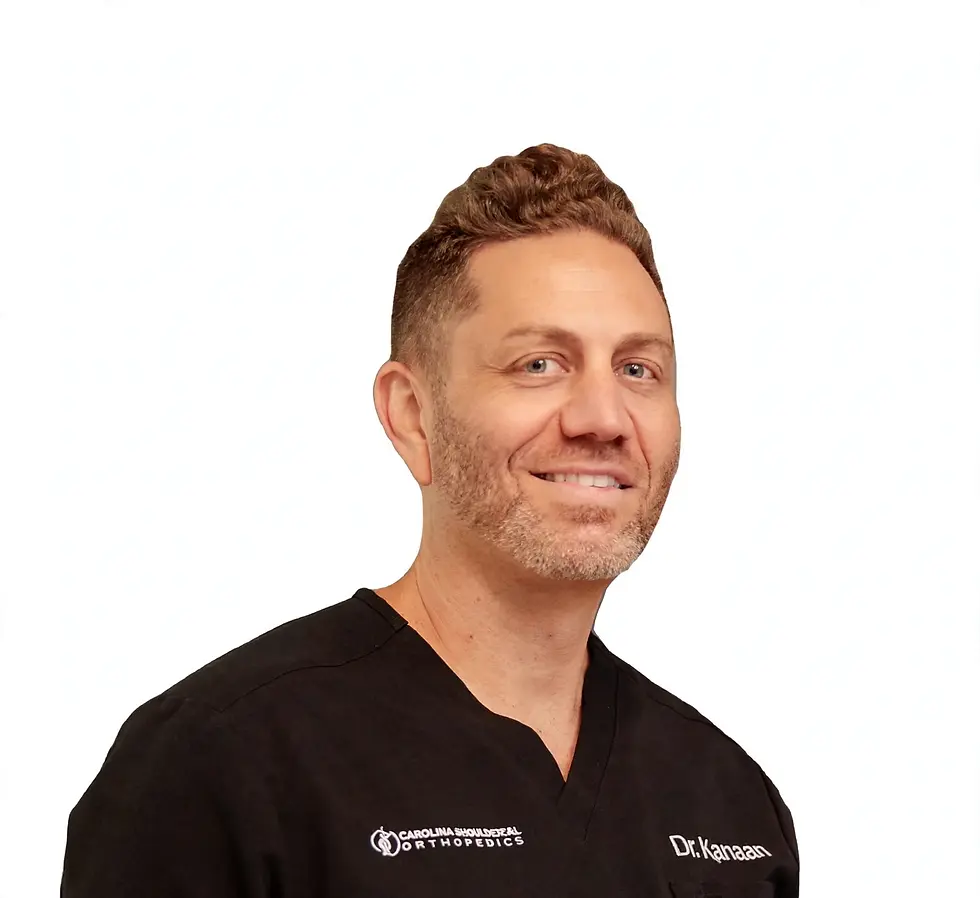
Dr. Matthew Kanaan
Nonsurgical Orthopedic Specialist
Founder of Carolina Nonsurgical Orthopedics. Fellowship trained in sports medicine at Duke; residency in family medicine at Duke, where he served as Chief Resident.
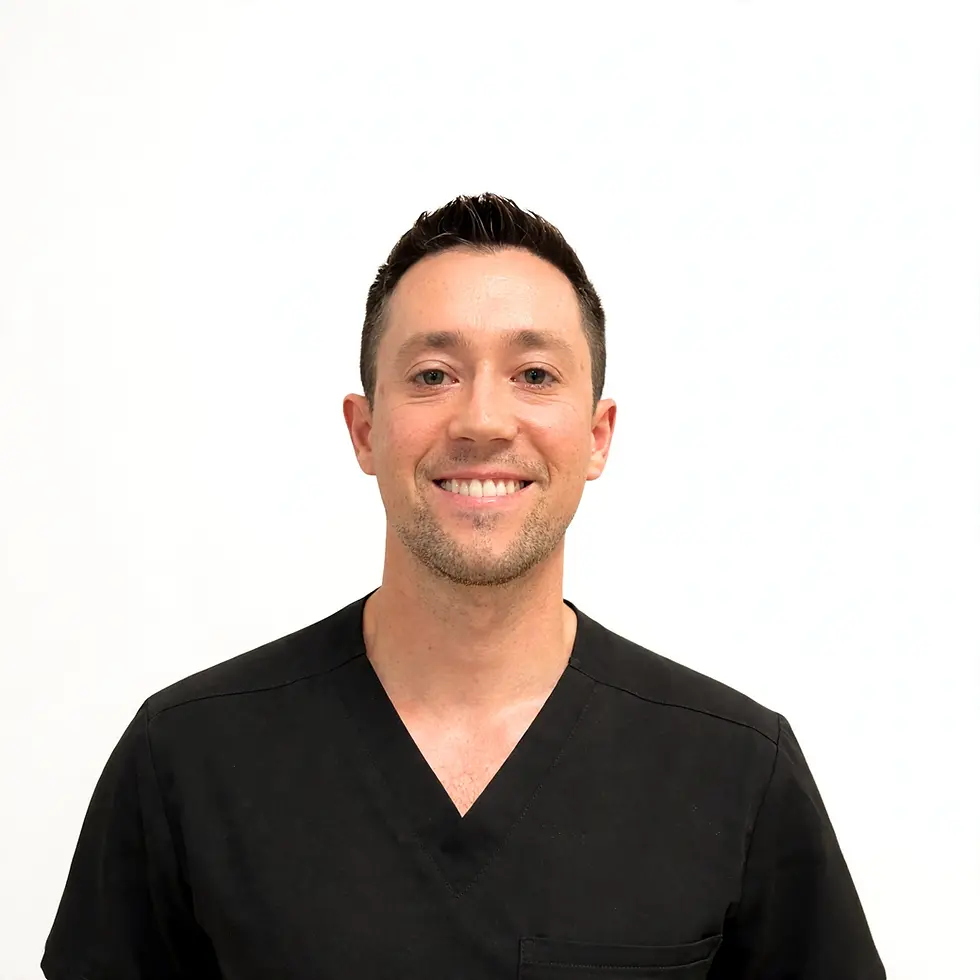
Dr. Pierce Knox
Nonsurgical Orthopedic Specialist
Fellowship trained in nonsurgical sports medicine at Penn Medicine; residency in primary care at Christiana Care.


