.png)
)_edited_pn.png)


How Long Does Hip PRP Take to Work?
Updated: Oct 15
Quick answer: PRP (platelet-rich plasma) is a concentrated injection of platelets from your own blood, placed under ultrasound guidance. At our Raleigh & Cary offices it is a cash-pay, nonsurgical treatment, and candidacy and exact pricing are reviewed at the evaluation, before you commit. Whether PRP is being considered for hip arthritis or a tendon problem, improvement is usually judged over weeks rather than days.
Hip PRP is generally not expected to provide immediate relief. Whether PRP is being considered for hip arthritis or a tendon problem, improvement is usually judged over weeks rather than days. The timeline depends heavily on the diagnosis. An arthritic hip joint, gluteal tendon and proximal hamstring tendon are different tissues with different loading demands, so there is no single recovery schedule that applies to every hip PRP procedure.
The first several days
Temporary soreness is common after a PRP injection. The treated area may feel more sensitive with walking, stairs or prolonged sitting depending on the target. Early discomfort should be managed according to the physician’s post-procedure instructions. The first few days are generally too soon to judge whether PRP will ultimately help.
The first few weeks
Some patients begin to notice a change during the first several weeks, while others do not. With tendon conditions, rehabilitation and progressive loading are often important parts of the plan. With hip arthritis, improvement may show up as easier walking, less stiffness after sitting or better tolerance of daily activities.
The 6- to 12-week window
A more meaningful assessment is often possible around 6 to 12 weeks. That is not a guarantee that improvement will occur by a specific date. Instead, it is a practical period in which trends in pain, function and activity tolerance can be evaluated. Some patients continue to improve after three months.
Why diagnosis changes the timeline
Lateral hip pain from gluteal tendinopathy behaves differently from deep groin pain caused by osteoarthritis. A labral problem or referred pain from the lumbar spine may require a different strategy altogether. Before PRP, the physician should identify the likely pain generator and explain why the proposed target makes sense.
What if there is no improvement?
If symptoms remain unchanged after an appropriate recovery period, the next step should be reassessment rather than automatically repeating the injection. Imaging, biomechanics, rehabilitation adherence and alternative diagnoses may need to be reconsidered. Advanced arthritis may also require a discussion about surgical options.
Setting realistic expectations
PRP is not a promise of tissue regeneration or permanent pain elimination. A reasonable goal is meaningful improvement in function and symptoms for a properly selected patient. Understanding the expected timeline helps patients avoid judging the treatment too early and helps physicians identify when another approach is needed.
Related orthopedic resources
Had PRP somewhere else — and it didn't work?
A failed PRP injection doesn't always mean PRP can't help you. The two most common reasons we see when we review outside treatments are dose — many clinics deliver a fraction of the platelet dose used in the studies that showed benefit, and often never measured it — and placement, when the injection was done without ultrasound guidance and never reached the target it was meant for. If your first treatment was underdosed or unguided, having it done properly is a different procedure, not a repeat of the same one. At an evaluation with us, we'll review what was actually done and tell you honestly whether redoing it right makes sense — or whether something else would serve you better.
About Your Physicians
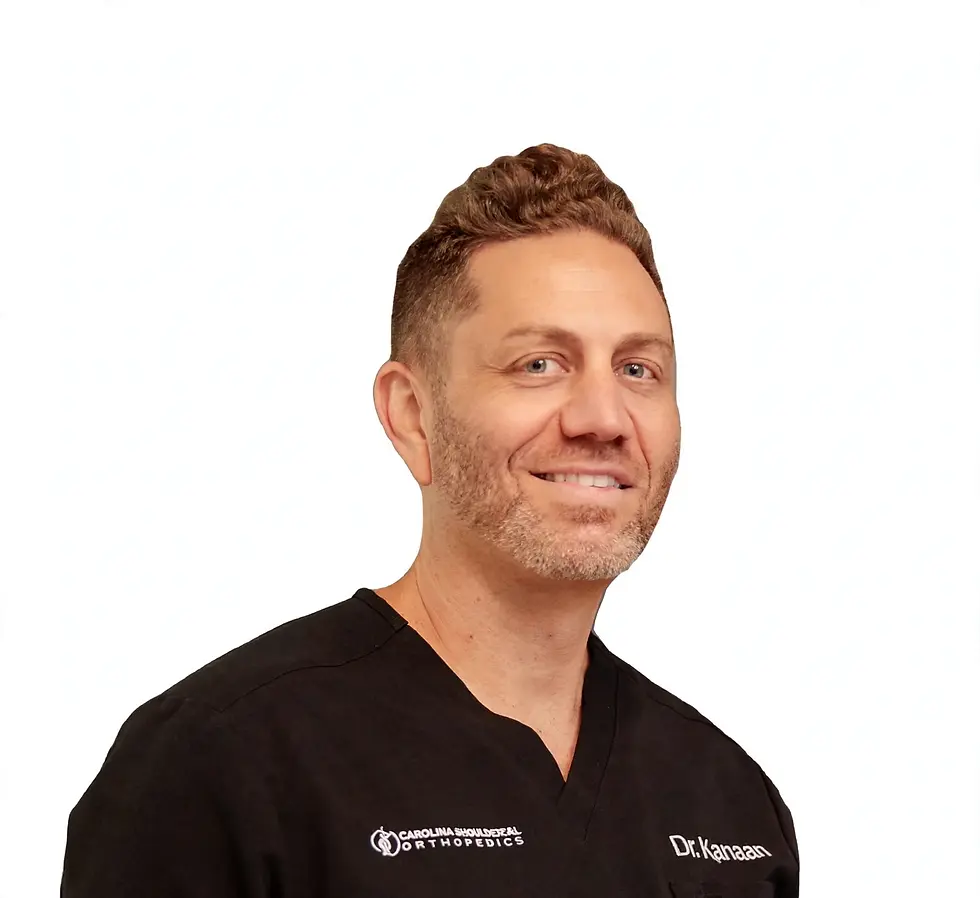
Dr. Matthew Kanaan
Nonsurgical Orthopedic Specialist
Founder of Carolina Nonsurgical Orthopedics. Fellowship trained in sports medicine at Duke; residency in family medicine at Duke, where he served as Chief Resident.
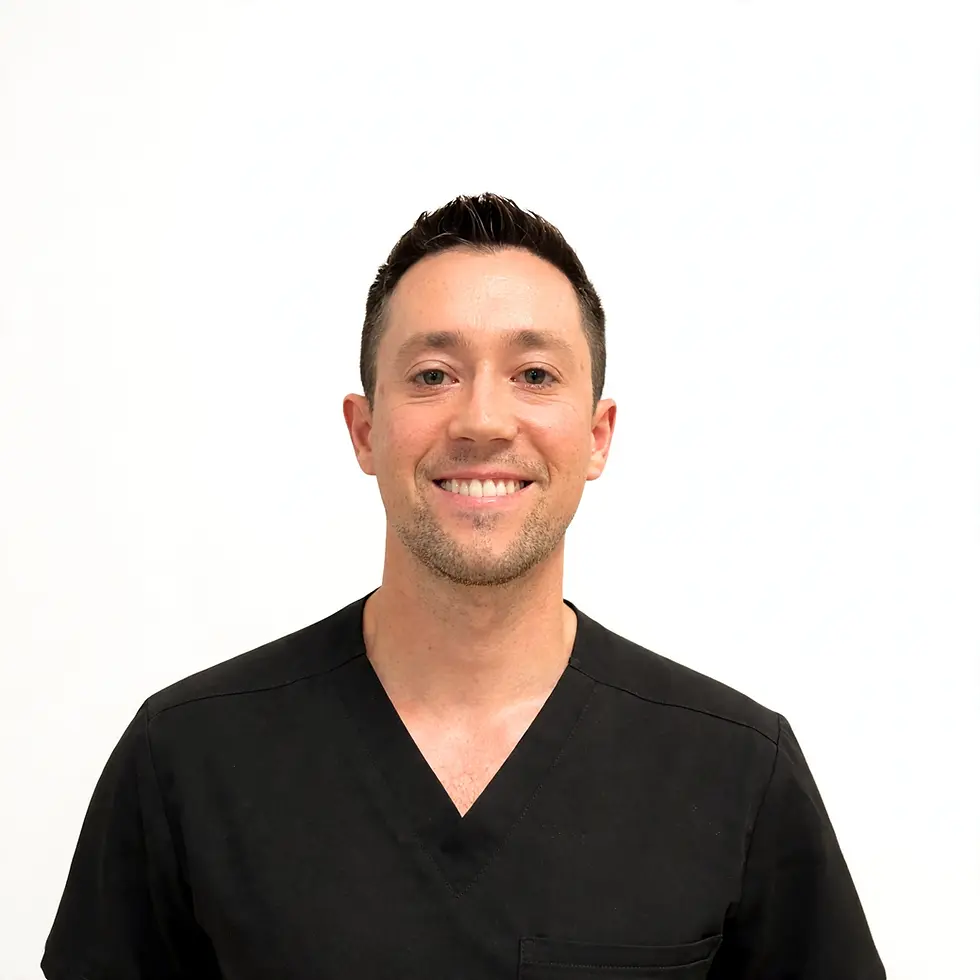
Dr. Pierce Knox
Nonsurgical Orthopedic Specialist
Fellowship trained in nonsurgical sports medicine at Penn Medicine; residency in primary care at Christiana Care.


