


How Much Does PRP Cost? What Goes Into the Price
Updated: Oct 15
Quick answer: PRP (platelet-rich plasma) is a concentrated injection of platelets from your own blood, placed under ultrasound guidance. At our Raleigh & Cary offices it is a cash-pay, nonsurgical treatment, and candidacy and exact pricing are reviewed at the evaluation, before you commit. In the research literature, studies using higher platelet concentrations have generally shown more encouraging results — though the evidence base is still developing and results vary from person to person.
If you've been told you might be a candidate for platelet-rich plasma — or PRP — therapy, one of the first questions on your mind is probably the most practical one: how much does it cost?
The honest answer is that PRP isn't like buying a gallon of milk. There is no single, standardized product with a single price tag. Two quotes from two different providers can differ significantly, and that doesn't necessarily mean one of them is wrong — the cost reflects real differences in how the treatment is prepared, delivered, and supported.
This guide explains what drives the price of PRP, why insurance rarely covers it, and which questions to ask any provider before you commit — so you can compare quotes on an apples-to-apples basis.
PRP Isn't One Standardized Product
The term "PRP" covers a wide range of treatments. At its core, platelet-rich plasma is made from your own blood: a sample is drawn, spun in a centrifuge to concentrate the platelets, and injected into the injured or arthritic area. Platelets carry growth factors and signaling proteins that studies suggest may support the body's natural healing in tendons, ligaments, and joints.
But here's the catch: there is no single agreed-upon recipe. The amount of blood drawn, the type of centrifuge kit, the final platelet concentration, and the volume injected can all vary from one provider to another.
This matters because dose appears to matter. In the research literature, studies using higher platelet concentrations have generally shown more encouraging results — though the evidence base is still developing and results vary from person to person. So when one clinic's quote seems much lower than another's, the first thing to ask is whether you're comparing the same treatment at all.
At Carolina Nonsurgical Orthopedics, we use high-dose PRP preparations because patients deserve the version of the treatment with the strongest supporting rationale. You can read more about our approach on our platelet-rich plasma (PRP) therapy page.
What Affects the Cost of PRP
Several factors combine to make up the total cost. Understanding each one helps you evaluate any quote you receive.
The Preparation System and Dose
Not all PRP kits are created equal. Simple, lower-cost kits produce a modest platelet concentration; advanced systems are engineered for high-dose PRP with several times more platelets per injection — and they cost the provider more for every procedure.
The dose also includes how much blood is drawn and how many platelets are delivered in the final injection. A treatment that draws a larger blood sample and delivers a higher platelet count reflects more time and materials.
Ultrasound Guidance
Most musculoskeletal PRP injections are placed precisely using real-time ultrasound guidance, which lets the physician see the target — a tendon tear, an arthritic joint, an inflamed bursa — and watch the needle reach it. Studies suggest better placement accuracy with imaging guidance than with landmark-based ("feel your way") injections.
But guidance isn't free. It requires an ultrasound machine, a physician trained in musculoskeletal ultrasound, and extra procedure time. A quote that seems unusually low may reflect treatment performed without imaging guidance — so ask whether ultrasound guidance is included.
The Condition Being Treated
PRP is used for knee arthritis, tennis elbow, rotator cuff tendinopathy, plantar fasciitis, and other tendon, ligament, and joint problems. Some conditions are straightforward to treat in a single visit; others involve multiple injection sites or more complex technique, which can influence the price. This is one reason a responsible provider won't give a firm quote without understanding your situation first.
The Number of Injections in a Course
Some PRP plans involve a single injection; others call for a series spaced several weeks apart. A per-injection price multiplied across a course adds up quickly, so know whether a quote covers one treatment or the full course. Be wary of comparing a single-injection price at one clinic with a full-course price at another — ask directly: "Does this quote cover the entire recommended course, or is it per injection?"
Follow-Up Care and What's Included
Follow-up visits to assess your progress, guidance on activity and rehabilitation, and communication with your physical therapist or referring physician are all part of quality care.
Some quotes are all-inclusive; others cover only the procedure, with follow-up visits billed separately. Neither approach is wrong, but you should know which one you're looking at. Questions about what to expect as a patient — including preparation and aftercare — are worth asking before you schedule.
Office Setting vs. Facility Setting
PRP performed in a physician's office typically costs less than the same procedure in a hospital outpatient department or surgery center, where facility fees are added on top. Office-based PRP avoids those facility charges entirely, which is one reason our Raleigh and Cary offices keep self-pay care accessible.
Why Insurance Rarely Covers PRP
One of the most common surprises for patients is learning that health insurance usually does not cover PRP injections for musculoskeletal conditions. Most insurers classify PRP as investigational or experimental for orthopedic use, even though a growing body of research supports its use for certain conditions. The general rule: PRP is a self-pay treatment.
Because of this, many practices — including ours — use transparent, upfront pricing: you know the full cost before treatment begins, with no surprise bills months later.
It's still worth a call to your insurer if you want to check your specific plan, since policies do change. But plan on PRP being an out-of-pocket expense, and evaluate it the way you'd evaluate any significant health investment: based on the quality of the treatment, the experience of the provider, and the clarity of the plan.
Questions to Ask Any Provider Before You Book
Whether you see us or someone else, these questions will help you compare options fairly:
What preparation system do you use, and what platelet concentration does it deliver? Look for a provider who can answer this specifically, not vaguely.
Is the injection performed with ultrasound guidance? For most joint and tendon targets, the answer should be yes.
Does the quote cover a single injection or a full course? Get the total cost of the recommended plan in writing.
What follow-up care is included? Ask about follow-up visits, activity guidance, and who to contact with questions afterward.
Who performs the injection? Outcomes depend on accurate diagnosis and precise placement — a physician with dedicated musculoskeletal and ultrasound training is the standard you want.
What are realistic expectations? No ethical provider guarantees results. Studies suggest PRP can reduce pain and improve function for many patients with tendon and mild-to-moderate joint problems, but results vary, and PRP is not a substitute for surgery when surgery is truly needed.
Frequently Asked Questions
Is PRP worth the out-of-pocket cost?
That depends on your condition, your goals, and your alternatives. For many patients with chronic tendon pain or early-to-moderate arthritis, PRP offers a minimally invasive option that may delay or avoid more aggressive interventions. Studies suggest meaningful pain relief and functional improvement for appropriately selected patients, though results vary and the evidence is stronger for some conditions than others. A thorough evaluation with a physician who will tell you honestly whether you're a good candidate — including when PRP is not the right choice — is the best way to weigh the value.
Why do PRP prices vary so much between clinics?
Because the treatments themselves vary. Differences in preparation systems, platelet dose, ultrasound guidance, the number of injections, included follow-up care, and facility setting all move the price. A lower quote isn't automatically a bargain — the key is understanding what each quote includes so you can compare equivalent treatments.
Will my insurance cover PRP if my doctor says it's medically necessary?
Usually not. Most insurers classify PRP for musculoskeletal conditions as investigational, and a physician's recommendation generally doesn't change the coverage policy. Some flexible spending accounts (FSAs) or health savings accounts (HSAs) may be usable for PRP — check with your plan administrator — but expect to pay out of pocket.
How do I get an accurate quote for my situation?
The condition, its severity, and the recommended plan all affect the price, so a responsible practice needs to understand your case first. Call our office at 919.719.2270 — we'll discuss your situation and give clear, upfront pricing with no surprises.
The Bottom Line
PRP cost reflects the dose and quality of the preparation, the precision of ultrasound-guided delivery, the complexity of your condition, the number of treatments in your course, and the care wrapped around the procedure. Understanding these factors lets you ask sharper questions, compare quotes fairly, and choose a provider based on value rather than price alone.
If you're considering PRP for a tendon, ligament, or joint problem here in the Raleigh and Cary area, we'd welcome the conversation. Call 919.719.2270 or schedule a consultation to discuss whether PRP makes sense for you — and exactly what it would cost.
Had PRP somewhere else — and it didn't work?
A failed PRP injection doesn't always mean PRP can't help you. The two most common reasons we see when we review outside treatments are dose — many clinics deliver a fraction of the platelet dose used in the studies that showed benefit, and often never measured it — and placement, when the injection was done without ultrasound guidance and never reached the target it was meant for. If your first treatment was underdosed or unguided, having it done properly is a different procedure, not a repeat of the same one. At an evaluation with us, we'll review what was actually done and tell you honestly whether redoing it right makes sense — or whether something else would serve you better.
About Your Physicians
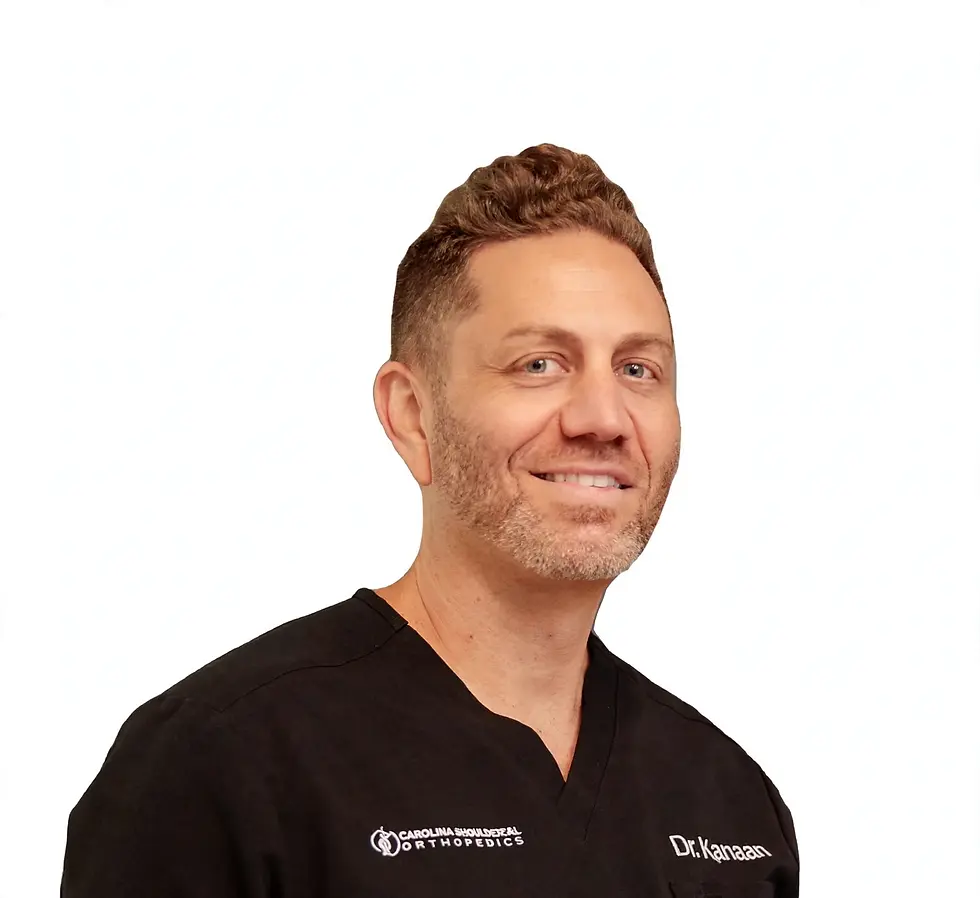
Dr. Matthew Kanaan
Nonsurgical Orthopedic Specialist
Founder of Carolina Nonsurgical Orthopedics. Fellowship trained in sports medicine at Duke; residency in family medicine at Duke, where he served as Chief Resident.
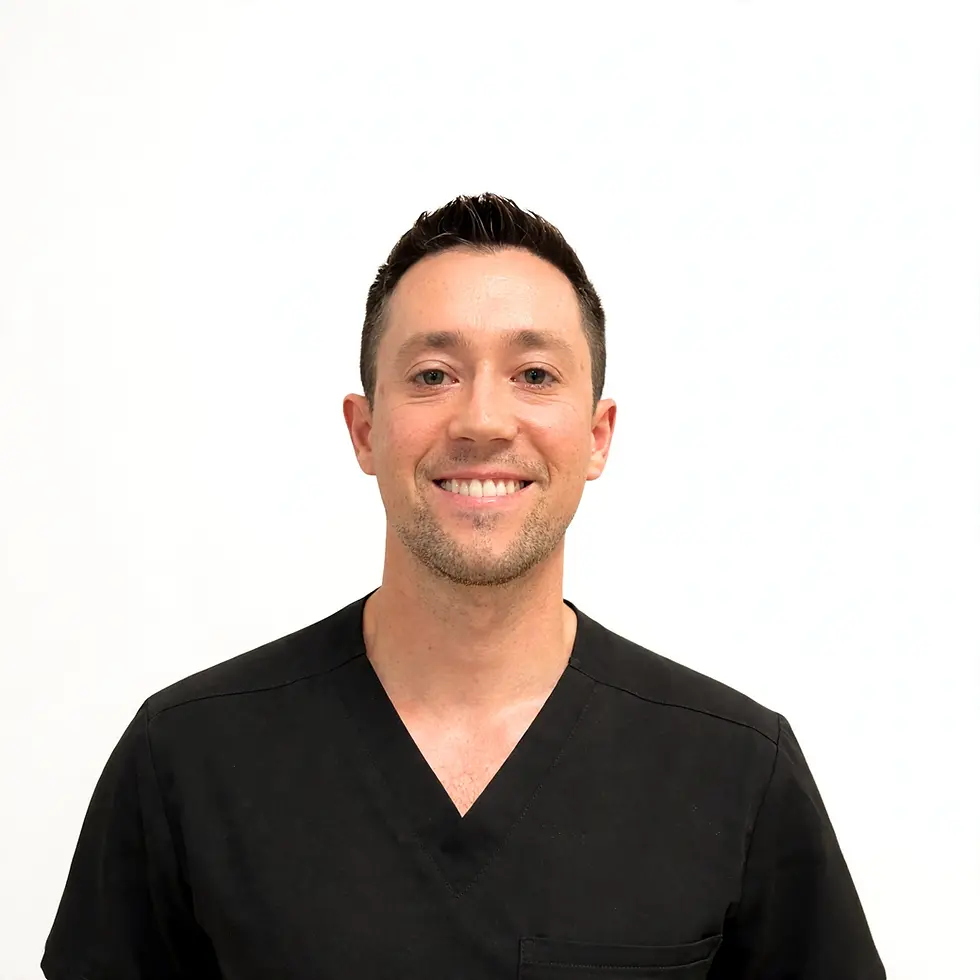
Dr. Pierce Knox
Nonsurgical Orthopedic Specialist
Fellowship trained in nonsurgical sports medicine at Penn Medicine; residency in primary care at Christiana Care.


