
)_edited_pn.png)


Knee Pain Treatment in Cary, NC: A Nonsurgical Approach
Updated: Oct 14
Quick answer: The nonsurgical path starts with an accurate diagnosis, then activity changes, therapy, and — when appropriate — image-guided treatment, with surgery considered only when conservative care isn't enough. That is the approach we take at Carolina Nonsurgical Orthopedics in Raleigh & Cary. For patients in Cary, the important first step is not deciding which injection to get.
Knee pain is one of the most common reasons active adults cut back on walking, exercise, golf, tennis, pickleball or simply climbing stairs. For patients in Cary, the important first step is not deciding which injection to get. It is identifying why the knee hurts. Arthritis, a meniscus problem, patellofemoral pain, tendon injury, ligament injury and referred pain can feel very different clinically even when patients describe all of them as “knee pain.”
A diagnosis-first sports medicine evaluation helps separate problems that are likely to respond to rehabilitation or targeted nonsurgical care from injuries that need MRI, surgical evaluation or a different specialty. The goal is to match treatment to the actual pain generator rather than treat every painful knee with the same protocol.
Where knee pain comes from
Pain at the front of the knee is commonly associated with the patellofemoral joint or patellar tendon, while pain along the joint line can occur with arthritis or meniscus pathology. Swelling after activity may reflect joint irritation, arthritis, a meniscus injury or other intra-articular problems. Pain behind the knee can come from a Baker’s cyst, hamstring or calf structures, or less commonly a vascular problem.
Symptoms such as true locking, giving way, inability to fully extend the knee, a large traumatic swelling or inability to bear weight deserve particular attention because they can change the urgency and type of evaluation.
How knee pain is evaluated
A useful evaluation begins with how the pain started, where it is located, which activities reproduce it and whether there is swelling, instability or mechanical symptoms. Examination of motion, strength, alignment, ligament stability, the patellofemoral joint and the meniscus helps narrow the differential diagnosis.
X-rays are often the most useful first test when arthritis is suspected because they show joint-space narrowing, osteophytes and alignment. Musculoskeletal ultrasound can evaluate many tendons, bursae, cysts and areas of fluid in real time. MRI is typically reserved for situations in which the diagnosis remains uncertain, a more significant structural injury is suspected or the result would change treatment.
Nonsurgical knee treatment options
Many knee problems improve with progressive strengthening, activity modification and correction of training errors. Hip and quadriceps strength, mobility and gradual loading often matter more than simply resting. Bracing can help selected patients, particularly when arthritis is concentrated in one compartment or when patellofemoral symptoms respond to improved tracking and support.
For knee osteoarthritis, treatment can also include medications when medically appropriate, weight management when relevant, hyaluronic acid injections and selected biologic procedures such as platelet-rich plasma. These options are not interchangeable, and the best choice depends on arthritis severity, prior treatment, goals and medical history. Ultrasound guidance can be used for many procedures to visualize the target and surrounding anatomy.
When PRP may fit
PRP may be considered for some patients with mild to moderate knee osteoarthritis and for selected tendon problems. It is prepared from the patient’s own blood, and the final product can differ substantially depending on blood volume, platelet concentration and processing method.
PRP is not a substitute for establishing the diagnosis. A patient with a displaced meniscus tear, a major ligament injury or advanced bone-on-bone arthritis should not be told that PRP is guaranteed to replace surgery. The value of any procedure depends on appropriate patient selection and realistic expectations.
When surgery may be the better option
Nonsurgical orthopedics includes knowing when not to keep treating nonsurgically. A displaced meniscus tear with true mechanical locking, certain acute ligament injuries, fractures and some large traumatic tendon injuries may warrant prompt surgical consultation.
For advanced knee arthritis with major daily functional limitation despite appropriate conservative care, joint replacement can be an effective and appropriate treatment. The purpose of nonsurgical care is to improve function and delay or avoid surgery when reasonable, not to postpone a needed operation indefinitely.
Common questions
How long should knee pain be present before evaluation? Persistent pain that limits activity, recurrent swelling, instability or symptoms that are not improving with basic measures are reasonable reasons to be evaluated.
Do you always need an MRI? No. Many common knee conditions can be identified with history, examination, X-ray and ultrasound. MRI is most useful when it is likely to change management.
Can you exercise with knee pain? Often yes, but the type and intensity should match the diagnosis. Relative load modification is usually more useful than prolonged complete rest.
Related Cary orthopedic resources
Important note
This article is for general educational purposes and is not a substitute for an individual medical evaluation. Treatment recommendations and results vary, and some orthopedic conditions require surgical or other specialty care.
About Your Physicians
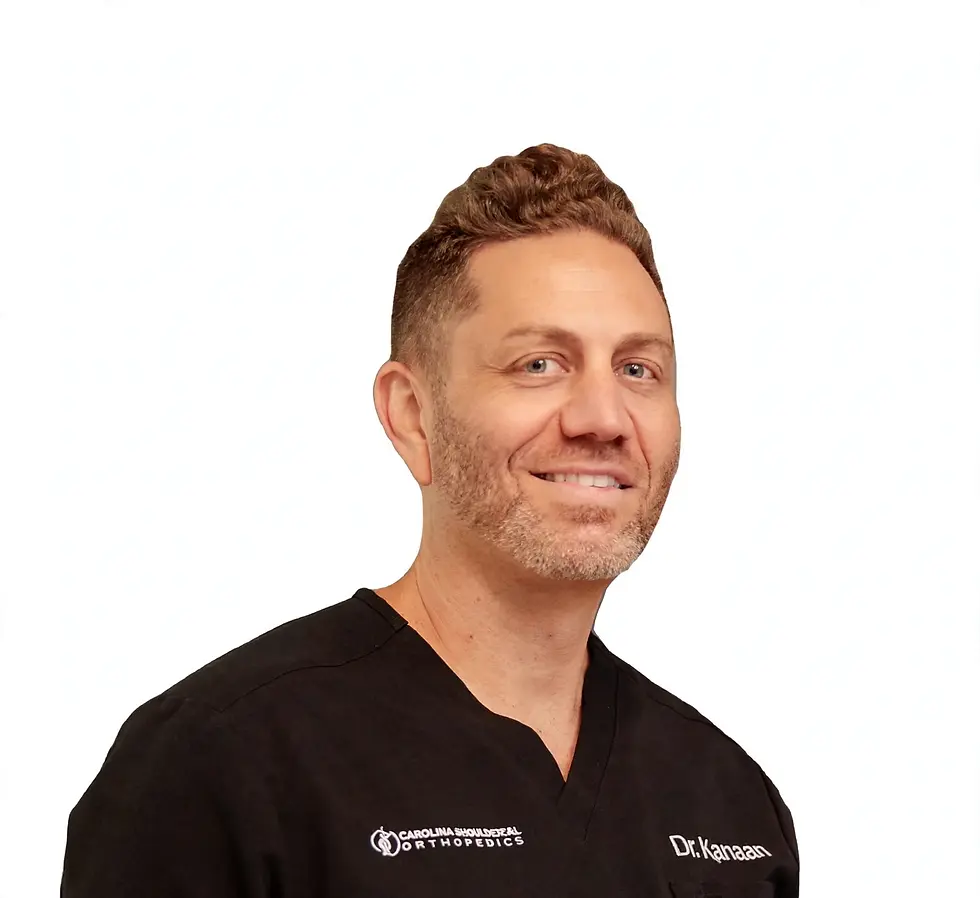
Dr. Matthew Kanaan
Nonsurgical Orthopedic Specialist
Founder of Carolina Nonsurgical Orthopedics. Fellowship trained in sports medicine at Duke; residency in family medicine at Duke, where he served as Chief Resident.
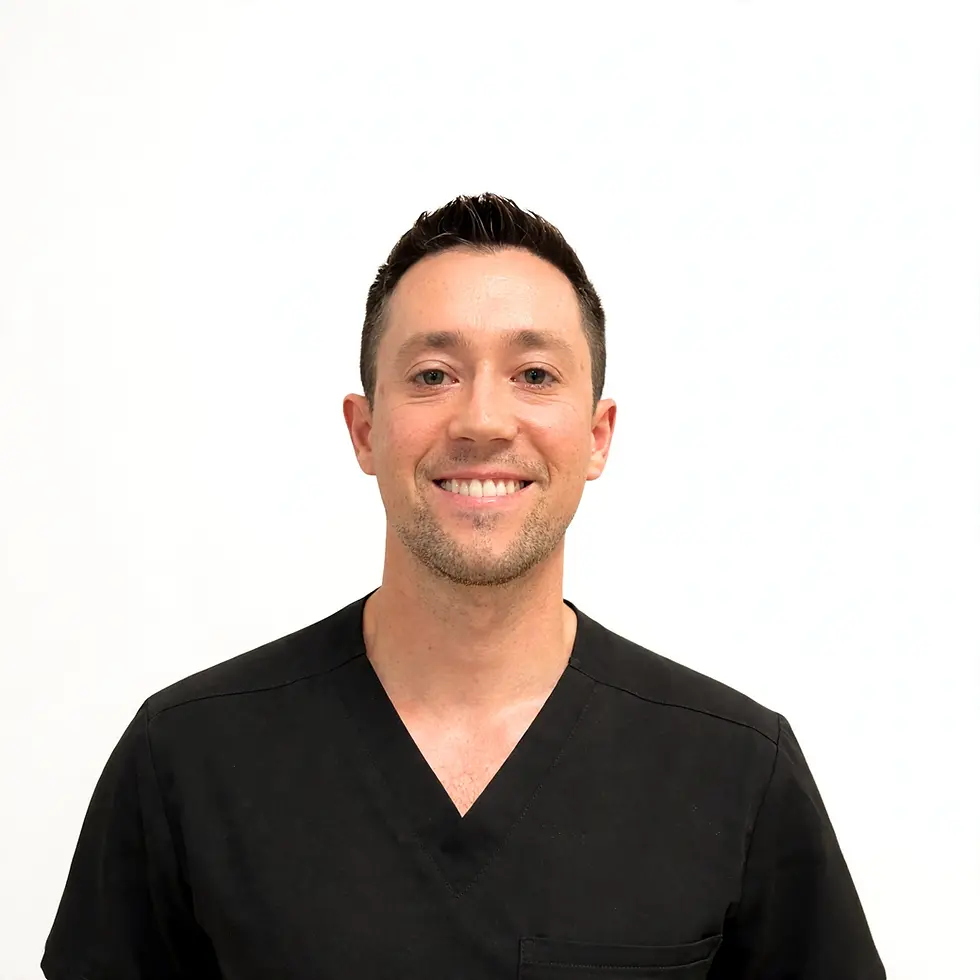
Dr. Pierce Knox
Nonsurgical Orthopedic Specialist
Fellowship trained in nonsurgical sports medicine at Penn Medicine; residency in primary care at Christiana Care.


