.png)
)_edited_pn.png)


PRP Injections in Cary, NC: What Patients Should Know
Updated: Oct 15
Quick answer: PRP (platelet-rich plasma) is a concentrated injection of platelets from your own blood, placed under ultrasound guidance. At our Raleigh & Cary offices it is a cash-pay, nonsurgical treatment, and candidacy and exact pricing are reviewed at the evaluation, before you commit. The question is not “Can PRP be injected here?” but “What structure is causing the symptoms, what does the evidence suggest for this condition and is PRP reasonable compared with rehabilitation, other injections or surgery?”
Platelet-rich plasma has become one of the most requested nonsurgical orthopedic procedures, but “PRP” is not a single standardized product. Two clinics can both advertise PRP while using very different blood volumes, processing systems, platelet concentrations and injection techniques. For patients considering PRP in Cary, understanding those differences is more useful than simply asking whether a clinic offers PRP.
PRP should also come after a diagnosis, not before one. The question is not “Can PRP be injected here?” but “What structure is causing the symptoms, what does the evidence suggest for this condition and is PRP reasonable compared with rehabilitation, other injections or surgery?”
What PRP actually is
PRP is prepared from a patient’s own blood. The blood is processed to separate and concentrate platelets within plasma, and the final preparation is then injected into a selected joint, tendon or other musculoskeletal target.
Platelets contain signaling proteins involved in tissue response and healing. That biology is why PRP is being studied across orthopedic conditions, but it does not mean PRP reliably regenerates any damaged structure or restores an arthritic joint to normal. Claims should match the evidence for the specific diagnosis.
Platelet dose and blood volume matter
A small syringe of PRP can contain very different numbers of platelets depending on how much blood was drawn and how the sample was processed. Total platelet dose may be more informative than simply reporting a concentration multiple or the number of milliliters injected.
Leukocyte content also varies. Some preparations are leukocyte-rich while others reduce white blood cells. The ideal formulation may differ between a chronic tendon problem and an arthritic joint, and there is no single PRP recipe proven best for every orthopedic condition.
Why ultrasound guidance matters
Musculoskeletal ultrasound allows the physician to visualize many joints, tendons, ligaments, nerves and surrounding structures in real time. During a procedure, the needle can be directed toward the intended target rather than relying only on surface landmarks.
Guidance is particularly useful for smaller tendon targets and areas near nerves or blood vessels. Accuracy alone does not guarantee success, but placing the treatment in the intended structure is a basic part of a well-planned procedure.
Conditions where PRP may be considered
PRP is commonly discussed for mild to moderate knee osteoarthritis and selected chronic tendon disorders such as tennis elbow, gluteal tendinopathy, patellar tendinopathy and some plantar fascia problems. Evidence varies by diagnosis, and individual results vary even within conditions where studies are favorable.
PRP is less convincing as a blanket treatment for advanced bone-on-bone arthritis, major unstable injuries or structural problems that are primarily surgical. Patient selection matters as much as the injection itself.
What recovery is like
PRP usually does not provide immediate relief. Temporary soreness is common after the procedure, and improvement—when it occurs—typically develops gradually over weeks. The rehabilitation plan depends on the treated structure. A tendon procedure may require a different progression than a knee-joint injection.
Patients should receive clear guidance about activity, expected soreness and when to resume strengthening. Medication instructions should be individualized rather than assuming every patient can safely stop anti-inflammatory or anticoagulant medication.
How to compare PRP clinics
Ask who performs the injection, whether diagnostic evaluation occurs before treatment, whether ultrasound guidance is used when appropriate and how the PRP is prepared. It is also reasonable to ask about blood draw volume, platelet dose and whether the clinic changes its approach based on the condition.
Be cautious with guarantees, claims that PRP can replace all surgery, or packages that recommend the same injection sequence for every diagnosis. A credible regenerative medicine program should also be willing to tell a patient when PRP is not the best option.
Related Cary orthopedic resources
Important note
This article is for general educational purposes and is not a substitute for an individual medical evaluation. Treatment recommendations and results vary, and some orthopedic conditions require surgical or other specialty care.
Had PRP somewhere else — and it didn't work?
A failed PRP injection doesn't always mean PRP can't help you. The two most common reasons we see when we review outside treatments are dose — many clinics deliver a fraction of the platelet dose used in the studies that showed benefit, and often never measured it — and placement, when the injection was done without ultrasound guidance and never reached the target it was meant for. If your first treatment was underdosed or unguided, having it done properly is a different procedure, not a repeat of the same one. At an evaluation with us, we'll review what was actually done and tell you honestly whether redoing it right makes sense — or whether something else would serve you better.
About Your Physicians
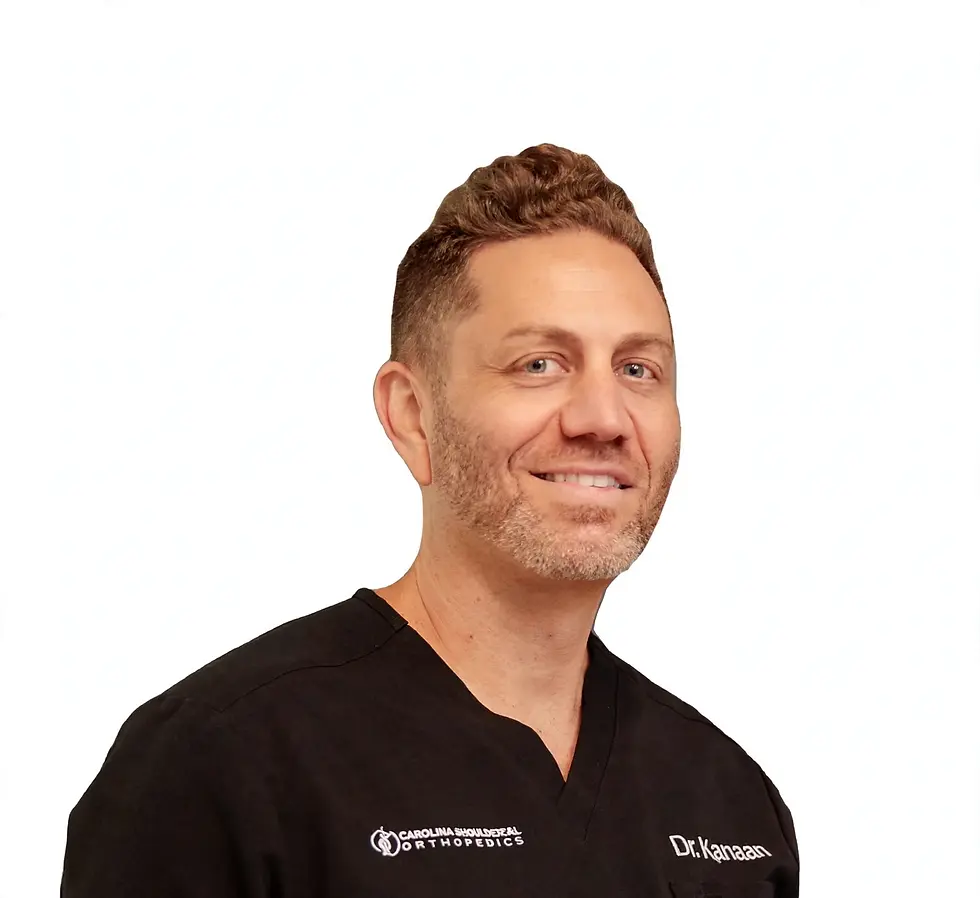
Dr. Matthew Kanaan
Nonsurgical Orthopedic Specialist
Founder of Carolina Nonsurgical Orthopedics. Fellowship trained in sports medicine at Duke; residency in family medicine at Duke, where he served as Chief Resident.
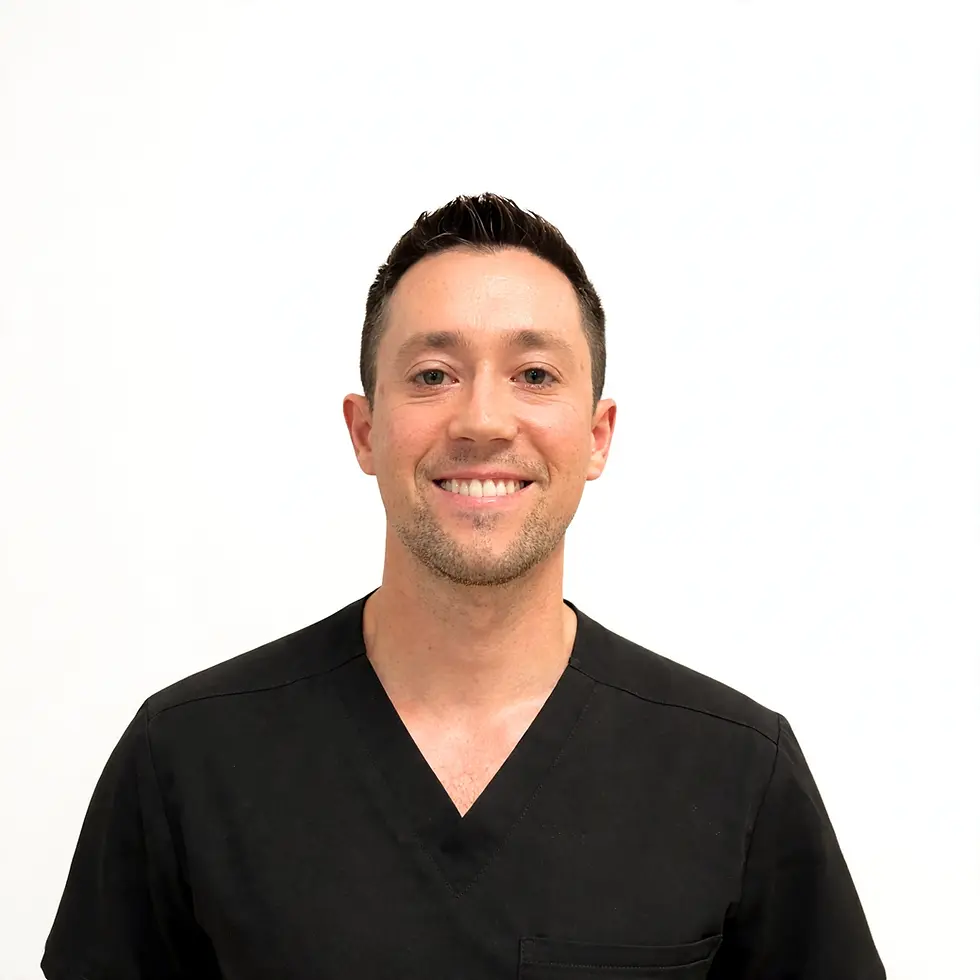
Dr. Pierce Knox
Nonsurgical Orthopedic Specialist
Fellowship trained in nonsurgical sports medicine at Penn Medicine; residency in primary care at Christiana Care.


