


PRP & Stem Cell Therapy in the Triangle: How to Choose the Right Provider
Updated: Oct 15
Quick answer: PRP and MFAT cell therapy are both nonsurgical, cash-pay regenerative treatments we offer in Raleigh & Cary, using your own blood or your own adipose tissue. Which one fits depends on the joint or tendon, how advanced the problem is, and what the evidence supports. If you search for PRP or stem cell therapy anywhere around Raleigh, you'll find no shortage of options — orthopedic groups, med spas, pain clinics, and dedicated regenerative medicine practices.
If you search for PRP or stem cell therapy anywhere around Raleigh, you'll find no shortage of options — orthopedic groups, med spas, pain clinics, and dedicated regenerative medicine practices. Most of these treatments are cash-pay, and the field is lightly regulated, which means the quality of what you get varies enormously from one provider to the next.
This guide explains what to look for, what to avoid, and which questions to ask — so you can choose a provider with confidence, whether that's us or someone else.
What these treatments actually are
PRP (platelet-rich plasma) is made from your own blood. A sample is drawn, spun in a centrifuge to concentrate the platelets, and injected into the injured joint, tendon, or ligament. Platelets carry growth factors that support the body's natural repair processes. It's most established for mild-to-moderate arthritis, tendon injuries (like tennis elbow), and ligament sprains.
"Stem cell therapy" in orthopedics usually means one of two things: bone marrow aspirate concentrate (BMAC) or microfragmented adipose tissue (MFAT) — both harvested from your own body on the day of the procedure. These are typically considered for more advanced arthritis or larger injuries where PRP alone may not be enough — though the research base for these treatments is still developing, and medical guidelines differ on their use.
One important note: products marketed as "umbilical cord stem cells" or amniotic "stem cell" injections are not FDA-approved for orthopedic use. Legitimate orthopedic regenerative medicine in the U.S. uses your own tissue.
What to look for in a provider
1. A physician performs the procedure — and the evaluation. Regenerative procedures should start with a real diagnostic workup by a physician, not a sales consultation. The person evaluating you should be the person deciding whether you're actually a candidate.
2. Image guidance for every injection. Joints and tendons are small targets. Blind injections miss more often than most patients realize. Look for a provider who uses ultrasound guidance (the standard for most joint, tendon, and ligament injections) for precise placement.
3. Dose and customization matter. Not all PRP is the same. Platelet concentration, volume, and whether the preparation is tailored to your specific condition all affect results. Ask what makes their preparation different from a basic single-spin kit.
4. Honest candidacy screening. The best sign of a trustworthy clinic is that they sometimes say no. Bone-on-bone arthritis with major deformity, complete tendon ruptures, and unstable joints are often poor candidates for regenerative treatment — and a good provider will tell you that upfront rather than take your money.
5. A framework beyond the injection. The injection is one part of recovery. Providers grounded in sports medicine typically pair treatment with a structured rehabilitation plan, because the tissue still needs to be loaded correctly as it heals.
Red flags
Guaranteed results or specific success percentages. No honest provider can promise this. Outcomes depend on the condition, its severity, and the individual.
Umbilical cord or amniotic "stem cells" for orthopedic conditions. Not FDA-compliant for these uses.
Priced and sold before you're evaluated. If the treatment plan (and price) is decided before a physician examines you, that's a sales process, not a medical one.
No imaging guidance. If they can't show you the needle on ultrasound, keep looking.
PRP offered as an add-on at a clinic that specializes in something else. Regenerative medicine done well is a full-time practice, not a side menu.
Questions to ask at your consultation
Will a physician evaluate me, and will a physician perform the injection?
Do you use ultrasound guidance?
How is your PRP prepared, and is the dose customized to my condition?
Am I actually a good candidate — and if not, what would you recommend instead?
What does recovery and rehab look like after the procedure?
What are the total costs, and what's included (evaluation, imaging, follow-up)?
A provider who answers these clearly and directly is usually a provider you can trust.
PRP & stem cell therapy in Raleigh, Cary, and across the Triangle
Carolina Nonsurgical Orthopedics offers high-dose, customized PRP and MFAT "stem cell" procedures at two Triangle locations, with every injection performed under ultrasound guidance by a physician.
Raleigh office — serving Raleigh and the surrounding communities Cary office — serving Cary and western Wake County
We regularly see patients from throughout the greater Triangle area, including:
Apex, Morrisville, Holly Springs, Fuquay-Varina, Garner, Knightdale, Wake Forest, Rolesville, Wendell, Zebulon, Clayton, Durham, Chapel Hill, Carrboro, and Pittsboro.
If you're dealing with joint pain, arthritis, or a tendon or ligament injury and want to explore nonsurgical options, schedule an evaluation at whichever office is more convenient. We'll give you an honest assessment of whether regenerative treatment makes sense for your situation — and if it doesn't, we'll tell you that too.
Had PRP somewhere else — and it didn't work?
A failed PRP injection doesn't always mean PRP can't help you. The two most common reasons we see when we review outside treatments are dose — many clinics deliver a fraction of the platelet dose used in the studies that showed benefit, and often never measured it — and placement, when the injection was done without ultrasound guidance and never reached the target it was meant for. If your first treatment was underdosed or unguided, having it done properly is a different procedure, not a repeat of the same one. At an evaluation with us, we'll review what was actually done and tell you honestly whether redoing it right makes sense — or whether something else would serve you better.
About Your Physicians
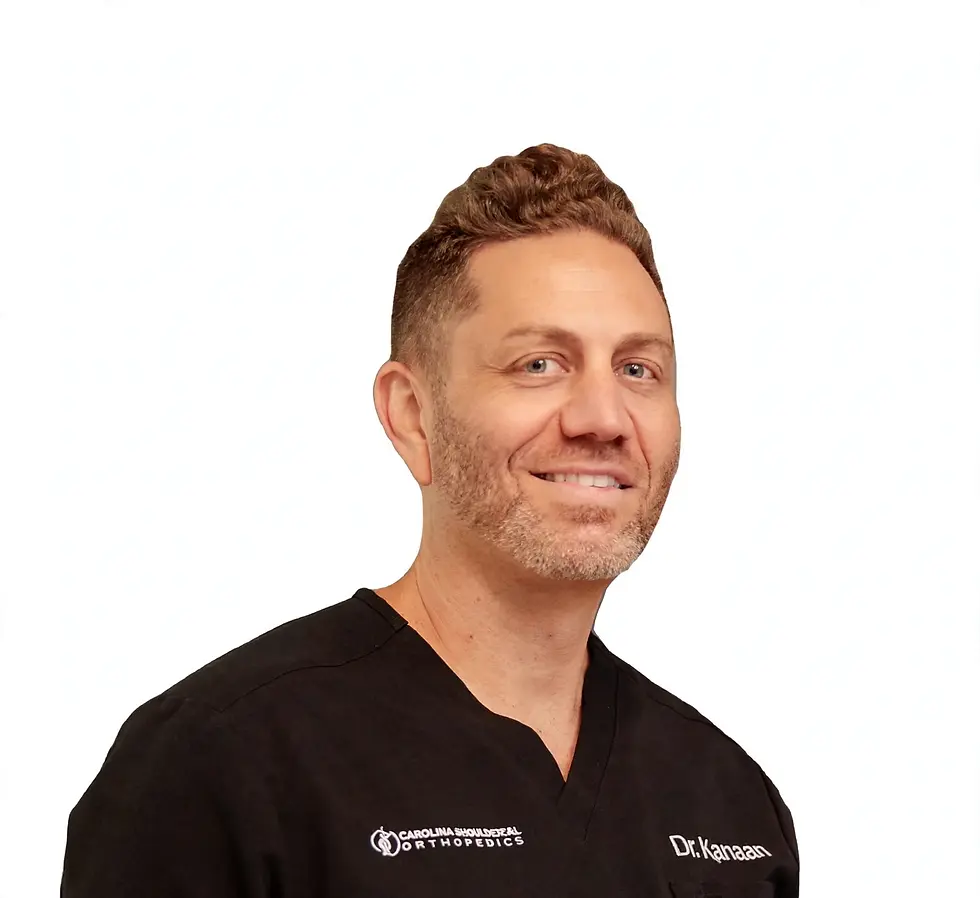
Dr. Matthew Kanaan
Nonsurgical Orthopedic Specialist
Founder of Carolina Nonsurgical Orthopedics. Fellowship trained in sports medicine at Duke; residency in family medicine at Duke, where he served as Chief Resident.
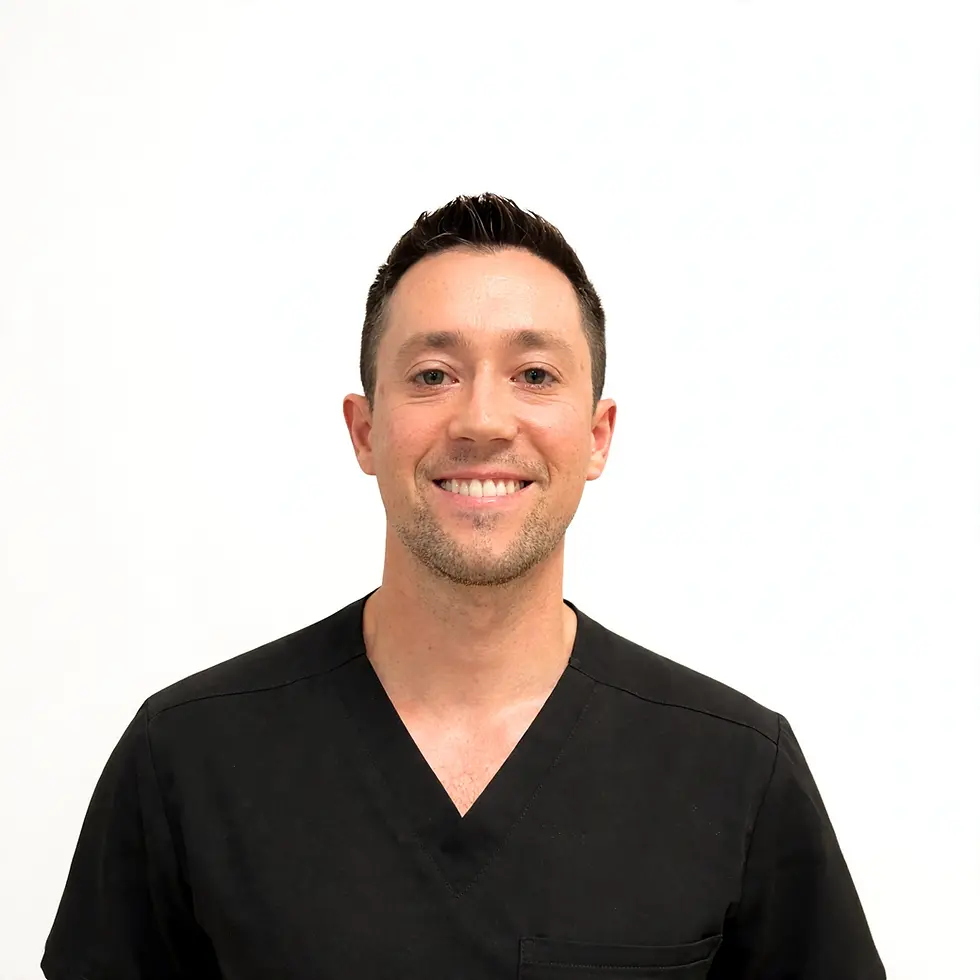
Dr. Pierce Knox
Nonsurgical Orthopedic Specialist
Fellowship trained in nonsurgical sports medicine at Penn Medicine; residency in primary care at Christiana Care.


