


Who Is NOT a Good Candidate for Stem Cell Therapy?
Quick answer: Cell therapy is not for everyone. Bone-on-bone arthritis with deformity, active infection, certain blood disorders, and uncontrolled medical problems are common reasons we say no. This post lists the exclusions we apply at our Raleigh & Cary evaluations, before anyone spends anything.
Most stem cell websites are lists of reasons to say yes. This one is the opposite — and we think it matters more.
Cell-based therapy (like MFAT, the treatment we offer at Carolina Nonsurgical Orthopedics) helps many patients with joint arthritis. But it is not a universal answer, and offering it to the wrong patient isn't harmless: it costs them money, months of waiting, and sometimes the window for a better treatment. Here are the situations where we'll honestly tell you it's not the right call.
1. Advanced, bone-on-bone arthritis with deformity
This is the most common exclusion, and the hardest conversation. When a joint is severely bone-on-bone — especially with bowing of the leg, significant instability, or major loss of motion — no injection rebuilds the joint's structure. The mechanics are the problem, and mechanics need a mechanical solution.
For many of these patients, joint replacement is an excellent, durable operation, and recommending cell therapy instead would be doing them a disservice. Our job is to tell you where you actually stand on that spectrum, using your imaging — not to sell you the treatment we happen to offer.
2. Arthritis driven by an untreated structural problem
Cell therapy doesn't fix a locked knee from a displaced meniscus tear, a hip that's painful because of severe impingement anatomy, or a joint that's unstable from a complete ligament rupture. If a mechanical problem is the primary driver, it has to be addressed — sometimes surgically — before regenerative treatment is a sensible conversation.
3. Inflammatory arthritis in an active flare
Rheumatoid arthritis and similar inflammatory conditions attack joints through the immune system. During an active flare, the priority is controlling the inflammation with your rheumatology team. Injecting a regenerative product into an inflamed, uncontrolled joint is poor timing at best. (Quiet, well-controlled inflammatory disease with residual mechanical damage is a different, individualized discussion.)
4. Active infection or infection risk we can't clear
An active joint infection is an absolute stop. So is an untreated skin infection near the harvest or injection site. Cell therapy involves harvesting and injecting tissue — sterility isn't negotiable, and we'll postpone or decline if there's any concern.
5. Certain blood and cancer histories
Because MFAT is harvested from your own tissue and processed the same day, most medical histories are compatible. But some situations require a hard look or a no:
Active cancer, or a cancer history your oncology team hasn't cleared for regenerative treatment
Blood disorders that affect healing or make the harvest unsafe
Anticoagulation that can't be safely paused around the procedure
These are case-by-case, but they have to be screened — which is one reason a real medical evaluation matters before anyone books a treatment.
6. Expectations no treatment can meet
If the goal is a guaranteed result, a brand-new joint, or being 25 again, cell therapy will disappoint you — because no honest version of it does that. The evidence supports meaningful pain and function improvement for many patients, typically measured over months. Patients who do best with it tend to share a profile: realistic goals, willingness to do physical therapy, and a joint that's damaged but not destroyed.
7. You haven't tried the basics yet
Stem cell therapy is not a first step. If you haven't genuinely tried activity modification, a real course of physical therapy, and weight management where relevant, those come first — they're cheaper, they carry no procedural risk, and for a surprising number of people they're enough. Starting with the biggest intervention isn't aggressive medicine; it's upside-down medicine.
What a "no" from us actually looks like
When we screen someone out, the visit isn't wasted. You'll leave knowing:
Exactly what your imaging shows and how advanced your arthritis is
What we recommend instead — therapy, a different injection, a surgical referral, or watchful waiting
Whether anything could change the answer later (for example, treating inflammation first, or losing weight to improve candidacy)
We'd rather earn your trust with an honest no than your money with a hopeful maybe. That's true for PRP, and it's doubly true for a treatment at this price.
The bottom line
Good candidates for stem cell therapy have mild-to-moderate arthritis, a structurally sound joint, realistic expectations, and a willingness to do the rehab work. If that's not you, the right move is a different treatment — and a good clinic will tell you so.
If you're wondering where you fall, bring your imaging (or we'll take it) and come in for an evaluation. You'll get a straight answer.
Call 919.719.2270 to schedule an evaluation at our Raleigh or Cary office.
About Your Physicians
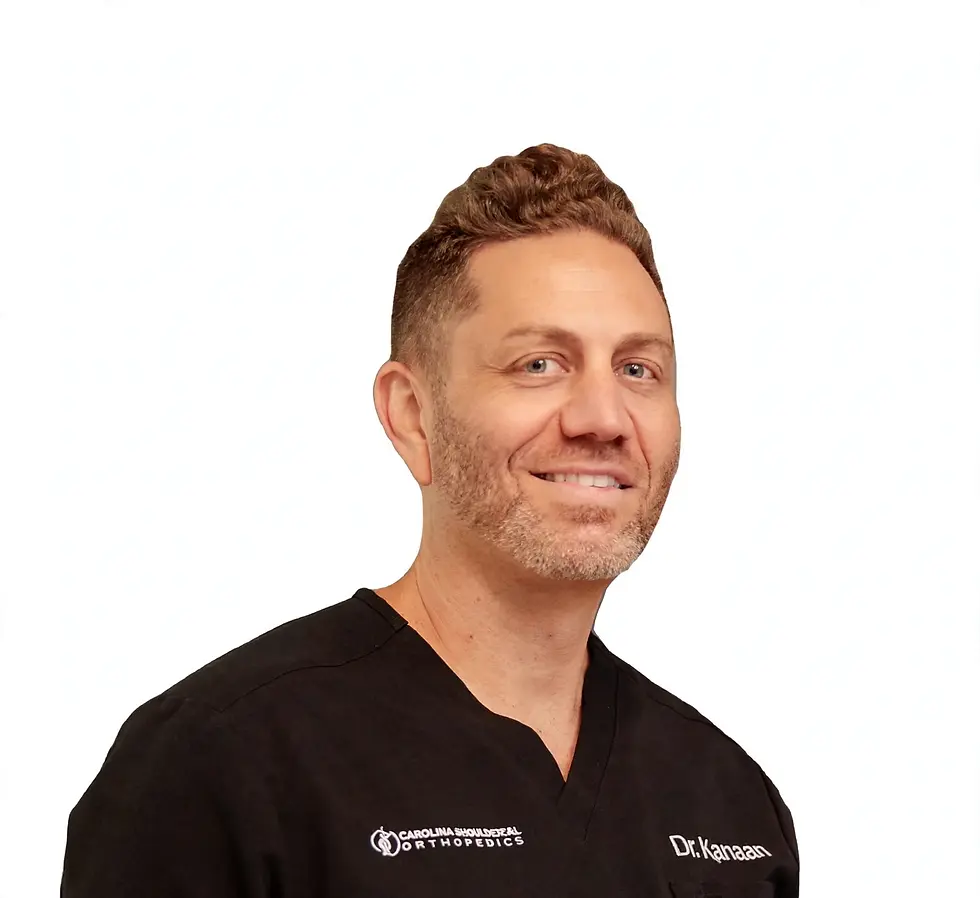
Dr. Matthew Kanaan
Nonsurgical Orthopedic Specialist
Founder of Carolina Nonsurgical Orthopedics. Fellowship trained in sports medicine at Duke; residency in family medicine at Duke, where he served as Chief Resident.
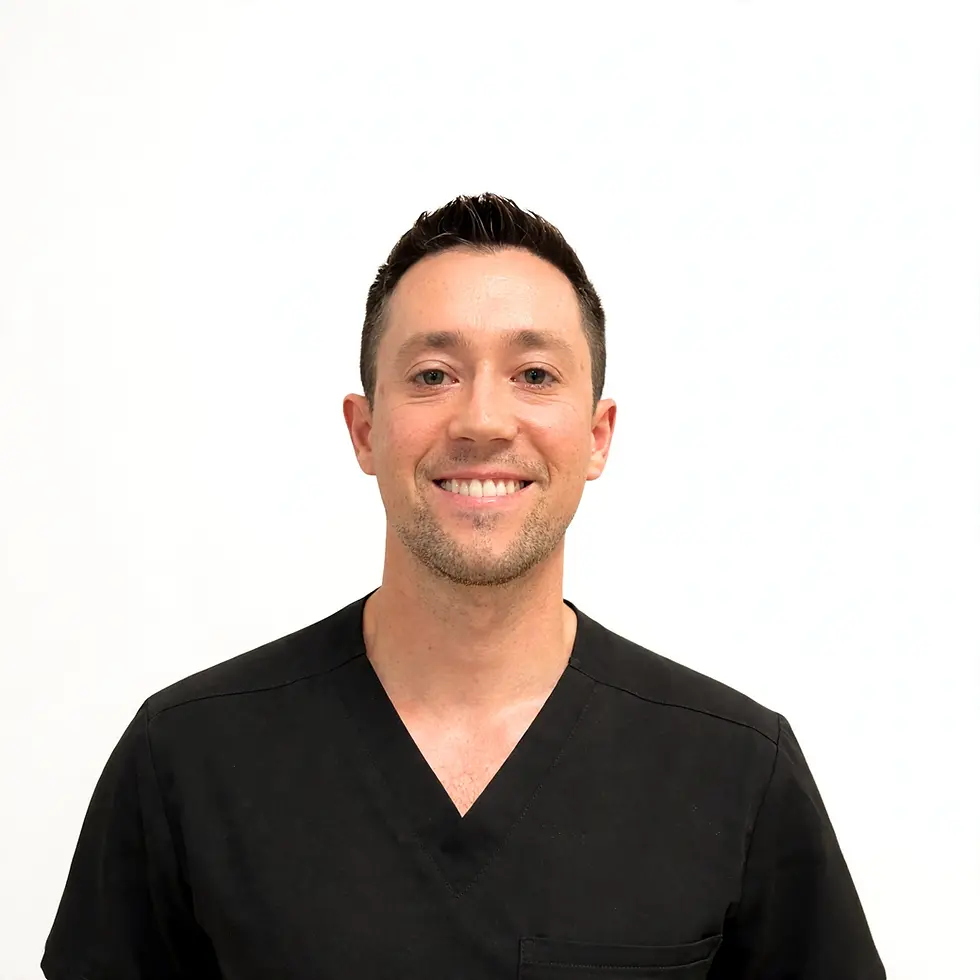
Dr. Pierce Knox
Nonsurgical Orthopedic Specialist
Fellowship trained in nonsurgical sports medicine at Penn Medicine; residency in primary care at Christiana Care.


