


Wrist Sprain: Grades, Healing Time & Nonsurgical Treatment
Updated: Oct 14
Quick answer: The nonsurgical path starts with an accurate diagnosis, then activity changes, therapy, and — when appropriate — image-guided treatment, with surgery considered only when conservative care isn't enough. That is the approach we take at Carolina Nonsurgical Orthopedics in Raleigh & Cary. Healing generally takes three to six weeks with bracing and rehabilitation.
You break a fall with an outstretched hand, jam your wrist playing basketball, or take an awkward tumble off a bike — and now your wrist is swollen, achy, and weak. Most likely you've sprained it: stretched or torn one of the many small ligaments holding the wrist's intricate bones together. The good news is that the vast majority of wrist sprains heal without surgery. The catch is that a small minority hide more serious injuries — fractures or ligament tears needing specific treatment — which is why getting the diagnosis right matters more than anything else.
What Is a Wrist Sprain?
A sprain injures a ligament — the tough bands connecting bone to bone. The wrist is one of the most ligament-dense joints in the body: eight small carpal bones in two rows, held together by more than twenty ligaments. When the wrist is forced beyond its normal range — typically bent sharply backward in a fall onto an outstretched hand — those ligaments stretch or tear.
It's worth distinguishing a sprain from its cousins. A strain injures muscle or tendon. A fracture breaks bone. A dislocation knocks bones out of alignment. All four can result from the same fall and feel similar in the first hours, which is exactly why a proper evaluation beats self-diagnosis.
Grades of Wrist Sprain
Clinicians grade sprains by severity, and the grade drives treatment and recovery time:
Grade I (mild). Ligaments stretched but not torn — mild pain, minimal swelling, stable wrist. Healing typically takes one to three weeks.
Grade II (moderate). Partial tearing — noticeable swelling, bruising, pain with movement, and a sense of looseness. Healing generally takes three to six weeks with bracing and rehabilitation.
Grade III (severe). Complete rupture of one or more ligaments, sometimes with joint instability. These need prolonged immobilization, and a subset eventually requires surgical discussion — though many are still managed nonsurgically when the joint remains reasonably aligned.
The grade isn't always obvious on day one, when pain and swelling mask the exam. Re-evaluation after the swelling settles often clarifies the picture.
Ruling Out the Dangerous Mimics
This is the most important section of this article. Several injuries masquerade as a "simple sprain" but demand different treatment:
Scaphoid fracture. The scaphoid is a small bone near the base of the thumb and the most commonly fractured carpal bone — classically from the same fall that causes sprains. The telltale sign is tenderness in the "anatomical snuffbox," the hollow at the base of the thumb. Scaphoid fractures can be invisible on initial X-rays, and the bone's fragile blood supply means a missed fracture can lead to nonunion and arthritis. Any snuffbox tenderness after a fall warrants imaging and often a thumb splint even if X-rays look normal, with repeat imaging in one to two weeks.
TFCC tear — ulnar-sided wrist pain with clicking on twisting motions (see our TFCC tear guide). Distal radius fracture — a break at the end of the forearm bone; deformity, severe swelling, or inability to move the wrist needs same-day imaging. Ligament instability patterns such as scapholunate dissociation can mimic a bad sprain but lead to progressive arthritis if missed.
The takeaway: persistent snuffbox tenderness, pinky-side wrist pain with clicking, visible deformity, numbness, or pain that isn't clearly improving after a week or two all deserve an in-person evaluation with imaging. In-office X-ray and ultrasound let us check for fractures and assess ligaments in the same visit.
First-Line Treatment: Protection, Bracing, and Smart Rest
For confirmed uncomplicated sprains, treatment follows a well-worn path:
Rest — but the right kind. Protect the wrist for the first few days, then gradually reintroduce movement as pain allows. Prolonged immobilization causes stiffness, so complete rest is brief.
Ice, compression, elevation. Fifteen to twenty minutes of ice several times daily for the first 48 to 72 hours, plus a light elastic bandage and keeping the wrist above heart level, controls early pain and swelling.
Bracing is the cornerstone. A removable brace that limits wrist bending while freeing the fingers protects healing ligaments without a cast's stiffness penalty. Grade I sprains may need only a week or two of bracing during aggravating activities; grade II typically needs three to four weeks of consistent wear; severe sprains may require longer immobilization in a custom splint.
Anti-inflammatories. Short courses of NSAIDs ease pain and swelling in the acute phase — a bridge, not a long-term plan.
Activity modification. Avoid the injury mechanism — no push-ups, planks, or heavy gripping — until pain-free motion returns. Re-injury during the healing window is the most common reason a sprain becomes a chronic problem, so athletes should resist the urge to "test" the wrist early.
Rehabilitation: Getting Strength and Motion Back
Once pain and swelling settle, rehabilitation determines whether the wrist returns to full function:
Range of motion first — gentle bending, straightening, and rotation, guided by pain (mild discomfort is fine; sharp pain is not). Progressive strengthening with grip exercises, light wrist curls, and putty rebuilds the forearm and hand muscles that dynamically stabilize the wrist. Proprioception drills — catching a light ball, coordination work — retrain the joint's protective reflexes that injury dulls. Gradual return to activity progresses from pain-free daily use to sport-specific drills to full competition, advancing only when each stage is comfortable. Most grade I and II sprains complete this arc within six to eight weeks.
When PRP Helps Ligament Healing
Most wrist sprains heal with bracing and rehab alone. But some don't — particularly moderate-to-severe sprains with persistent pain, lingering instability, or slow ligament healing. That's where regenerative options enter the picture.
For wrist ligaments healing slowly or painful beyond the expected timeline, an ultrasound-guided PRP injection delivers a concentrated dose of growth factors involved in ligament repair directly to the injured tissue. Because the wrist's ligaments are small and closely packed, ultrasound guidance ensures the treatment reaches the injured ligament precisely. Prolotherapy is another option we use for chronic ligament laxity in selected cases.
Neither replaces the fundamentals: accurate diagnosis, appropriate bracing, and rehabilitation. They complement those steps when healing stalls or when a patient wants to optimize recovery.
When Is Surgery Considered?
Surgery for wrist sprains is uncommon and reserved for specific situations: complete ruptures with gross instability, associated fractures requiring fixation, or chronic instability patterns like scapholunate dissociation that threaten long-term joint health. Even then, many complete tears in lower-demand patients do well with extended bracing and rehab.
Our frame with every patient: surgery is the last resort, not the first move. The overwhelming majority of wrist sprains recover fully with well-executed nonsurgical care.
Recovering From a Wrist Sprain in Raleigh and Cary
For our patients across Raleigh and Cary, the path back usually runs through accurate diagnosis (ruling out the fractures and tears that mimic sprains), smart bracing, progressive rehab, and — when healing needs a boost — targeted regenerative treatment. If your wrist injury isn't following the expected timeline, or you have snuffbox tenderness, persistent swelling, or instability, don't just wait it out.
Frequently Asked Questions
How long does a sprained wrist take to heal? Grade I sprains typically resolve in one to three weeks, grade II in three to six weeks, and severe grade III injuries in eight to twelve weeks or longer. Pain that isn't clearly improving — or is worsening — warrants re-evaluation to rule out a missed fracture or ligament tear.
Should I wear a brace all the time or only during activities? It depends on the grade. Mild sprains usually need bracing only during aggravating activities after the first few days. Moderate sprains benefit from more consistent wear for the first two to three weeks. Too little protection risks re-injury; too much immobilization causes stiffness.
When should I worry that it's more than a sprain? Seek prompt evaluation for visible deformity, severe swelling, numbness or color changes, inability to move the wrist, snuffbox tenderness at the base of the thumb, or pain that isn't improving after ten to fourteen days of appropriate care.
Do I need an X-ray for every sprained wrist? Not always, but the threshold should be low. X-rays are warranted for significant swelling, deformity, snuffbox tenderness, or inability to use the wrist — and they're the only way to rule out a scaphoid fracture, which can be invisible early on. Because we have in-office X-ray, there's rarely a reason to skip it when any doubt exists; a quick image beats weeks of wondering.
Take the Next Step
If a wrist injury isn't healing on schedule — or you want to confirm it's "just a sprain" and nothing more serious — an evaluation with in-office X-ray and ultrasound gives you a definitive answer and a clear recovery plan.
Call Carolina Nonsurgical Orthopedics at 919.719.2270 or schedule your visit online. With offices in Raleigh and Cary, NC, we're here to get your wrist back to full strength — without surgery whenever possible.
About Your Physicians
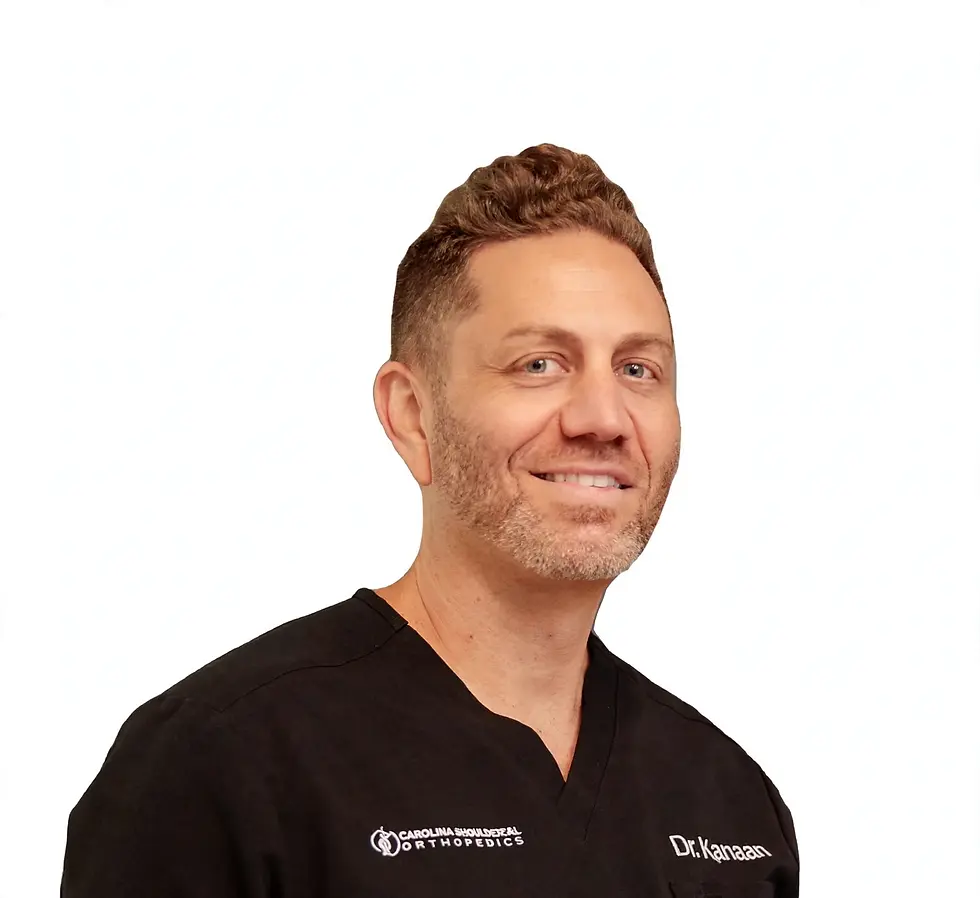
Dr. Matthew Kanaan
Nonsurgical Orthopedic Specialist
Founder of Carolina Nonsurgical Orthopedics. Fellowship trained in sports medicine at Duke; residency in family medicine at Duke, where he served as Chief Resident.
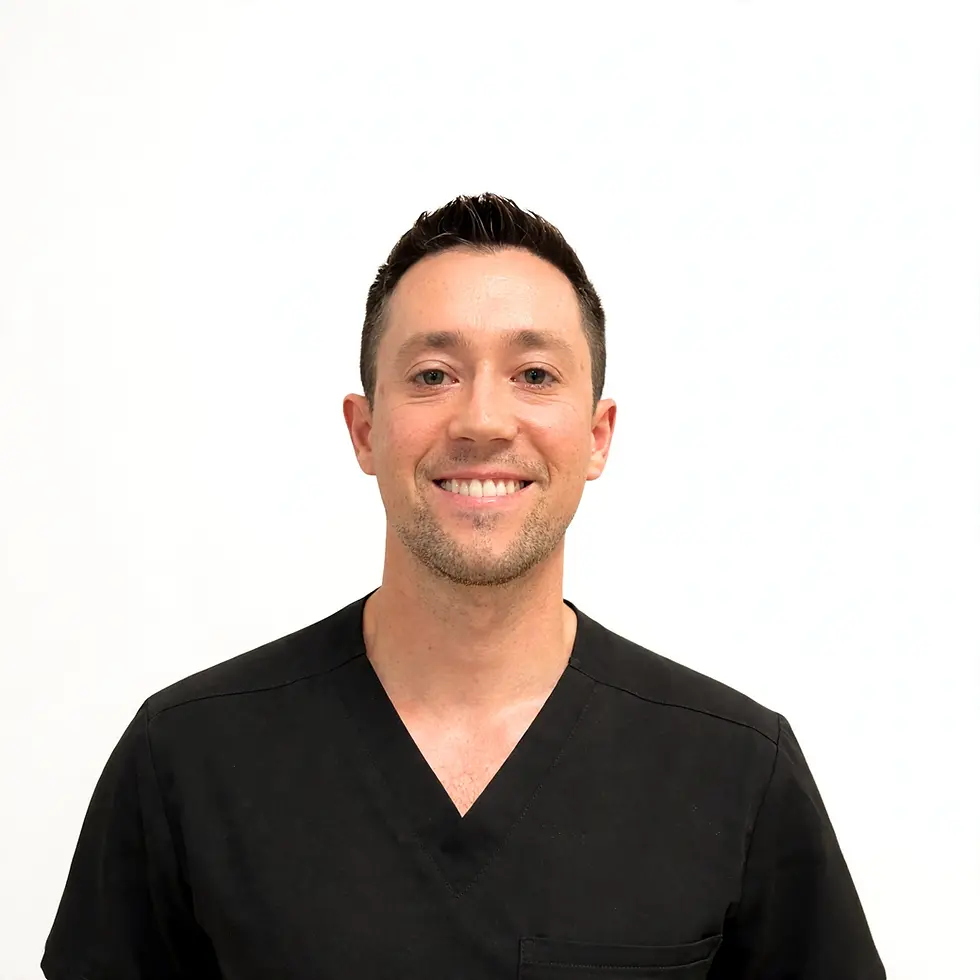
Dr. Pierce Knox
Nonsurgical Orthopedic Specialist
Fellowship trained in nonsurgical sports medicine at Penn Medicine; residency in primary care at Christiana Care.


