
)_edited_pn.png)


Shoulder Pain Treatment in Cary, NC: Common Causes and Options
Updated: 2 days ago
Quick answer: For patients in Cary, the most useful starting point is a focused diagnosis rather than immediately choosing an injection. Calcific tendonitis occurs when calcium deposits develop within a rotator cuff tendon and can cause episodes of severe pain.
Shoulder pain can make simple movements such as reaching overhead, putting on a jacket, sleeping on one side or lifting a bag unexpectedly difficult. The challenge is that several different conditions can produce similar symptoms. Rotator cuff disease, bursitis, frozen shoulder, arthritis, biceps problems, calcific tendonitis and referred pain from the neck can all be described as “shoulder pain.”
For patients in Cary, the most useful starting point is a focused diagnosis rather than immediately choosing an injection. Range of motion, strength, the pattern of pain and targeted imaging can often separate the major causes.
Rotator cuff pain and tears
The rotator cuff is a group of tendons that help stabilize and move the shoulder. Tendinopathy and partial-thickness tears commonly cause pain with reaching, lifting and sleeping on the affected side. A full-thickness tear may produce weakness, although some chronic tears are surprisingly well tolerated.
An acute injury followed by sudden weakness is different from a slowly developing ache and deserves earlier evaluation because a traumatic repairable tear may have a time-sensitive surgical component.
Frozen shoulder
Adhesive capsulitis, or frozen shoulder, typically causes progressive loss of both active and passive motion. Patients often notice difficulty reaching behind the back, fastening a bra, putting on a coat or reaching overhead. Night pain can be prominent.
Treatment often includes mobility work, physical therapy and pain control. In selected cases, ultrasound-guided hydrodilatation can be used to distend the capsule and may help restore motion when combined with rehabilitation.
Arthritis, bursitis and calcific tendonitis
Shoulder arthritis tends to cause deeper joint pain, stiffness and grinding, particularly in older adults or after prior injury. Subacromial bursitis can occur by itself but often accompanies rotator cuff pathology.
Calcific tendonitis occurs when calcium deposits develop within a rotator cuff tendon and can cause episodes of severe pain. Ultrasound and X-ray can help confirm the diagnosis. Treatment may include rehabilitation, shockwave therapy, image-guided barbotage in selected cases and other nonsurgical options.
How ultrasound and X-ray help
X-rays are useful for arthritis, calcification, alignment and bone abnormalities. Musculoskeletal ultrasound provides a dynamic view of the rotator cuff, bursa and biceps tendon and can be performed while the shoulder moves.
MRI is valuable when a larger tear, labral problem, surgical lesion or deeper pathology is suspected. Not every shoulder requires MRI before treatment, especially when examination and ultrasound provide a clear diagnosis.
Treatment options without surgery
Rehabilitation remains central for many shoulder conditions. Restoring motion, improving scapular control and gradually strengthening the rotator cuff can change symptoms more than passive treatment alone.
Image-guided injections may be used selectively depending on the diagnosis. Corticosteroid can provide short-term relief in certain inflammatory situations, but repeated exposure should be considered carefully. PRP may be discussed for selected tendon problems, while shockwave therapy has a role in conditions such as calcific tendinopathy.
When surgery should be considered
Acute traumatic rotator cuff tears with substantial weakness, recurrent instability, advanced arthritis and some labral or structural lesions may warrant surgical consultation. Persistent symptoms despite appropriate nonsurgical care are another reason to reassess the diagnosis and treatment plan.
A good nonsurgical evaluation should make it easier to identify those patients rather than simply delaying referral.
Related Cary orthopedic resources
Important note
This article is for general educational purposes and is not a substitute for an individual medical evaluation. Treatment recommendations and results vary, and some orthopedic conditions require surgical or other specialty care.
About Your Physicians
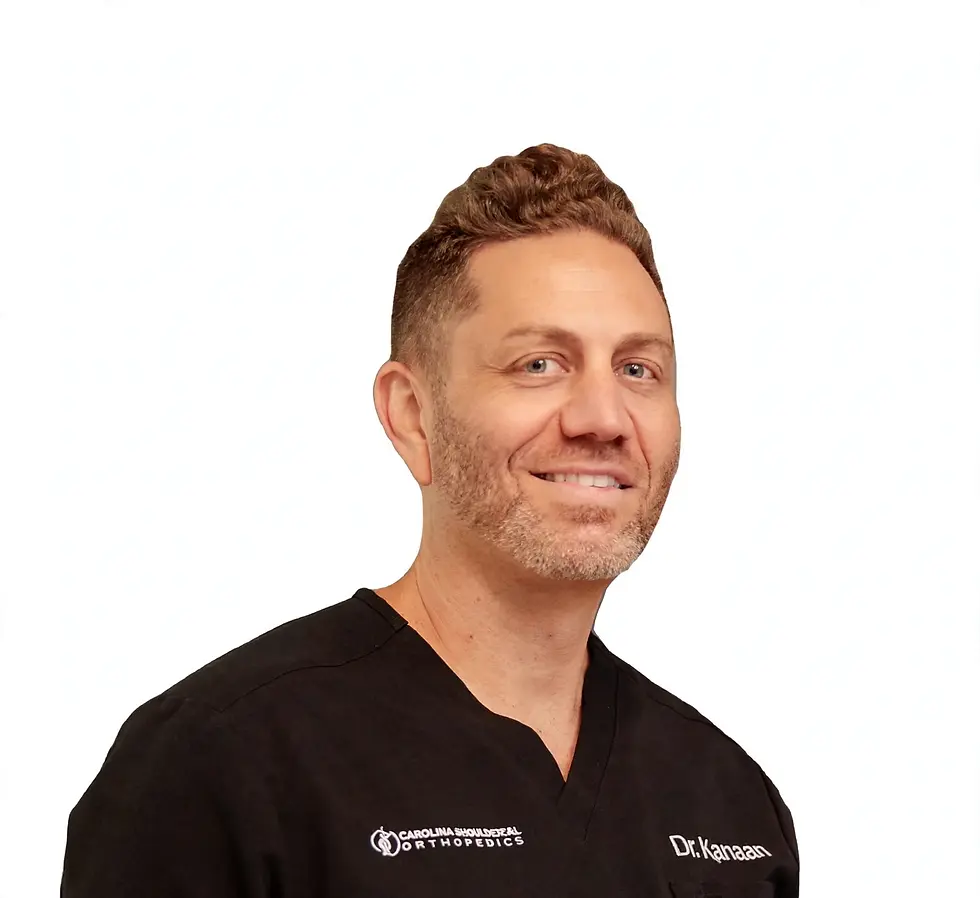
Dr. Matthew Kanaan
Nonsurgical Orthopedic Specialist
Founder of Carolina Nonsurgical Orthopedics. Fellowship trained in sports medicine at Duke; residency in family medicine at Duke, where he served as Chief Resident.
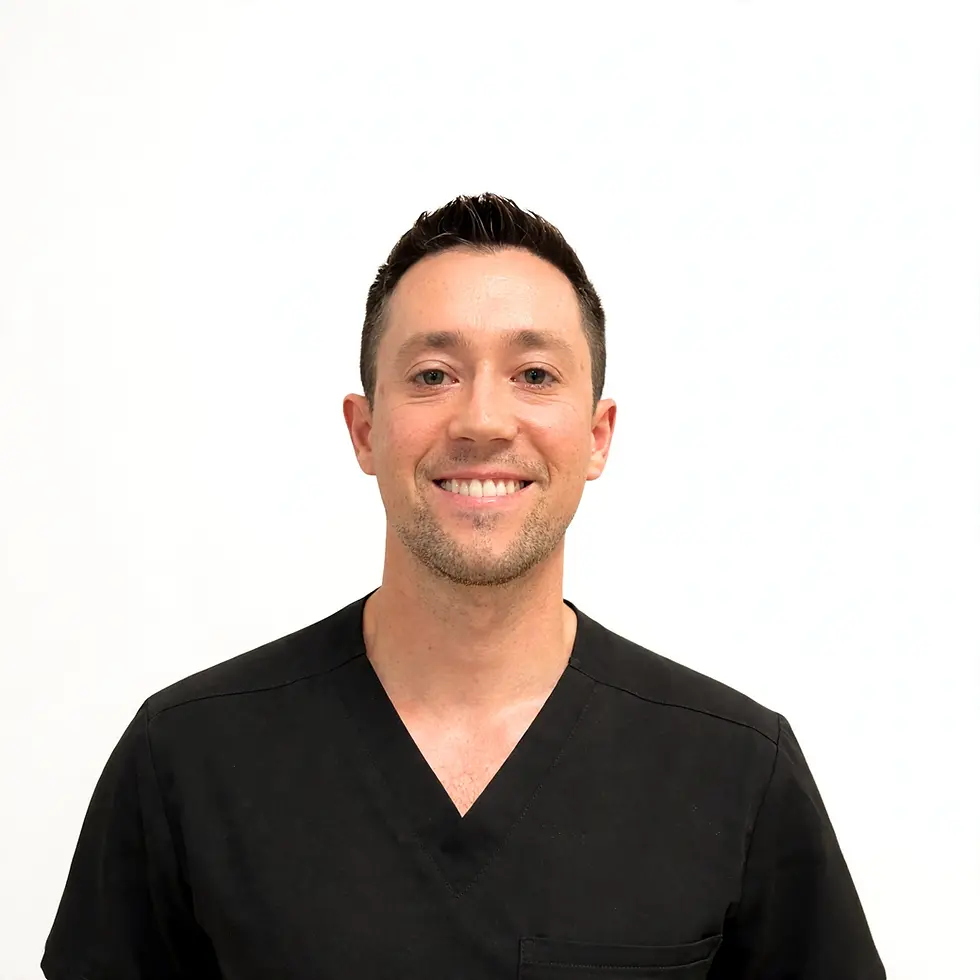
Dr. Pierce Knox
Nonsurgical Orthopedic Specialist
Fellowship trained in nonsurgical sports medicine at Penn Medicine; residency in primary care at Christiana Care.


